

There is a teaspoon of water in the sun-tunnel diffuser and a much larger argument about where it came from. Dave looks at the rain notes before the roof photo. Mike asks whether the water followed a cold night. Same puddle, different possible route.
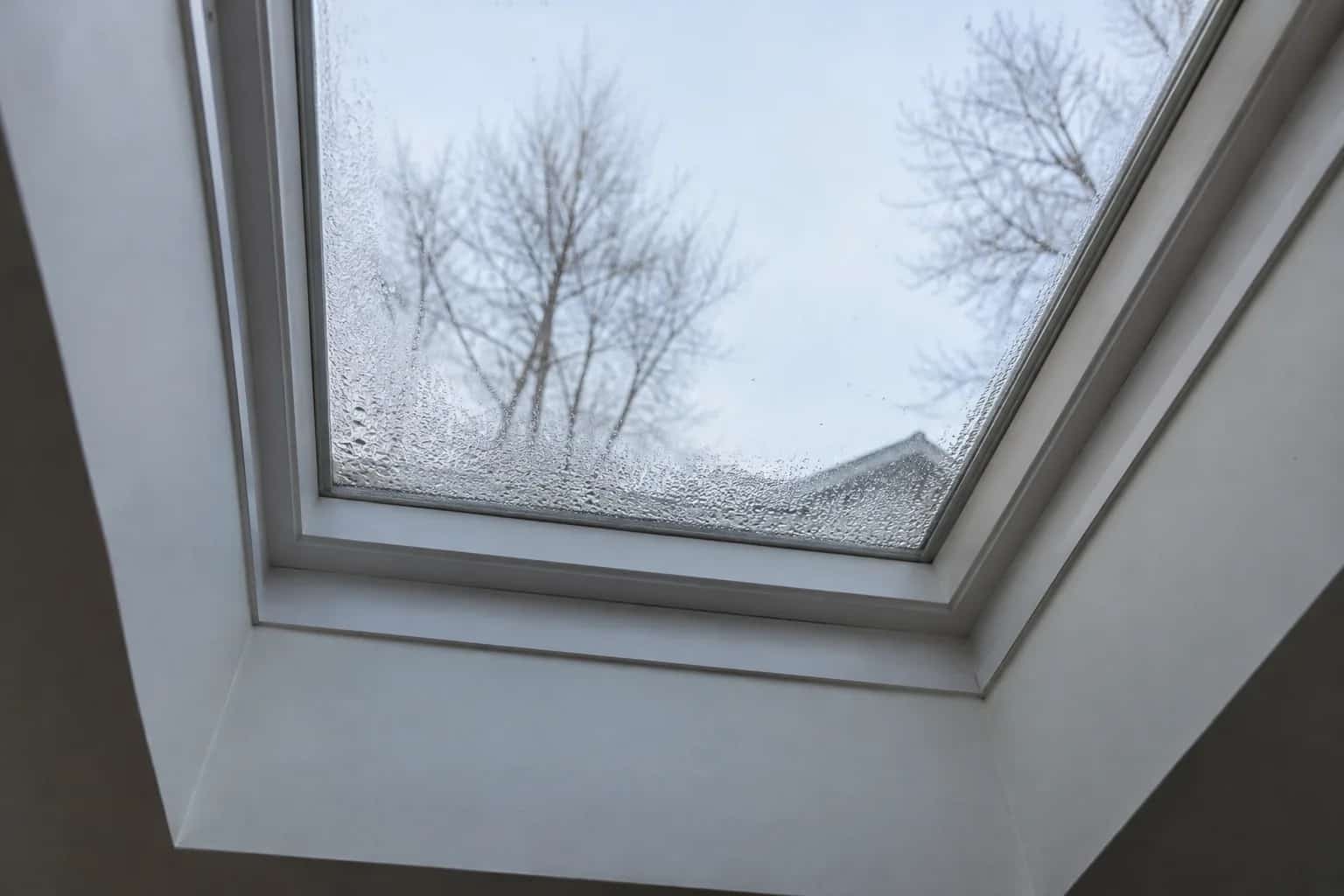
Water can enter at a roof detail, or moisture-bearing air can condense on colder tunnel surfaces. The wet diffuser shows where water ended up, not necessarily where the defect began.
Follow the Assembly From Roof to Room
At the top is the roof collector and its weatherproof connection. The reflective tunnel carries daylight through the attic. At the bottom, a ceiling assembly and diffuser finish the opening into the room. Joints, seals and insulation details along that route matter as well as the exterior flashing.
VELUX's condensation support describes moisture entering through gaps in the tunnel and collecting as droplets or water at the diffuser when conditions permit condensation. It also identifies the tunnel's insulation connection as a check. This explains a mechanism; it does not mean every wet diffuser has the same fault.
Pat draws the dome, tube and room-side diffuser as separate parts. "Which bit got wet first?" is more useful than "Is the skylight broken?" A sun tunnel is an assembly, and the repair needs to follow the evidence through it.
Two Water Routes to the Diffuser
Trace the route before choosing an exterior repair or a tunnel-connection correction.
Roof entry
Rain crosses a collector or flashing defect and travels downward.
Moist air entry
Air enters an unsuitable gap and moisture condenses on colder surfaces.
Visible collection
Water at the diffuser can be the endpoint of either route.
Model-specific inspection
Check the actual roof connection, joints, insulation and ceiling assembly.
Where Is the Water Actually Visible?
From the room, describe whether droplets are on the accessible room-facing surface, apparently inside the diffuser assembly, or accompanied by a stain around the ceiling ring. Include when they appear: after cold nights, after showers elsewhere in the home, during rain, or after a thaw.
Those patterns guide inspection but can overlap. Cold rain can occur while indoor moisture is high. A drip that begins after the weather changes may have spent time travelling down the tunnel. Avoid turning one dry afternoon into proof that the roof connection is sound.
If there is pooled water, loose material or nearby electrical equipment, arrange service rather than removing the diffuser overhead. Some installations contain an electric light kit. Do not assume a daylight device contains no wiring.
Find the Model Before Choosing Tape or Insulation
A rigid and a flexible tunnel do not share every detail. Even within one brand, the collector, diffuser, extensions and accessories can differ. The installer needs the model and installation instructions, not a generic roll of tape and a guess.
VELUX Canada's technical library provides separate model documents, including the TGR, TMR and THR installation instructions. Use the document matching the installed product and accessories. Do not borrow an overseas repair detail or seal an opening without establishing its intended function.
This is where we want the attending trades working from one description of the problem. The roofer may repair flashing while an installer restores tube joints or the ceiling connection. Both should work from the same identified assembly.
The homeowner has a replacement dome open in a shopping tab. Mike leaves that decision parked until the inspection distinguishes rain entry from condensation and checks the actual model. A new dome is an expensive way to leave a duct-like tube problem untouched.
Verify the Original Symptom, Not Just the New Seal
After correction, compare the condition under the weather or room conditions associated with the original wetting. Keep the service finding specific: a damaged roof connection, an open tunnel joint, an insulation discontinuity or another observed cause.
The ceiling around the opening still needs assessment if it was wet. If surface condensation is also occurring on conventional skylights or windows, indoor humidity and cold surfaces may be part of the wider investigation.
Bring the model information, weather timing and safe photographs to the inspection. We want the little pool gone for a reason we can explain, not simply absent on a warmer afternoon.