
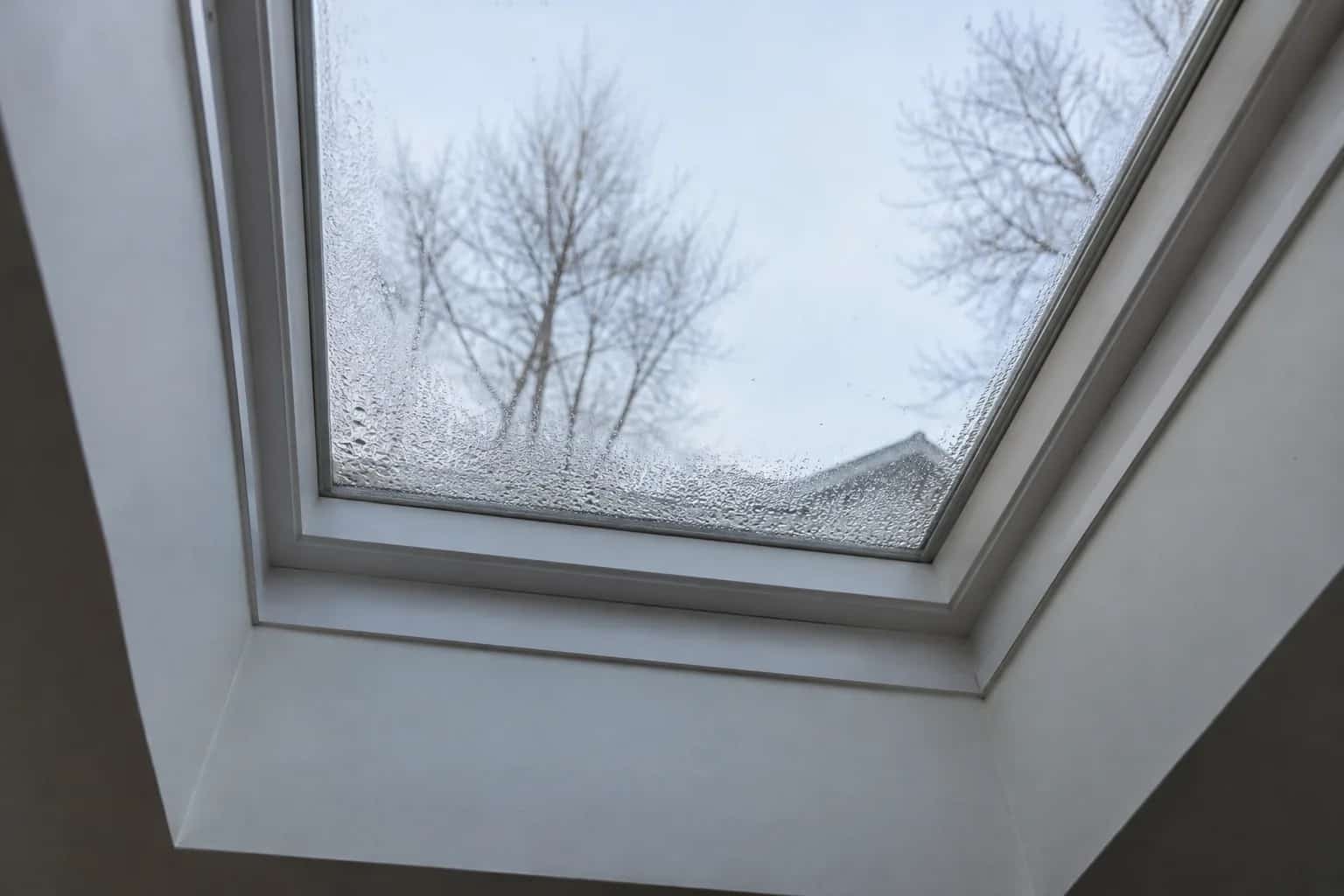
The drip arrived after a shower on a cold, dry morning. Dave looked outside for rain. Pat looked at the wet room-facing glass and the bathroom window. "The weather may be coming from in here."
Moist indoor air can condense on a sufficiently cold skylight and run down toward the frame. Surface condensation, moisture between panes and rain entering around the opening need separate investigations. A plausible indoor explanation is no excuse to dismiss a wet shaft.
That is a plausible explanation, not permission to dismiss every wet skylight. Surface droplets, moisture between panes and rain entering around the opening need different responses.
Start With Timing and Location
Does moisture appear on cold mornings after a shower, even when there has been no rain? Are other windows wet too? Does it clear as room conditions change? Those observations support a condensation investigation.
Does the shaft stain after wind-driven rain while the visible glass stays dry? That points toward a different inspection. Note the weather and photograph where water first appears if you can do so safely.
Moisture apparently between panes belongs in a separate category. Our fogging guide explains that distinction. Do not assume every cloudy pane is wet on the room side.
The Same Room Can Be Fine in October and Wet in January
Condensation depends on both the moisture in the air and the temperature of the surface. NRCan explains this relationship. A room condition that causes no visible droplets in mild weather may do so during a cold spell.
Dave added room-humidity readings to the observation notes, alongside shower use, humidifier operation and outdoor conditions. A hygrometer can help show the pattern. It does not hand every house one universal target regardless of temperature, and a single reading after the room has dried would miss the interesting part of this visit.
We compared the other windows before blaming the whole skylight. Several wet panes after a shower supported checking humidity and ventilation. But Pat kept the persistently damp shaft corner on the list for local insulation or air-leakage assessment. "Two things can be wrong," he reminded Dave, who had been enjoying the prospect of one tidy answer.
How Indoor Air Becomes a Skylight Drip
Condensation forms through a temperature-and-moisture sequence.
Moisture enters room air
Bathing, cooking and other activities raise indoor moisture.
Glass becomes cold
Outdoor conditions and the assembly affect the inside surface temperature.
Air reaches the cold surface
If conditions reach the dew point, liquid water forms.
Droplets collect
Water can run to the frame or shaft and resemble a roof leak.
The Shaft Can Affect the Glass Area
A deep shaft, restricted air movement, insulation gaps or air leakage around the opening can contribute to cold surfaces. Blinds and the way the room is heated can also affect local conditions.
VELUX's maintenance advice discusses ventilation and condensation. Follow the instructions for your model, and do not block designed openings or add improvised seals to stop a symptom.
If moisture repeatedly wets the shaft, ask for an assessment of its insulation and air sealing as well as the skylight. Redecorating damp drywall without resolving the cause simply gives the stain a cleaner place to return.
If glare is the concern, choose light control for the room routine while preserving the model's intended operation.
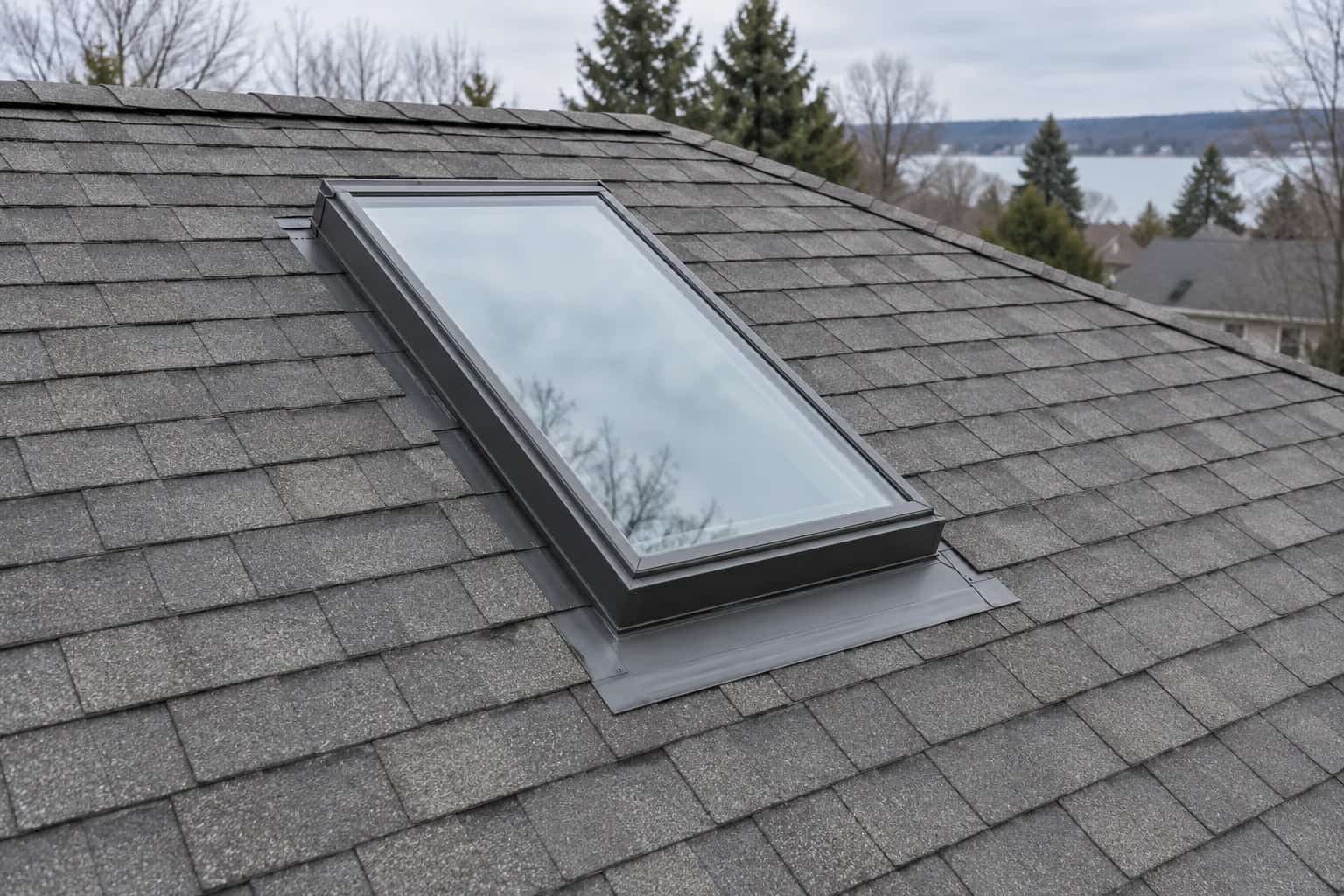
Return to where the first droplets appeared
For surface condensation, start with moisture sources and ventilation operating as intended. Bathroom and kitchen exhaust need to discharge appropriately outdoors; adding moisture with a humidifier can work against that effort.
Persistent dripping, deteriorating finishes or uncertainty about where the water originates warrants inspection. A cold or leaky shaft, failed glazing and exterior flashing need their own corrections.
A roof-sealant repair cannot change room humidity. Equally, reducing humidity cannot repair rain entry at a failed flashing. Matching the remedy to the observed route is what prevents a second disappointing visit.
The useful follow-up paired room conditions and shower timing with the location of the first droplets. We could then see whether the chosen correction addressed the pattern. A new bead of roof sealant would have made a poor substitute for understanding why the glass was wet indoors.