
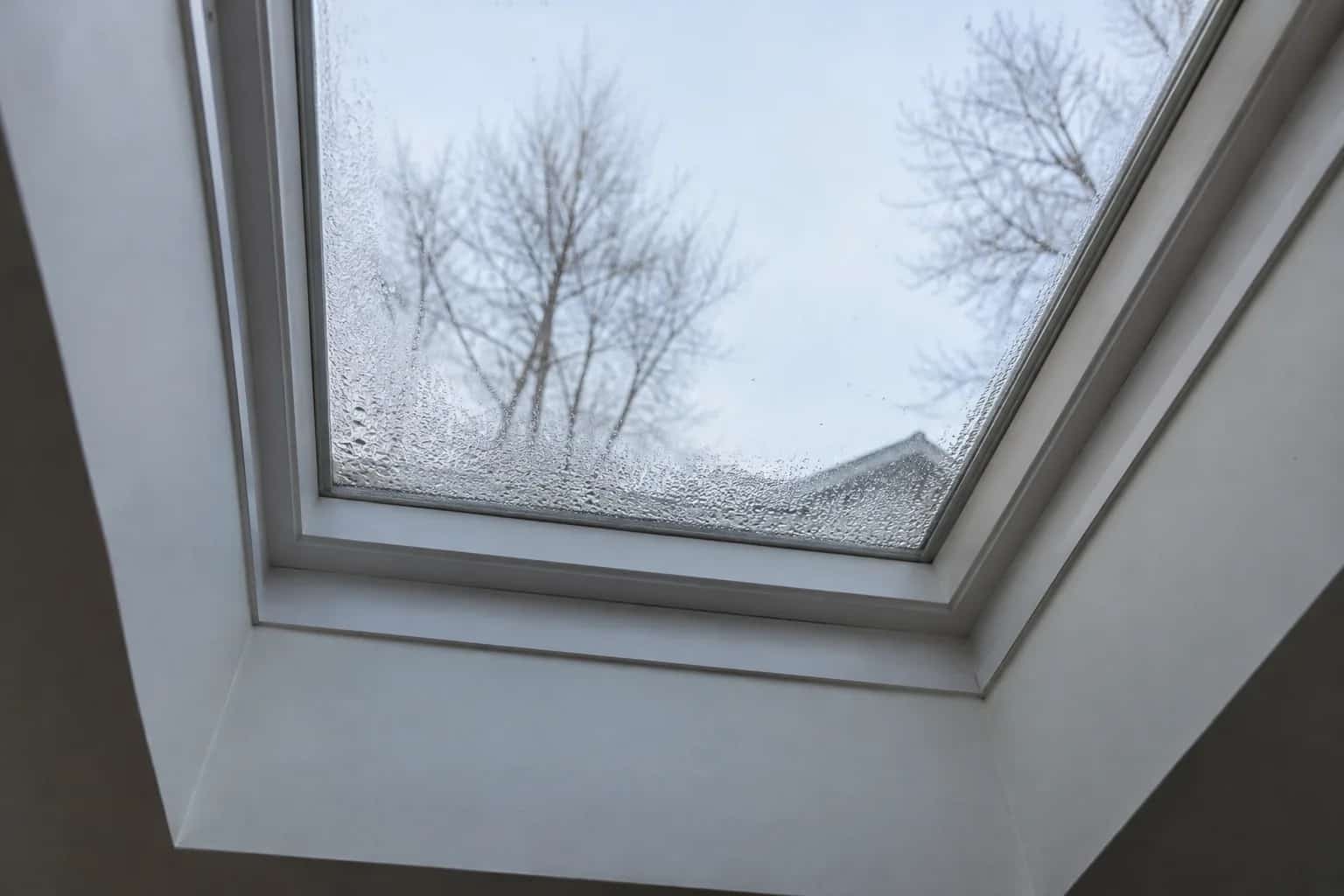
The attic insulation photograph looks reassuring until the skylight shaft enters the frame. Rachel has been thinking of the attic floor as the edge of the heated room. Mike traces that edge upward around the opening. The daylight has brought an awkward little wall assembly with it.
The attic floor has a generous layer of insulation, yet the skylight shaft is cold. Look at where the heated room actually ends: around the skylight opening, that boundary turns upward through the attic.
The shaft walls need insulation and a continuous air-control connection too. Insulating only the attic floor can leave an exposed section around the daylight opening.
Follow the Room Up to the Glass
Trace the inside edge of the heated space on the drawing. It runs along the ceiling, turns up the shaft walls and reaches the skylight. The insulation and air-control layers need to follow that shape rather than stop at the hole in the ceiling.
Insulation slows heat flow. Air sealing controls air moving through gaps. Batts pushed into a corner do not reliably replace a continuous air seal, so adding more insulation may leave the moisture-carrying route open.
The selected skylight's installation requirements and the actual roof construction govern the detail. The hidden rear side of the shaft matters as much as the easy side nearest the hatch.
When deciding on the layout, one large skylight and two smaller units create different light distributions and shaft work.
What You Might Notice Indoors
A cold-feeling shaft, recurring condensation near the glass or seasonal staining may justify inspection. These signs are not exclusive to insulation problems. Rain entry, room humidity and glazing condition must remain in the investigation.
Rachel starts keeping the weather with each photograph: cold and dry, or after rain? Mike asks for the first wet location when it can be observed safely. Once the water has spread across the finish, the most useful clue may be harder to place.
Natural Resources Canada's condensation explanation describes the relationship between cold surfaces and indoor moisture. A shaft problem can influence local surface temperatures without being the only source of humidity in the home.
Pat asks for the rear corner to be photographed as well as the easy side near the hatch. Rachel laughs because every renovation seems to have a side nobody wants to reach. Unfortunately, the enclosure needs to be continuous on that side too.
Follow the Enclosure Around the Shaft
The thermal and air-control layers must connect across changes in direction.
Ceiling connection
The room ceiling's air-control layer meets the shaft perimeter.
Shaft walls
Insulation and air sealing separate the heated shaft from the attic.
Top connection
The enclosure joins the skylight opening without unaddressed gaps.
Roof ventilation space
The detail preserves any ventilation paths required by the roof assembly.
Inspect Without Creating an Attic Problem
Have the shaft assessed from suitable professional access. Attics can contain hidden openings, wiring and materials that should not be disturbed casually. Do not walk on ceiling drywall or compress existing insulation to reach the far side of the shaft.
Ask for photographs of all accessible sides, including the top and ceiling connections. A tidy-looking near side does not establish that the difficult rear corner is finished equally well.
The repair must also preserve ventilation paths required by the roof assembly. Stuffing insulation into every available gap can block intended airflow. Ventilated and unvented assemblies need different approaches; the contractor should identify which construction is present.
Fix the Cause Before Making the Shaft White Again
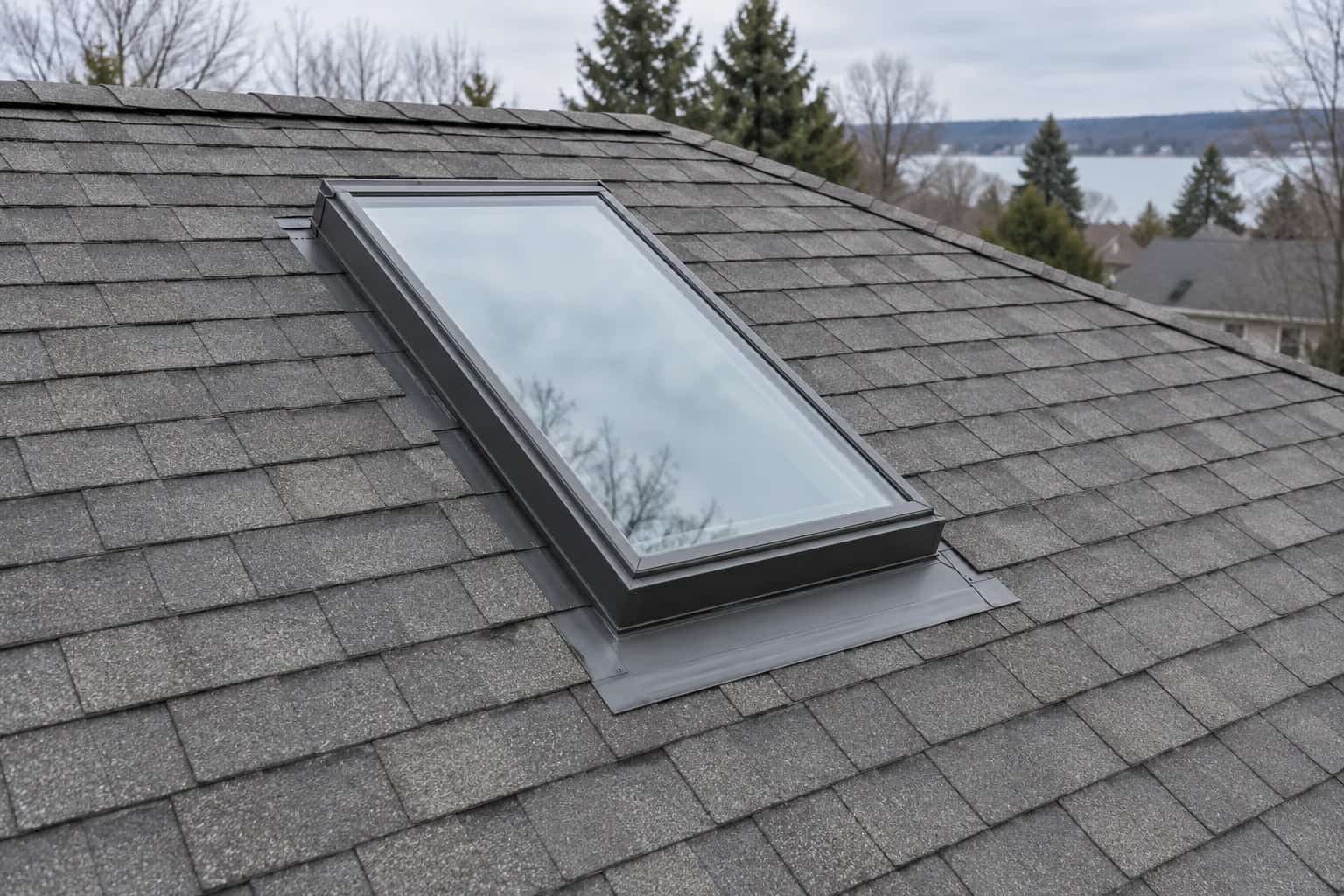
Cold-weather staining can involve the shaft's insulation or air leakage, but rain entry and glazing condition remain possible. The weather pattern and the first wet location help separate them.
Once the cause is identified, affected materials need assessment before finishing. If a skylight replacement is already planned, include the shaft while access is available; see replacement timing.
The aim is a continuous enclosure around the whole opening. A beautifully painted shaft with an unfinished attic-side corner is still an unfinished part of the roof assembly.
Dave keeps the first-wet-location photographs beside the weather notes before anyone orders paint. A cold-weather pattern deserves a different investigation from rain entry. Rachel wants the shaft white again, but we would rather have one proper finishing job than an annual appointment with the same stain.