
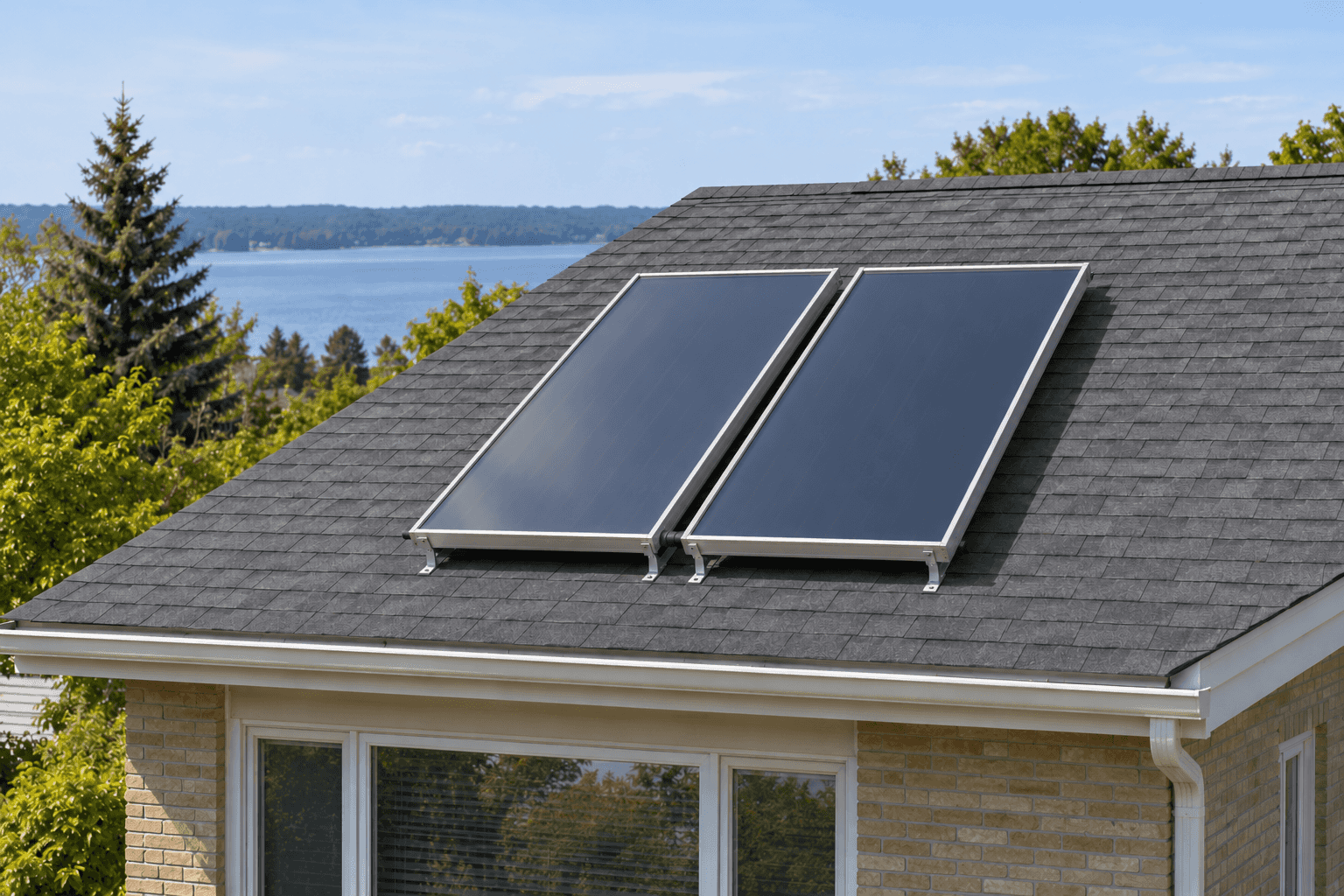
The roof has two dark panels, but the equipment in the utility room includes a pump, pipework and a hot-water storage system. These are solar thermal collectors. A booking for "solar panel removal" needs to identify that before anyone arrives with the wrong scope.
Have a qualified solar-thermal service contractor plan the heating-system work alongside the roofer. Collector handling, fluid circuits and return to service are part of the project, even when the reason for the visit is simply worn roofing.
Identify the system before getting removal prices
Collect the collector model, installation manual, system diagram and service history. Record whether the system serves domestic hot water, space heating or a pool, and who currently services it. Photographs of accessible labels can help; there is no need to climb up to find a rooftop serial plate.
Do not assume the fluid in the collector circuit is ordinary household water. The system design determines its fluid, freeze protection and operating procedure. Ask the service contractor to identify those before agreeing to disconnection or storage.
Our solar-panel removal guide covers photovoltaic equipment. Some coordination questions overlap, but its electrical handover does not replace the thermal-system service plan.
Two connected jobs
Name who completes each handover.
Identify and assess
Confirm equipment, circuit and condition before pricing removal.
Remove and protect
Use the qualified service plan and agreed equipment storage.
Roof and mounts
Complete compatible attachments and pipe-entry details.
Return to service
Obtain the system-specific commissioning and roof records.
Make shutdown and handling a specialist task
Viessmann's Canadian Vitosol service manual, dated February 2016, warns that connection pipes and solar fluid can cause severe burns, particularly after stagnation. It assigns service to a licensed professional heating contractor. Use the applicable current instructions for the actual installed model; this manual is a model-specific example.
Do not loosen fittings, drain a circuit or turn a pump off as a way of making the collectors safe to move. Have the contractor specify the shutdown, fluid handling, equipment protection and any electrical work needed for the system.
Ask how the collectors will be lifted, transported and stored, and who records their condition before removal. Include glass, frames, mounting parts and any components intended for reuse. "Leave them beside the garage" is not a complete storage agreement.
Resolve mounts and pipe entries before the new roof
Have both contractors review a marked roof plan. Identify supports, retained or abandoned penetrations, the new roof covering and the proposed pipe-entry details. Decide who supplies each mounting and flashing component and who accepts the completed junction.
The US Department of Energy's solar-water-heating planning guide recommends arranging collectors so they can be removed and reinstalled for maintenance or roof work. On an existing installation, ask what the actual mounting arrangement allows and what must change.
A new roof profile or additional insulation may alter the height of the collector supports and pipe route. Include that in the design before ordering materials. Do not force old fittings to reach a new position or assume that every existing flashing can be reused.

Decide whether the old equipment should return
Ask for a condition assessment and separate prices for necessary repairs, reinstallation and any optional replacement. Age alone does not settle the decision, but unavailable parts or a damaged collector can affect the practical options.
Clarify how household hot water will be supplied during the interruption. Have the service contractor confirm the backup arrangement and controls rather than assuming the existing tank will operate normally with part of the system disconnected.
If the system is being retired, include safe decommissioning of the connected equipment and proper closure of roof openings. Removing the visible collectors is not the whole scope.
Require a return-to-service record
Agree who calls the service contractor back after roofing and what makes the roof ready for reinstallation. Include weather delays and the responsibility for temporary protection.
At handover, obtain the applicable commissioning and service record: checks of the circuit, controls, fluid and freeze protection, together with any outstanding work. The exact checks and settings belong to the system's instructions and qualified contractor.
Keep those records with photographs of the roof attachments and pipe entries before the collectors obscure them. A neat pair of panels and hot water at a tap are welcome, but the completed handover should account for the roof and the connected heating system.