
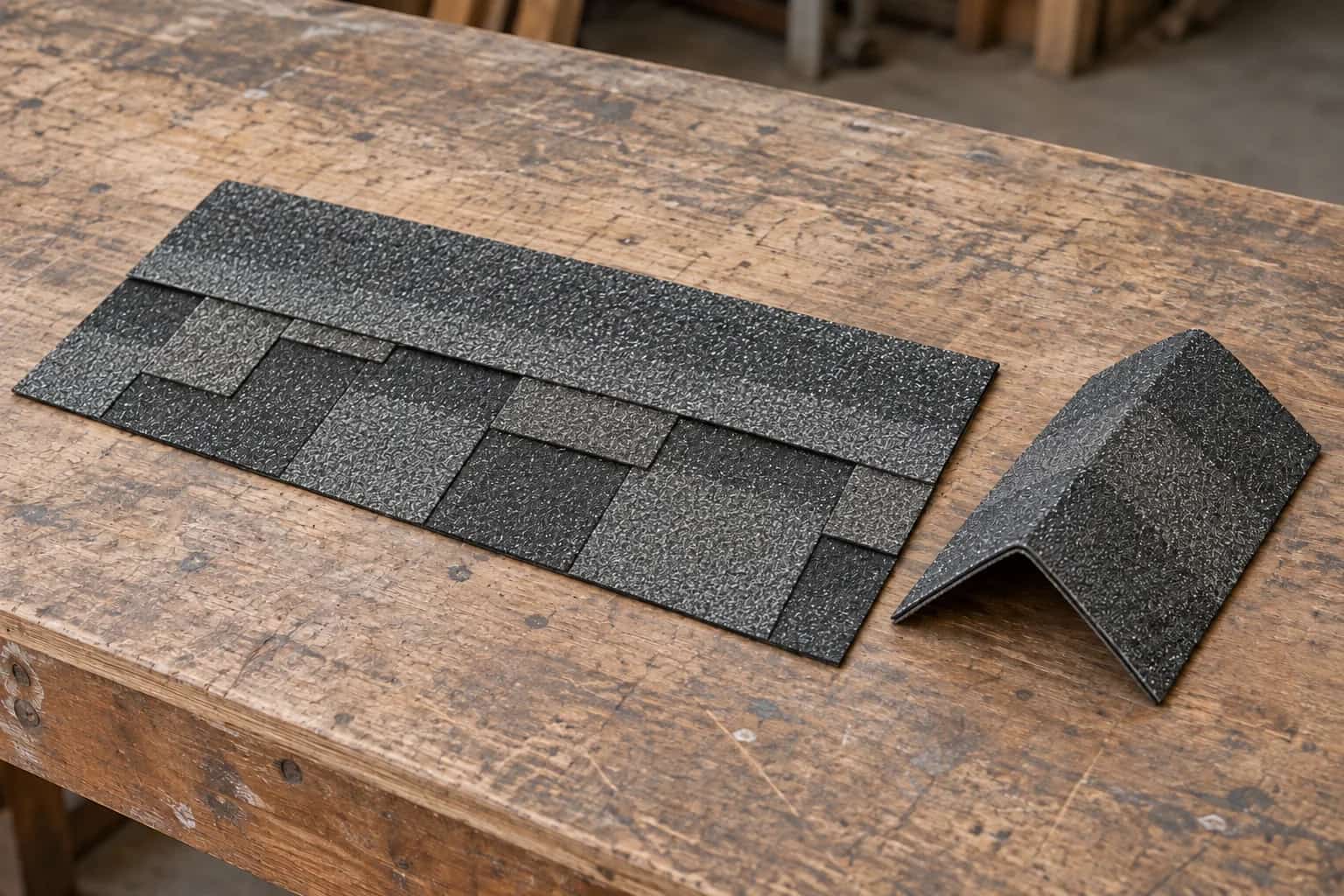
Pat is packing up when the owner brings over a spare shingle, shiny strip facing out. "Did you forget these?" It is a fair question. The strip looks exactly like something you would peel off before sticking something down. Pat fetches a second shingle instead of reaching for an excuse.
On the IKO asphalt shingles covered by its release-film bulletin, that plastic stays on. It separates shingles inside the package. It is not the backing the roofer must peel away to make the installed courses bond. Other products need their own instructions, especially anything actually described as peel-and-stick.
The Bundle and the Roof Are Different Arrangements
IKO's release-film bulletin explains that the film prevents packaged shingles sticking together. Once installed in the correct orientation, the working sealant sits elsewhere and bonds the adjoining courses. That change in position is the part a loose shingle cannot show by itself.
On the bench, Pat stacks the samples as they came in the bundle, then shifts them into the product's installed arrangement. The owner can now see that different places touch. "The packaging layout retired when we opened the bundle," he says. The demonstration explains position; the wrapper still supplies the actual installation pattern.
Ask the installer to show the arrangement with spare material on the ground. A manufacturer diagram and two samples are more useful than pulling at installed tabs. You can understand the answer without creating a fresh inspection problem.
The Contact Changes After Unpacking
A packaging separator is not necessarily a backing that exposes working adhesive.
In the bundle
Release film prevents unwanted contact between stacked shingles.
On the roof
Courses shift into the specified overlap; their contact points change.
At the sealant
The intended sealant meets the neighbouring shingle as the product was designed.
At inspection
Check the named product's instructions and actual bond, not the film alone.
Do Not Confuse Three Different Things
A packaging release film keeps units separate before use. An active sealant strip is part of the product's intended connection after installation. A removable adhesive liner protects adhesive that a particular product requires the installer to expose.
Those names describe functions, not universal colours or locations. A translucent strip is not automatically one category, and a black strip is not automatically another. Starter products, membranes and field shingles can arrive on the same delivery with different handling requirements.
Dave adds a membrane offcut to the bench, then takes it away again: wrong product for this demonstration. That little interruption matters. The useful question is, "What does this product say to remove?" Keep the wrapper or take a clear photograph before packaging leaves. Check the exact line and version, rather than borrowing instructions from a different shingle in an online video.
A Loose Shingle Still Deserves Attention
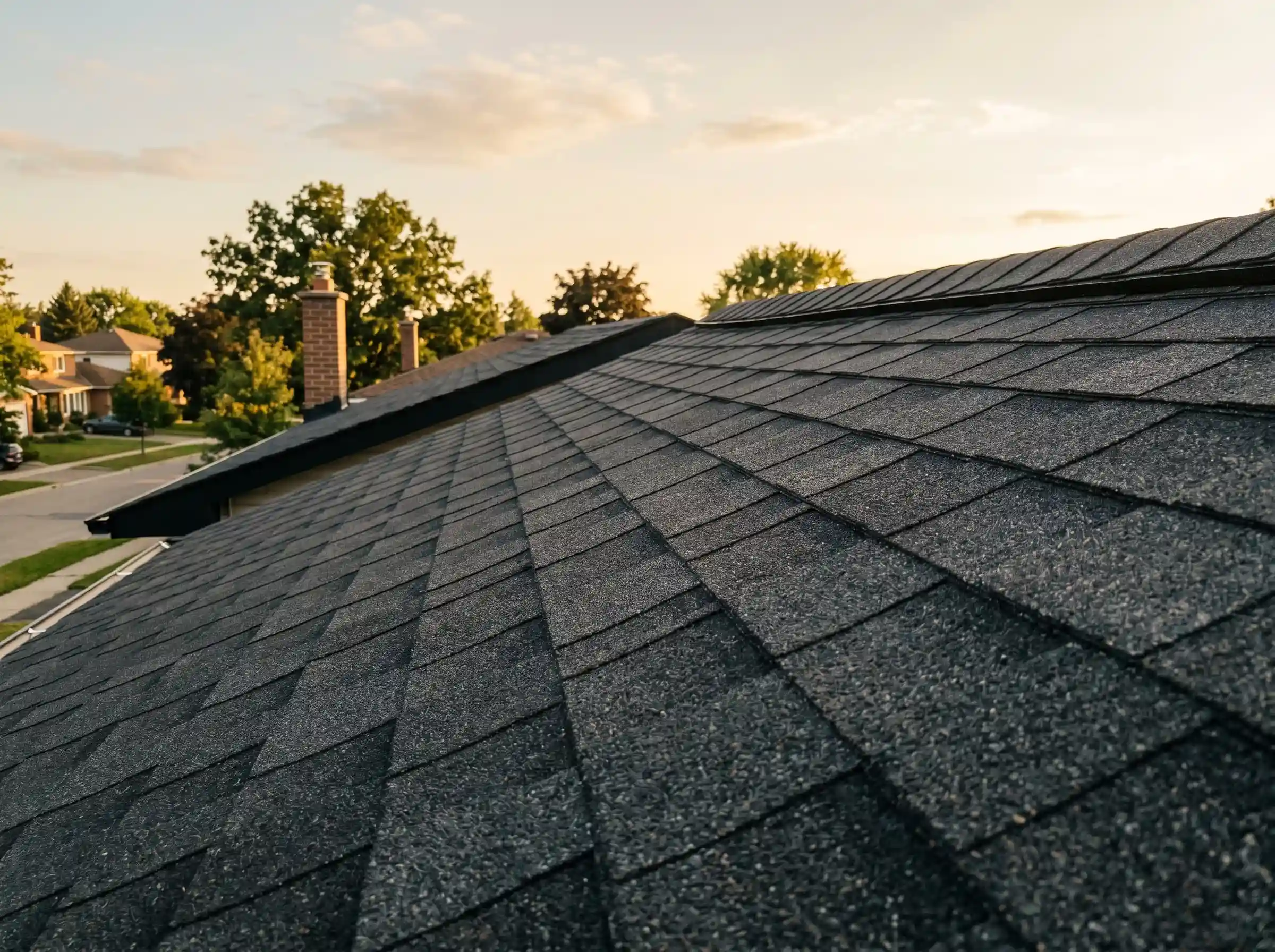
The correct presence of film does not prove the whole installation is sound. If you saw a tab flapping, found a folded piece or noticed a gap after wind, report that observation. The roofer still needs to assess attachment, seal condition, installation conditions and surrounding material.
IKO's installation guidance makes clear that exposure, offset and nail placement depend on the particular product. Peeling packaging film cannot compensate for an incorrect layout or fastening detail. Nor should a homeowner go looking for film by lifting courses that are already bonded.
A good response to your concern connects the two questions: why the film is correct for this product, and whether the actual symptom requires repair. "The plastic stays" answers the first. It should not end the conversation if shingles moved during a storm.
What to Ask at the Completion Review
Bring the spare piece and ask for the relevant instruction, not a general assurance that every shingle is the same. If the material is a different brand or a self-adhered accessory, its own document decides the handling.
Keep a photo of the product label with the roof invoice. That makes a later question about a repair or course pattern much easier to resolve.
If there is no damage and the instructions say the film remains, the spare shingle has done you a favour: it prompted a useful explanation. It has not uncovered a roof-wide defect. If there is visible lifting, use our missing-shingle guide to organise the next inspection from the ground.