
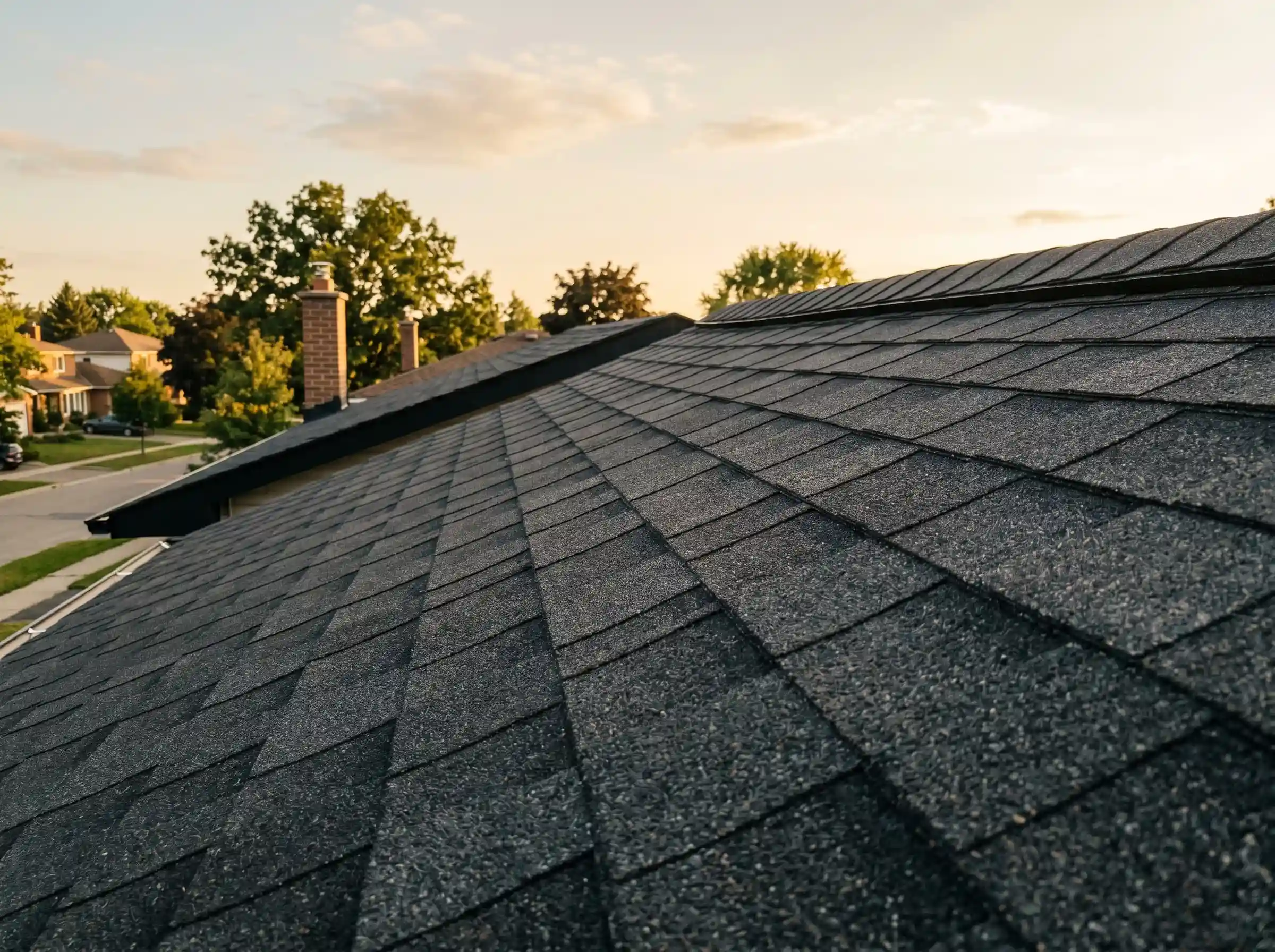
The waste bin is filling faster than expected. Under the first covering is another, and the crew has not reached the base yet. Mike pauses the price conversation long enough to separate extra removal from damaged wood. They can both cost money; they are not the same finding.
Tear-off can reveal damaged decking or extra old coverings that nobody could see from the driveway. The next step is a clear change order separating removal, disposal and measured wood repairs, with photographs before the roof is covered again.
Decking is the wood surface beneath the roof covering. A sound-looking shingle roof can conceal localized deterioration, and an attic inspection cannot reveal every upper surface or covered joint.
When Tear-Off Reveals Another Roof Underneath
With an older wood covering below the asphalt, there are two decisions: the extra removal and disposal, and the condition of the deck finally exposed. Keep them separate in the change order. More rubbish does not prove that all the wood needs replacing.
For a house with old wood shingles over spaced boards, the contractor must establish what base the new product needs. Do not assume an unexplained stack of cedar and modern panels is sound, or that a fresh layer on top will repair what is hidden. Photograph the actual sequence as it is uncovered, then show the proposed deck work with its supported repair boundaries.
Extra stripping changes handling, disposal and the schedule before the first new shingle appears. Include the temporary weather-protection plan in that change; an open roof still needs protection while the quantity is agreed.
Ontario's renovation guidance says that, where an estimate forms part of the contract, the final price cannot exceed it by more than 10% unless you agree to new work or a new price. Use a written change describing what has been discovered and approved rather than treating the rule as a substitute for a clear scope.
Two Discoveries, Separate Prices
Record each newly exposed layer and additional disposal. Keep the approval and photographs with the invoice.
Extra coverings
Record each newly exposed layer and additional disposal.
Exposed base
Show the condition and supported boundary of the proposed repair.
Written change
Agree quantity, unit, price and schedule before concealing work.
Final record
Keep the approval and photographs with the invoice.
Agree the Unit Before You Need It
Ask whether replacement is charged per sheet, per square foot or by another stated unit. Record the material and thickness, and whether the rate includes removal, fastening, labour, support at cut edges and disposal. A price for plywood alone is not a price for an installed repair.
Board decking may need a different method from sheet sheathing. Extensive deterioration, unusual gaps or damaged framing can also require work beyond a routine sheet replacement. The contract should explain how those situations are quoted instead of forcing them into an unsuitable unit rate.
Ask What the Photograph Shows
A useful photo includes enough surrounding roof to locate the defect, followed by a close view. Ask the roofer to explain why the wood is unsuitable: loss of strength, delamination, broken edges or inability to hold the specified fasteners.
Dark staining alone does not establish that every sheet must be replaced. Conversely, a small visible patch may extend farther once the covering is removed. The explanation should connect the observed condition to the proposed repair boundary.
You can review these details on your phone. Do not climb onto an open roof for a better look.
The approval message should connect location, observed defect, material, supported repair boundary and total price. "Some wood was bad, extra charge to follow" leaves all of those open. Keep the final photographs and agreed quantity with the invoice; our quote guide helps set that expectation before tear-off.

Keep the Decision Moving
If several owners are involved, choose one person to approve changes. State whether the proposed quantity is final or an allowance that will be reconciled.
If you will be unreachable, agree a limited authorization process beforehand. Unlimited permission to "do whatever is necessary" makes budgeting harder; refusing to discuss any contingency leaves the crew with an open roof and no decision route.
When the change arrives, compare it with the photographs while the deck is still visible. This is one piece of paperwork that should not have to rely on everyone having an excellent memory.