

At the table, Farah sorts three quotes from cheapest to most expensive. Pat turns the first one over looking for the missing detail. There is no second page. The logo has had more attention than the scope, which makes the total difficult to compare rather than automatically wrong.
Three quotes, three different totals. One names every product. One says "full replacement." The cheapest has a beautifully printed logo and almost nothing underneath it.
Start by comparing the work. You can judge the price once you know whether the crews are proposing the same roof.
First, what comes off?
The quote should say which coverings are being removed, what happens to the old underlayment and flashing, and who handles disposal. Ask how the crew will protect the driveway and garden and collect stray nails.
If one contractor proposes an overlay and another a full tear-off, that is a scope difference to discuss before comparing their totals.
Compare the scope
What is inside the price?
A useful quote explains the work at each stage, including what happens when the old roof comes off.
"Full roof replacement" leaves questions open.
A single description makes it difficult to tell whether two prices include the same work.
- Materials
- Which shingle and underlayment products?
- Hidden damage
- What happens if the deck needs repairs?
- Junctions
- Which flashings will be replaced?
- Completion
- Who handles disposal, cleanup and warranty paperwork?
Compare scope before price. These prompts do not replace the actual contract or warranty documents.
Next, what goes back?
Look for named shingles, underlayment and eave-protection products. "Architectural shingles" leaves room for interpretation. A brand, product and colour are much easier to agree on.
The less glamorous lines matter too:
- Decking: how damaged wood is identified, priced and approved.
- Flashing: which valleys, walls, chimneys and roof openings are being addressed.
- Edges and ventilation: the planned edge details and how attic intake and exhaust will work together.
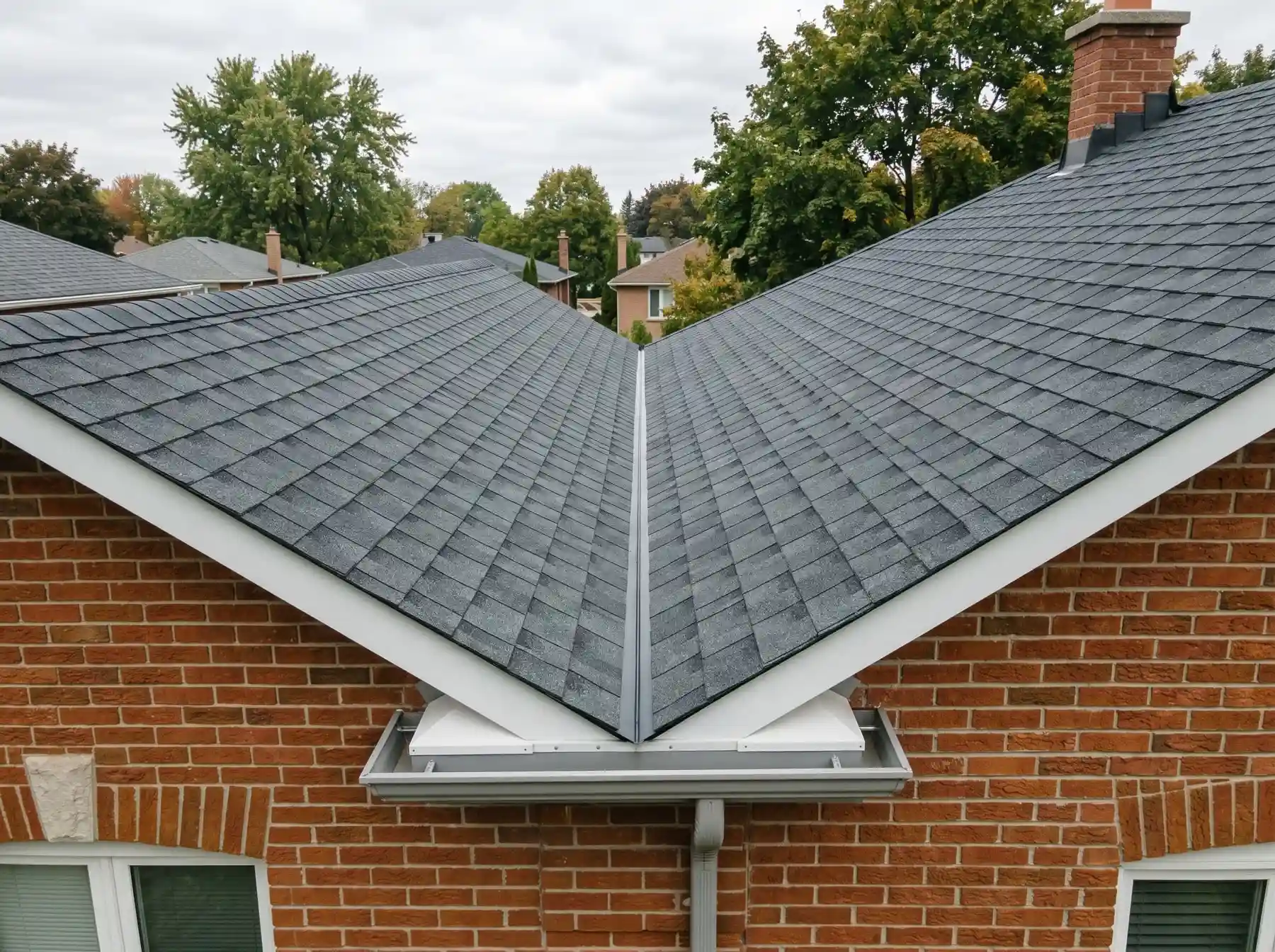
Farah keeps the marked-up photograph with the bids: this chimney, that valley, intake along these eaves. It places each line on her house. The contractors can now answer the same question about the same connection.
The line you hope not to use
What happens if stripping exposes damaged decking?
For example, a per-sheet decking price should state whether it includes removal, the replacement panel, installation and disposal. An open-ended "wood extra" line leaves too much unresolved. Agree on photographs and approval before the extra work, and include the estimate in the written contract. Ontario's renovation guidance explains what that paperwork should contain.
Mike marks the chimney, wall and valley on a photograph while Farah reads the phrase "all flashing." Which of those locations does it include? The question is concrete enough for every contractor to answer. A reassuring adjective cannot do the same job.
Keep the written estimate in the agreement and understand Ontario's ten-percent estimate rule before comparing a higher invoice.
Put both quotes against the same questions
Before choosing the total, obtain a written answer from each contractor to the same short list:
- Removal: every existing layer, or an overlay? Which flashings stay?
- New assembly: exact shingle, underlayment, eave membrane and edge details?
- Unknown wood damage: price per sheet or other stated unit, included labour and disposal, and your approval process?
- Roof openings: which chimney, wall, plumbing vent and skylight details are replaced, reused or excluded?
- Scheduling: how is an opened roof protected if weather interrupts the work?
- Completion: who supplies installation photos, cleanup, warranty documents and registration confirmation?
Two prices become comparable when these answers describe the same work. If one contractor allows for replacing a difficult wall flashing and another excludes it, that price difference buys a specific job. Decide whether that job is needed before negotiating the total.
Compare the exclusions too
Skylights, chimney masonry, gutters, permits and interior repairs may sit outside a roofing price. Find out which apply to your job. Then read the payment schedule and warranty terms.
A lower total is worth considering. Just make sure you can explain why it is lower. Put the same unanswered question to each contractor and compare the replies, not the brochures.
Dave asks what "wood extra" buys per stated unit, including labour and disposal. Farah adds the answer to the same comparison sheet as access work and exclusions. By the end, she can explain why a price is lower. That is a better place to negotiate from than hoping the nicest brochure contains the missing work.