
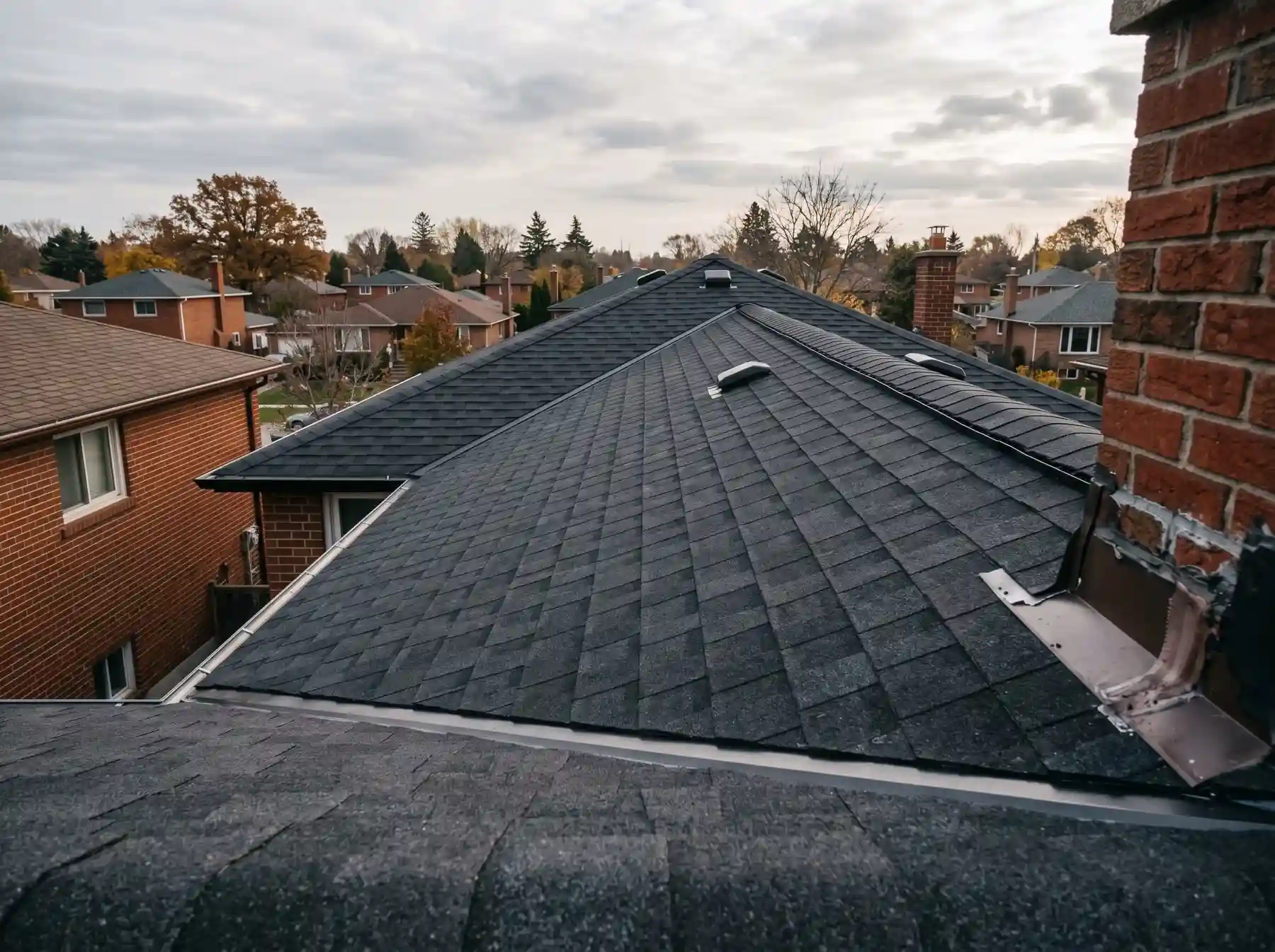
The reserve fund has a reassuring balance. The roof looks tidy from the parking area. Neither tells a condo buyer whether a major roofing bill is approaching. Find the roof in the reserve study, then connect its assumptions to today's condition and the corporation's funding plan.
A reserve study is a planning document, not a promise that a roof will fail in a particular year. It considers future major repairs and replacements. Its usefulness depends on the inspection, assumptions and updates behind the numbers.
The buyer has highlighted the reserve balance in green. Mike asks for the page with the roof entry. Then they discover that the garage membrane is listed somewhere else. "That is why we bring the whole report," he says. The attractive number on the first page has not changed; what it has to pay for has become clearer.
Find the Right Roof Line
Large properties can have several roofing systems and installation dates: townhouse shingles, flat garage roofs, entrance canopies and membranes beneath terraces. A line labelled roofing may combine them or cover only one. Ask which buildings and components it includes.
Check the study date, observed condition, estimated remaining life and assumed replacement scope. Does the allowance include removal, deck repairs, insulation, flashings, drains, access and professional services where relevant? A covering-only allowance and a complete assembly project are not the same budget.
The Condominium Authority's resale guidance recommends reviewing reserve funding, governing documents and the status certificate before committing. The certificate provides financial and other information about the corporation; it does not replace reading the study's technical assumptions.
A Date Can Move for Two Different Reasons
Suppose a study anticipated replacement in eight years. Three years later, a new report places it five years away. That may simply reflect the passage of time. If the new report instead calls for work next spring, something material has changed.
Ask whether the revision comes from new condition evidence, recurring failures, changed scope or updated cost assumptions. A roof that has been patched several times may still have useful service left, but the repair history should inform the forecast. Conversely, a clean-looking surface can conceal a difficult drainage or insulation problem.
Request the latest roof inspection or major-repair summary where available. Compare it with the study, rather than choosing whichever document has the most comforting sentence. Our repair-or-replace guide explains the technical distinction without treating age as a verdict.
A second highlighter comes out for the other major work. Windows, paving and the roof are all approaching the same part of the schedule. The buyer stops asking whether the fund is large and starts asking whether the planned contributions match that crowded period. That is a much better conversation to have before moving in.
Follow the Roof Through the Reserve Documents
Match each roof type and area to its study entry.
Identify component
Match each roof type and area to its study entry.
Check assumptions
Read condition, timing and replacement scope together.
Follow the funding
Compare contributions with all planned major work.
Update the picture
Review later reports, tenders, notices and the status certificate.
The Fund Has Other Jobs
A corporation with money in reserve may also face windows, paving, elevators or structural repairs. The question is whether its projected contributions and expenditures work together, not whether today's balance exceeds one roofing estimate.
Look for the board's funding plan and changes since the study. Ask whether contributions have followed that plan and whether a roof project has already been tendered or approved. A forecast cost is different from a contractor's current price, and both may differ from the amount already committed.
The CAO reserve-fund guide explains the planning framework. Use it to understand the documents, then have your legal and financial advisers assess their significance for the purchase. No single reserve percentage tells every buyer whether a corporation is well funded.
The agent forwards a newer roof report after the study has been read. Nobody has done anything wrong; the documents were simply written at different times. The buyer writes the dates across the top of a page. Suddenly the file has a sequence instead of a pile.

Ask About Work Between the Documents
The status certificate, annual budget and reserve study may have different dates. A leak investigation or accepted roofing tender could fall between them. Ask whether there have been relevant decisions, notices or changes since the latest document in your package.
If a special assessment is proposed or announced, bring the exact notice to your lawyer. Who pays around a sale depends on the documents and transaction; do not settle it with a casual promise that the seller will handle the roof.
Finish with a short list of unresolved questions attached to the relevant pages. Which roof? Which scope? Which expected year? Which funding source? That is much more useful than asking the agent whether the condo has a healthy reserve fund and accepting a yes.