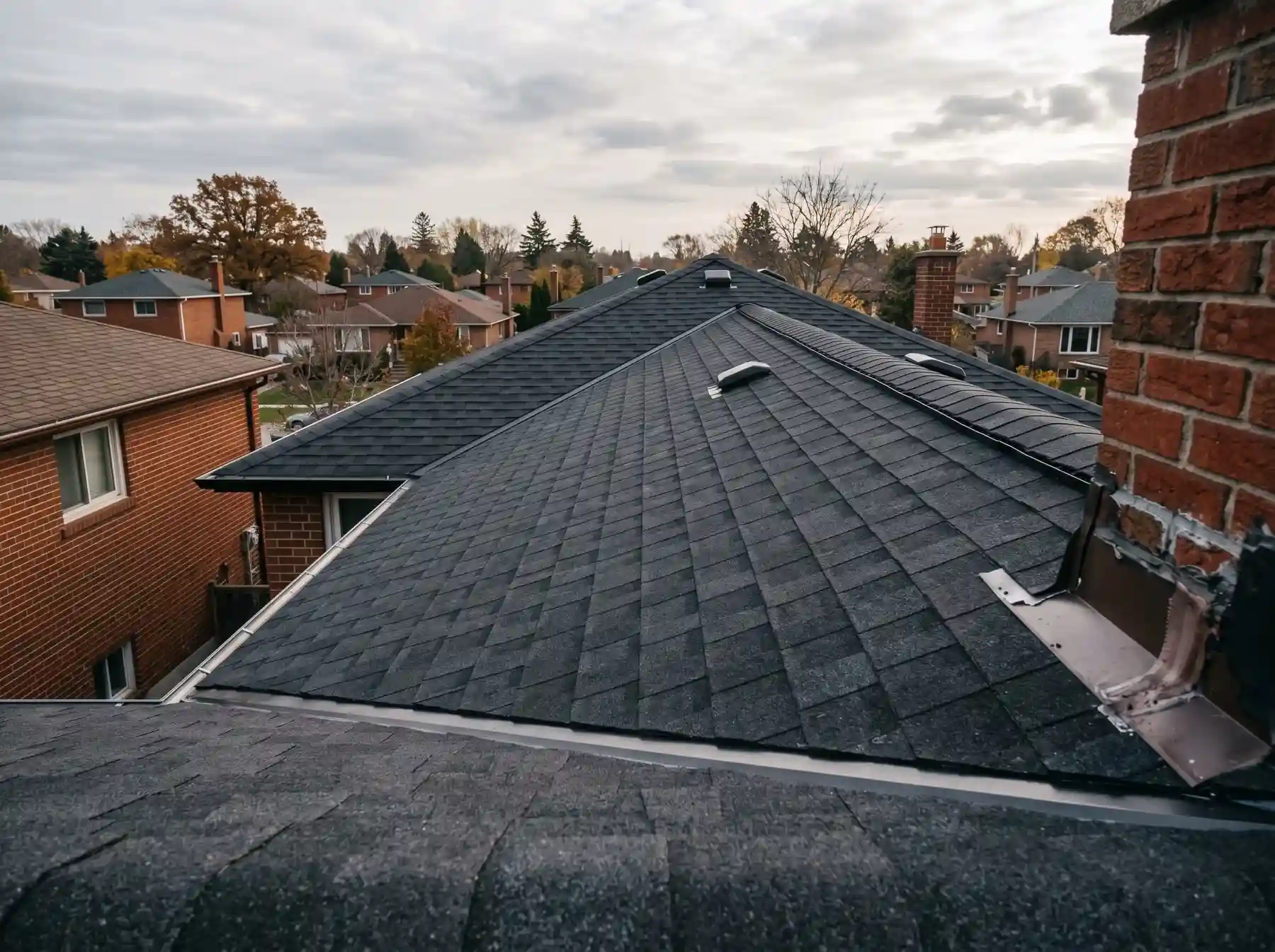
The email says roof replacement, special assessment, payment due. The amount is substantial, and your ceiling has never leaked. The useful first step is to understand the corporation's work and funding decision, not whether your own unit has a stain. A shared roof can need replacement before every household sees damage.
In Ontario, the Condominium Authority explains special assessments as additional charges when the corporation needs funds for expenses such as major repairs. They may be payable at once or in instalments. An assessment can create a payment obligation even while an owner has questions about the project.
At a townhouse kitchen table, one owner says the roof above her unit is fine. Her partner points to the assessment total. Dave brings them back to the scope drawing: "Which buildings are in this contract?" The notice has made everyone think about their own ceiling. The drawing makes the shared project visible again.
Separate the Roof Decision From the Funding Decision
Ask for the explanation supporting replacement: condition assessment, affected roof areas, alternatives considered and the approved scope. Then ask why the reserve fund and planned contributions do not meet the need. Those are connected questions with different evidence.
Imagine a townhouse corporation where most roofs were expected to last several more years, but repeated leaks and investigation reveal an earlier replacement need. Another corporation may be replacing on schedule while prices or the assumed scope have changed. Both can produce a shortfall. The right questions depend on which occurred.
A statement that the roof is old is less informative than a report describing repairable defects, widespread deterioration and the consequences of delay. Equally, a large reserve balance alone does not show spare money: other common elements may need it soon. Our reserve-study reading guide follows that wider picture.
The first instinct is to divide the total by the number of houses. The calculator gives a confident answer immediately. Unfortunately, it has not read the declaration. They put that number aside and request the actual allocation used in the notice.
Read the Assessment From Scope to Unit Share
Condition report and defined replacement scope.
Project evidence
Condition report and defined replacement scope.
Funding gap
Reserve commitments and the additional amount required.
Unit allocation
Applicable share and the calculation on the notice.
Payment and delivery
Due dates, project contacts and completion reporting.
Check How Your Share Was Calculated
Obtain the assessment notice and the basis used to allocate costs. Do not divide the project price by the number of front doors unless that is actually how the governing documents allocate the relevant expense.
Ask management to identify your unit's applicable share and show the calculation. For a purely illustrative calculation, a $200,000 funding requirement allocated at one percent would produce $2,000. That arithmetic says nothing about the appropriate allocation for your corporation; the documents determine the percentage and the decision determines the amount being allocated.
Check whether the notice covers the entire roof contract, only a funding gap, professional fees, taxes or a contingency. It should be possible to distinguish the project budget from the amount being collected now. If the scope changes, ask how owners will receive revised information.
Make the Payment Terms Explicit
Confirm each due date, accepted method and the process for discussing a payment difficulty. Raising a question does not automatically suspend a due date. CAO warns that unpaid assessments can lead to a lien against the unit, so obtain timely advice if you dispute the charge or cannot meet it.
Keep your questions concise: what document authorises the allocation, what amount applies to this unit, and what dates govern payment? If a response remains unclear, ask for the precise missing record. A general complaint about rising condo fees is less likely to resolve the calculation.
Once the payment explanation is clear, the owner asks the question that will matter on Monday morning: where do the patio furniture and dog go when this section starts? Pat adds the site contact to the same folder. A funding decision still turns into a noisy construction day at somebody's back door.
Follow the Work After the Notice
Owners also need practical information: roof access, noise, protection of patios, temporary weather protection and how to report water during construction. Ask for the project contact and the method of notifying occupants before work reaches their section.
A completion update should identify what was installed, any outstanding work and how warranty records will be retained. The corporation may hold the main file, while you keep notices affecting your unit. For an active leak, use the separate condominium repair-responsibility guide; paying an assessment does not itself resolve interior restoration or insurance questions.
The notice should leave you able to explain three things: why the work is needed, why this funding is needed and how your own payment was determined. That is a reasonable standard for a very expensive email.