
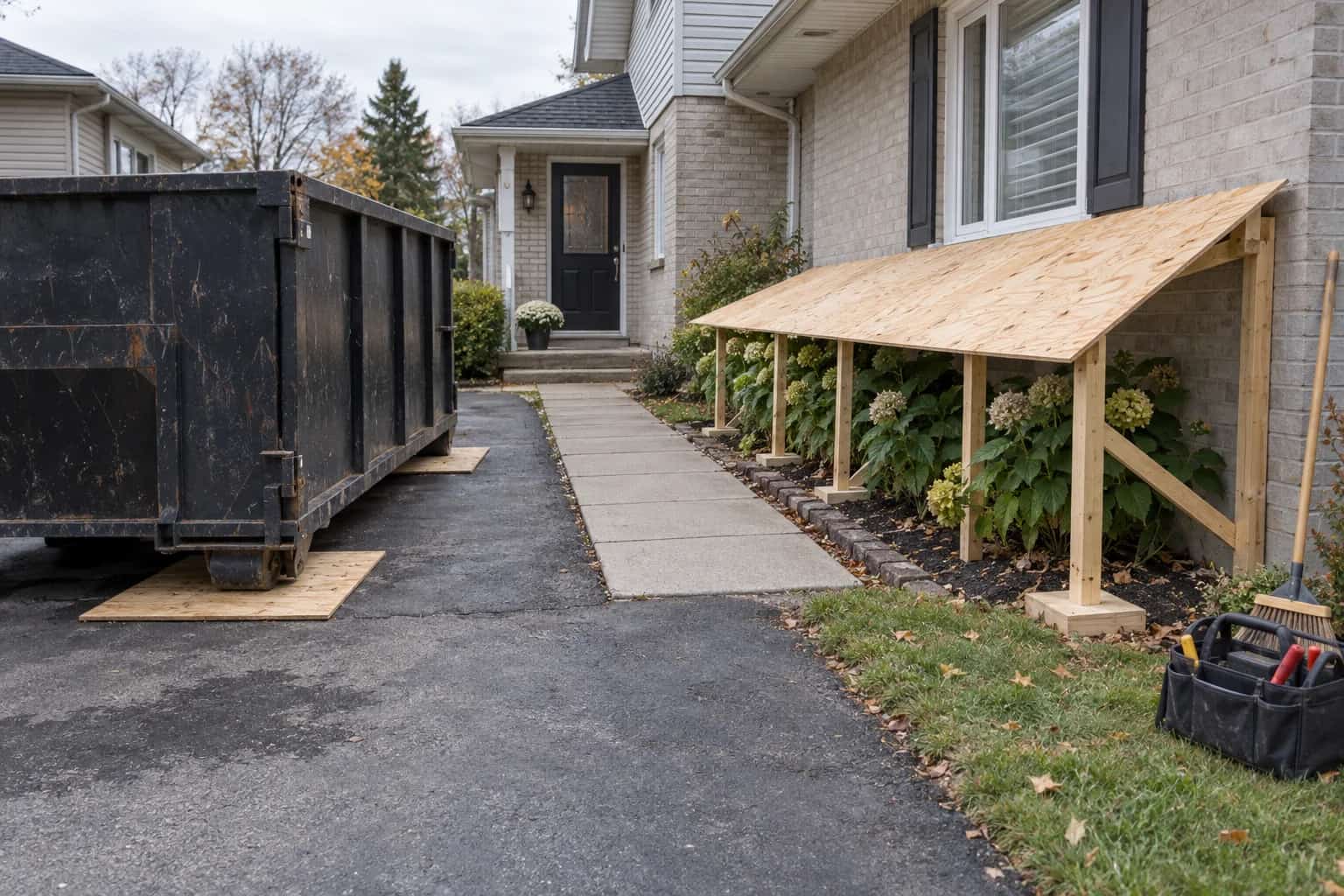
The tenant has moved the dining table for the roofer. The attic hatch is in a different room, and nobody has arranged access. Dave can see the stain; he cannot see the roof space he came to assess. A rental-property repair needs one person to join up the appointment, access and follow-up.
Establish the required access before arranging entry, and give occupants a clear reporting route. Active leakage, electrical contact or a bulging ceiling needs the appropriate prompt safety response.
For an active leak, collect the room, time, weather and photographs from a safe position. Ask whether water is near electrical equipment or whether a ceiling is bulging. Urgent safety concerns need an immediate appropriate response, not a place at the bottom of a routine maintenance list.
Know What Access the Contractor Needs
A roofer may need to inspect the attic, photograph an interior stain or return after rainfall. Establish those needs before sending a notice. The exterior appointment does not automatically settle entry into a tenant's unit.
Ontario's Residential Tenancies Act sets out landlord maintenance duties and entry rules. For qualifying non-emergency entry, the usual written-notice route requires at least 24 hours' notice, stating the reason, date and a time between 8 a.m. and 8 p.m. Emergency and other permitted entry situations have their own provisions. Apply the rule that fits the actual circumstances.
Do not treat every roof appointment as an emergency to bypass planning. Equally, do not delay a genuine emergency because the ordinary appointment process is inconvenient. Obtain specific advice if the property or tenancy arrangement raises uncertainty.
Before relying on residential coverage, check the warranty terms for rental or corporate ownership against the named owner and property use.
A Helpful Message Is Short and Practical
Pat's planned-work message tells occupants the date, expected noise, which entrance remains usable, any parking change and whom to contact if the plan changes. Add the separate unit-entry arrangements where applicable. A long technical description of the roof is less useful than knowing whether the side door will be available at school pickup.
After an active leak, close the loop with an equally clear update: whether water entry has been addressed, whether drying or interior repair remains and when the next visit is expected. Silence after the roof crew leaves can make an unfinished ceiling look like a forgotten repair.
Coordinate an Occupied-Home Repair
The repair needs a reporting route, appropriate entry arrangements and interior follow-up.
Report
Collect the tenant's location, timing and photographs of the problem.
Arrange entry
Apply the proper notice or emergency process for the required access.
Repair
Coordinate exterior work, interior protection and drying.
Follow up
Confirm completion and check whether the original symptom returns.
Explain What Occupants Will Experience
Ask the contractor to keep debris and equipment away from occupied routes and to explain any temporary restrictions. Delivery, tear-off and cleanup may create different conditions during the day. The plan should account for people coming home while the crew is still working.
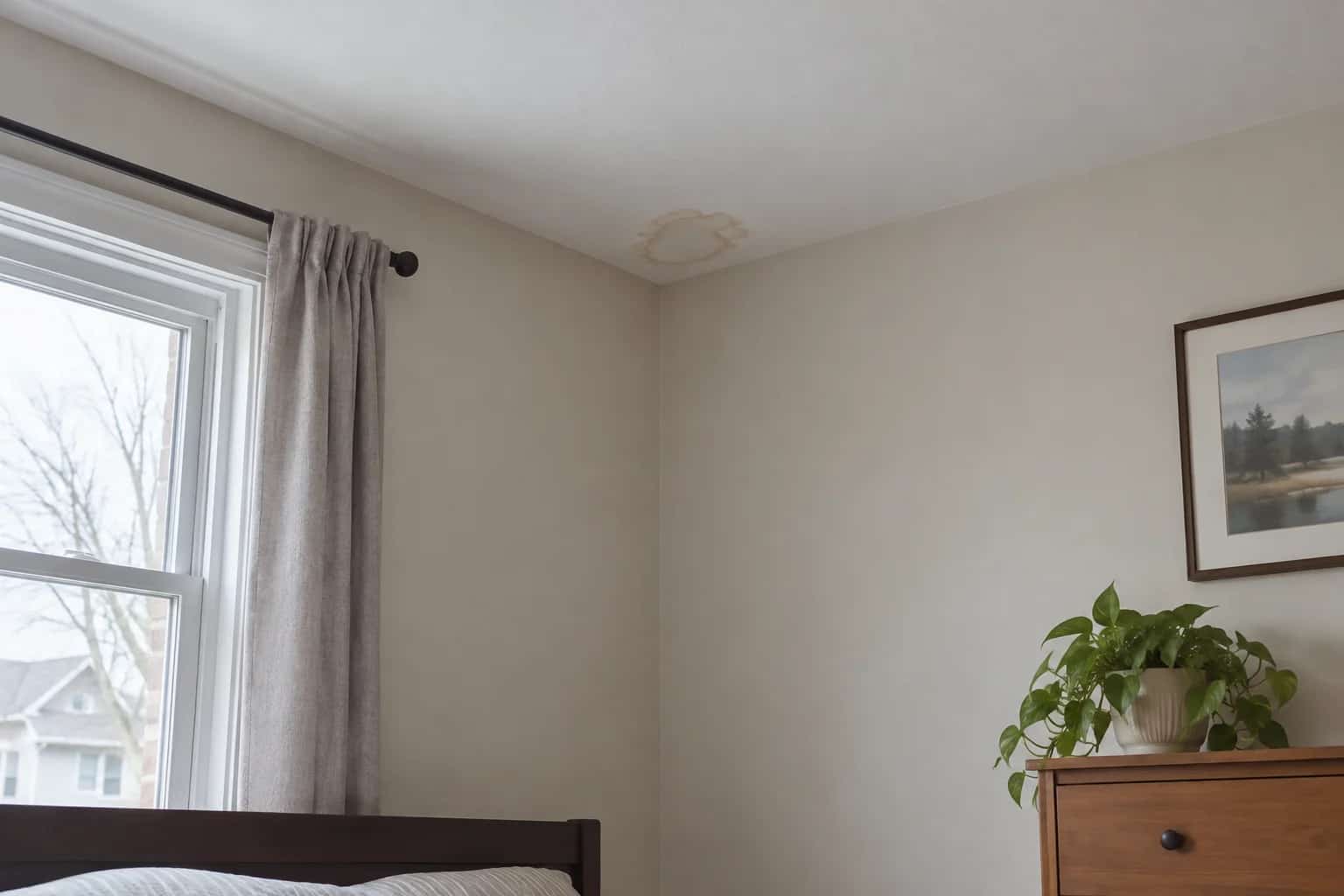
A Dry Roof Does Not Finish a Wet Ceiling
Stopping water entry is not always the last task. Damaged insulation, wet materials and ceiling finishes may need further assessment, drying or repair. Record who is responsible for that follow-up and when it will happen.
Ask the tenant to report recurrence, but do not make them diagnose the roof or enter an attic. A photograph of a returning stain and the time it appeared are useful enough. Our leak-tracing article explains why the visible stain may be some distance from the roof opening.
When the exterior work is complete, keep the wet-material and ceiling follow-up visible. "Roof fixed" is a frustrating message to receive while a stain still hangs over your dinner table. Name the next task and who is arranging it.