
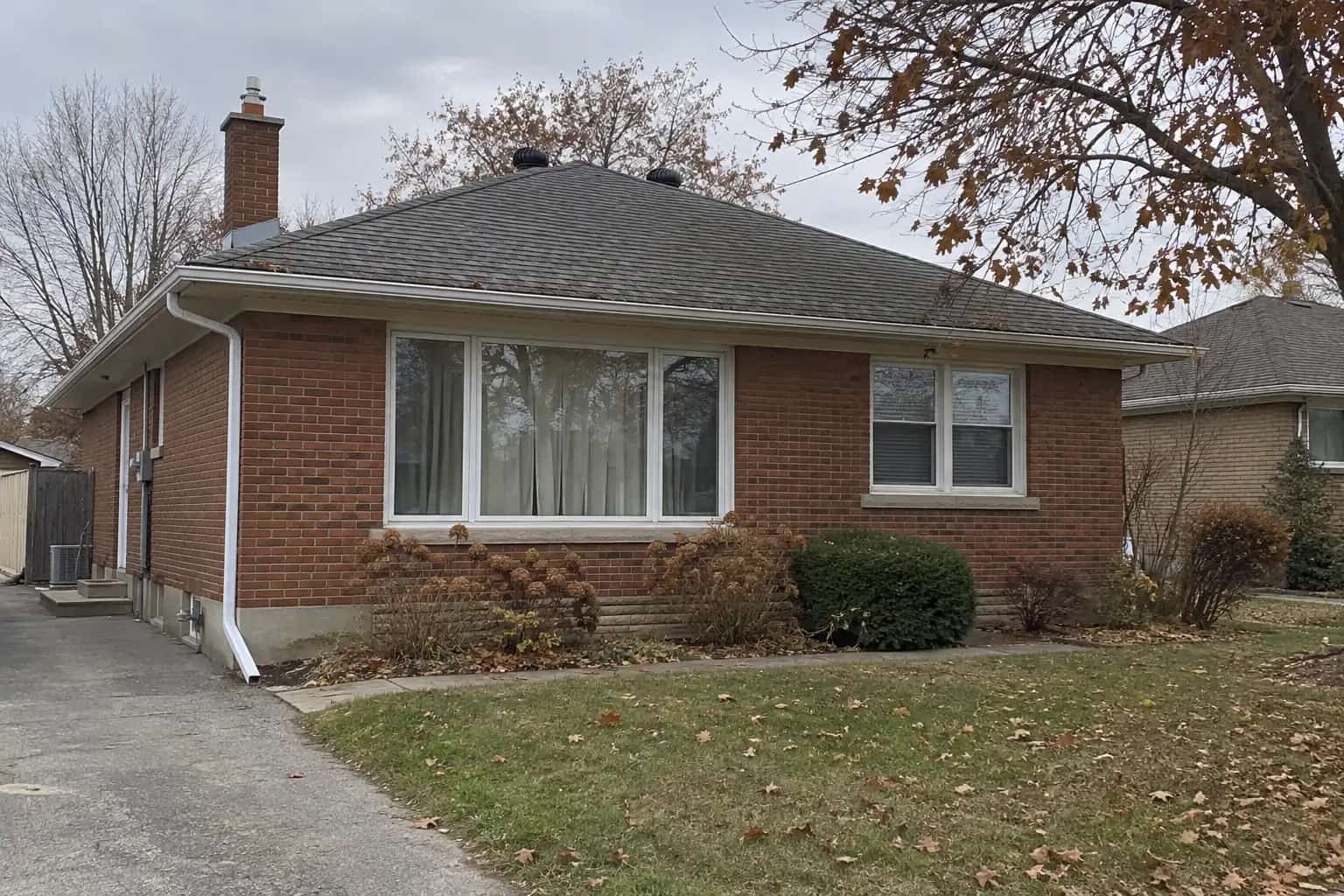
The back garden has two steps, the path gets slippery, and the ladder has not left the shed in years. None of that disqualifies you from looking after the roof. A useful maintenance plan fits the resident, with comfortable observation points, a named contact and findings brought back to you.
We start with what you can see during ordinary life: the front eave from the window, the downspout beside the door, the hallway ceiling. The hidden rear valley belongs on the contractor's list. It does not belong on your obstacle course.
Choose a Few Useful Observation Points
From a stable, accessible position, look for obvious changes at roof edges: a displaced gutter, hanging trim, fallen shingle pieces or branches resting on the roof. Indoors, notice new ceiling marks or recurring moisture around upper-floor features.
Do not lean from an upper window, step onto a porch roof or walk over icy ground to improve the view. If a roof area is hidden, mark it as needing professional inspection. Binoculars or a zoomed photograph can help with visible details, but neither proves the condition of concealed materials.
During rain, observe drainage only from a safe sheltered place if convenient. Note where water overflows or collects. There is no need to stand beneath an overflowing gutter to confirm that it is overflowing.
A Routine That Fits the Resident
The resident chooses the viewpoints and approval route.
Comfortable viewpoint
Use a window or stable accessible place; assign unseen roof areas to the contractor.
One change
Record location, timing and what changed rather than trying to diagnose it.
Named authority
A helper may arrange the visit; the owner keeps the agreed approval decisions.
Closed task
Keep the finding, completed work and next action together.
Make the Routine Small Enough to Use
A simple roof record can hold installation dates, previous repairs and the next recommended visit. A paper folder is fine if that is easier to use than an app.
Dave brings the photographs to the kitchen table. The owner has a hearing aid, and a conversation shouted down from the eaves is going nowhere. Mike moves the appointment indoors and puts the rear corner on the screen. "This is the bit we need to decide about. The other mark is old."
Her daughter offers to take over the calls. "You can book them," the owner says. "I'm still choosing." Fair enough. A useful maintenance plan preserves that division: help with access and arrangements, clear evidence for the person making the decisions.
A One-Page Plan You Can Actually Use
Write these six lines on paper or in a shared note:
- My viewpoints: living-room window for the front eave; back-door window for the downspout; upstairs hallway ceiling.
- My known blind spot: rear valley above the addition. Include it in the inspection scope.
- My first contact: named contractor and number, with a backup if unavailable.
- My helper's role: send photographs and arrange appointments with permission; the owner approves non-emergency work.
- My record: date, location, visible change and the contractor's written finding.
- My next action: specific agreed work or next review, with the responsible person named.
Keep urgent hazards separate from the ordinary routine. A hanging gutter over the entrance, bulging ceiling or water at electrical equipment calls for prompt help and keeping clear, not a better photograph. For an ordinary new stain, a useful message is: "The hallway mark widened after Tuesday's rain; the previous photo is attached." You have supplied the change without having to supply the diagnosis.

The Contractor Should Bring the Findings to You
When booking a visit, explain that you want findings and photographs you can review from the ground. Ask which areas will be inspected, what access is required and whether minor work needs separate approval. Avoid a vague recurring service whose actual tasks are never listed.
Ontario's renovation guidance is a useful reference for written repair agreements. Keep the scope and price clear, and take time to understand recommendations before authorising non-emergency work.
After a visit, request a short explanation of what was found, what was completed and what remains. A marked photograph is more helpful than being told to climb up and have a look. If drone imagery is offered, understand its inspection limits.
The useful plan is the one you can keep using comfortably. Let the contractor do the reaching and bring back the evidence; your job is deciding what happens next.