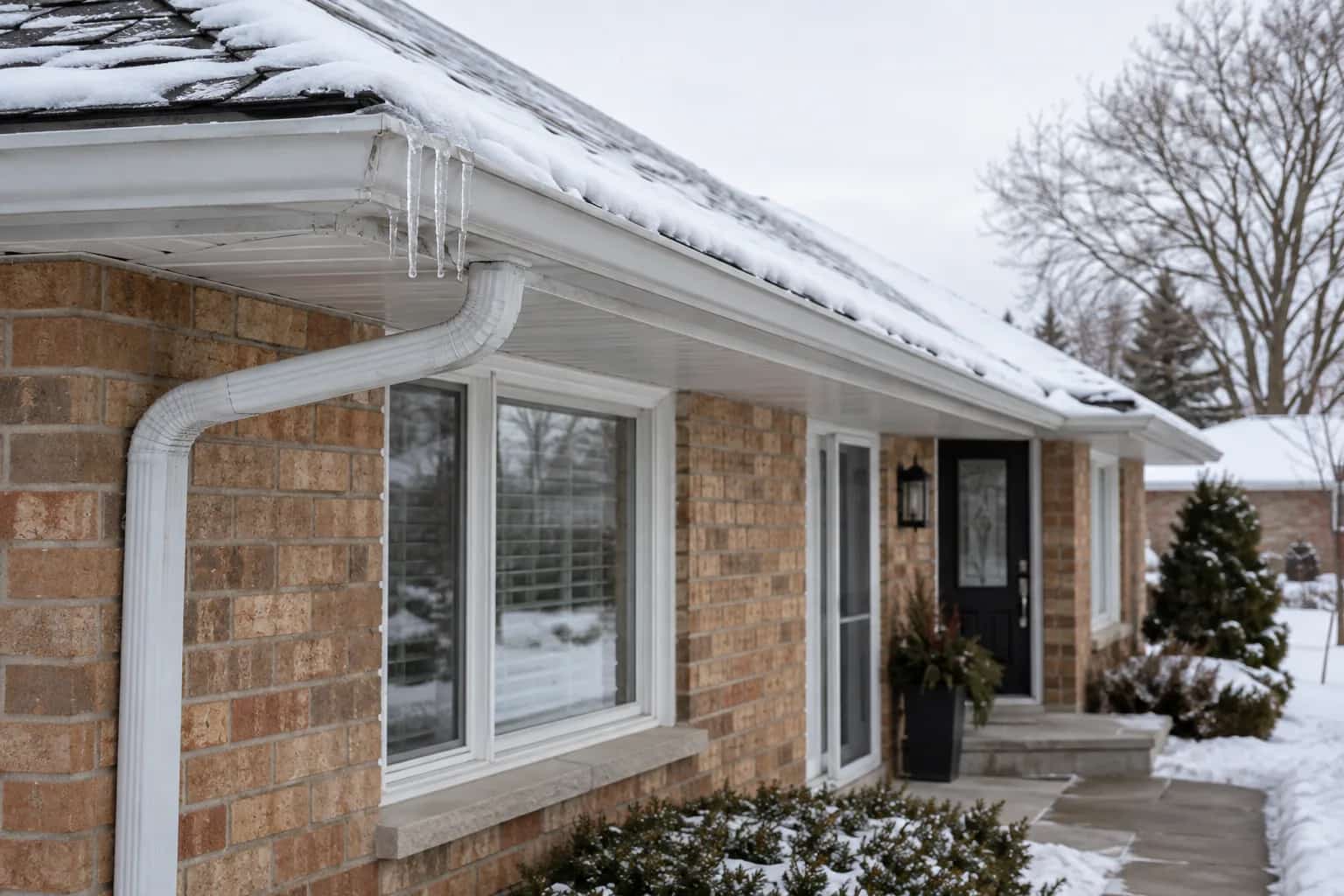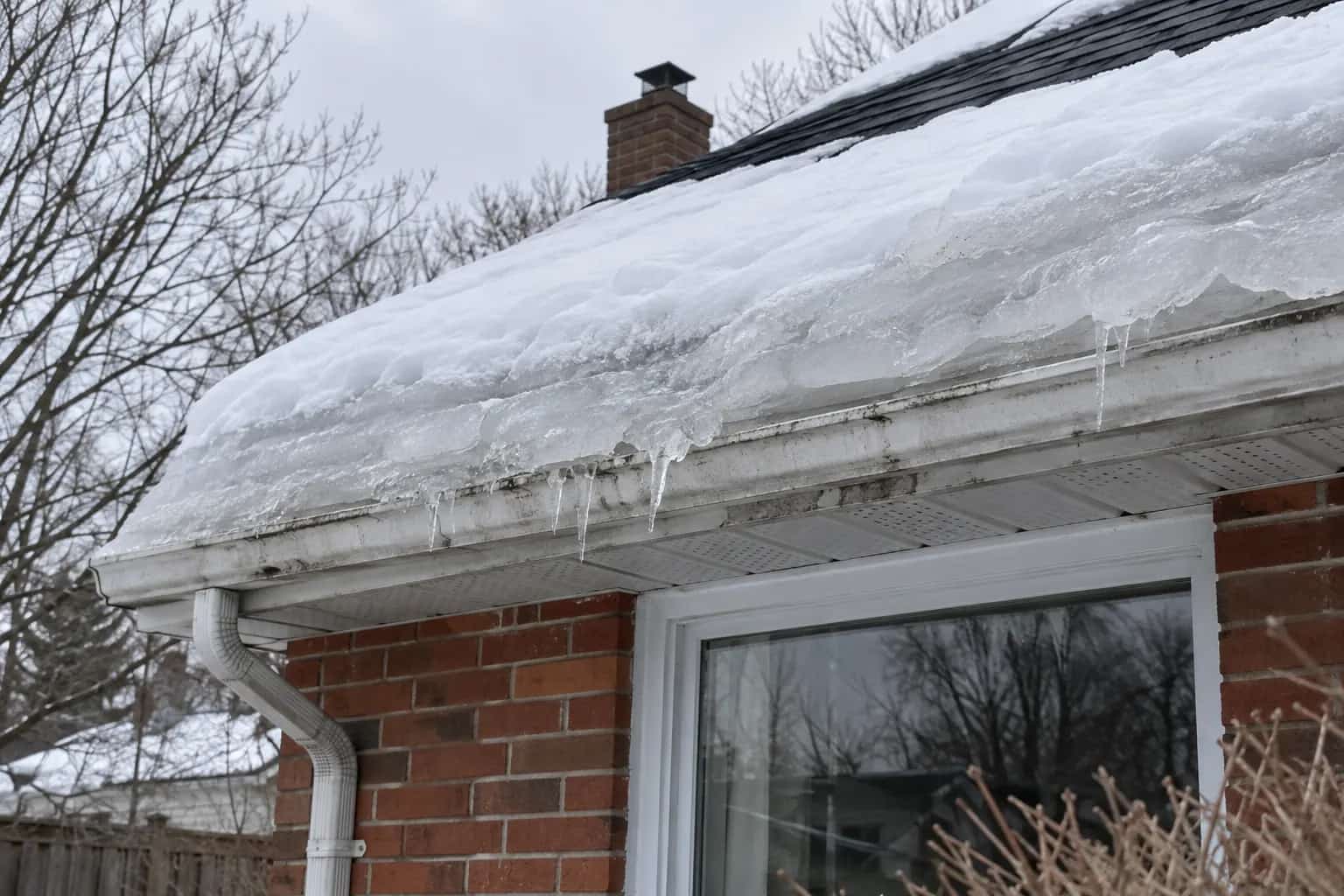
The snow at the garage eave looks reachable. The patch beside it is a little farther away. Before adding another length to the roof-rake handle, look at where you would stand and where the snow would land.
Stop when the work needs a ladder, a snowbank, an approach to wiring or a position beneath falling material. More reach does not repair any of those conditions. The tool and the roof must suit each other; structural concerns, ice and inaccessible areas need appropriate professional help, not a longer pole.
Reach is only one condition
The tool manufacturer's instructions matter: intended roof surfaces, operating position and limits differ. A rake suited to one low eave may catch on another roof's skylight, vent, gutter or snow-retention hardware. Frozen material is not loose snow, and forcing a tool against it can damage the roof or bring down more than expected.
CNESST's roof-removal guidance identifies falls, electrical contact and burial among the risks. Its advice to plan the work and control the area below is useful here; its Quebec workplace rules should not be read as Ontario homeowner instructions.
A service wire can cross a side yard below a white sky, with snow-covered branches obscuring its route. Inspect the surroundings from the ground before carrying a long tool upright. Never assume a line is harmless because it looks insulated.
If storm damage has brought down a line, stay away and call the utility or 911. Ontario's Electrical Safety Authority says to assume downed lines are live and keep at least 10 metres away. A roof rake is not a way to move a branch off a wire.
Three Situations Where More Reach Is the Wrong Answer
- The pole would pass near a service wire: do not use it there. A longer pole expands the reach of the hazard as well as the tool.
- You would stand on a snowbank to reach: the intended ground position has been lost. Melting or shifting snow is not a platform.
- The snow would land on your position or the only open path: the release zone and occupied space overlap. Move people away and arrange another method with a qualified contractor.
These examples explain why the safe answer cannot be expressed as one maximum roof height. A drawing should show the standing position, full pole movement, electrical route and possible fall area together. It is a planning aid, not a calculation of a universally safe distance.
When booking help, send the roof shape and access constraints from safe ground. Include the entrance that must stay usable, not just the snow you want removed. If there is creaking, new sagging or another concern about structural distress, use urgent assessment rather than experimenting with a rake to see whether the roof improves.
Pat watches the owner point to a strip the rake cannot reach from the clear standing area. The proposed solution is a little farther up the bank, with a little more handle extension. Dave shakes his head. "The snow hasn't moved. We've just made the person less steady."
They stop treating reach as the target. The useful limits are the footing, overhead hazards, escape space and tool instructions. A strip left alone pending suitable help is a better result than turning a maintenance attempt into an emergency.
Reach Does Not Establish a Safe Position
The tool must fit the position, surroundings and roof condition.
Stable ground
No ladder or snowbank to gain extra reach.
Release zone
The operator and other people must remain clear of falling material.
Electrical route
Do not use a long tool where it can approach overhead wiring.
Roof condition
Structural concern or inaccessible ice needs appropriate professional help.
A rake cannot diagnose an ice dam
Snow removal is sometimes discussed as if it cures every winter roof issue. It does not repair a flashing leak, establish structural capacity or correct warm air escaping into an attic.
If there are signs of possible snow-load distress, the first step is an urgent assessment and safe occupancy decision. If the issue is recurrent ice dams, removal may be temporary help while the underlying heat and drainage conditions are investigated.
The unreachable strip can stay unreachable until there is a suitable plan. Keeping a roof rake on the ground is part of using it; knowing when to put it away is another.