
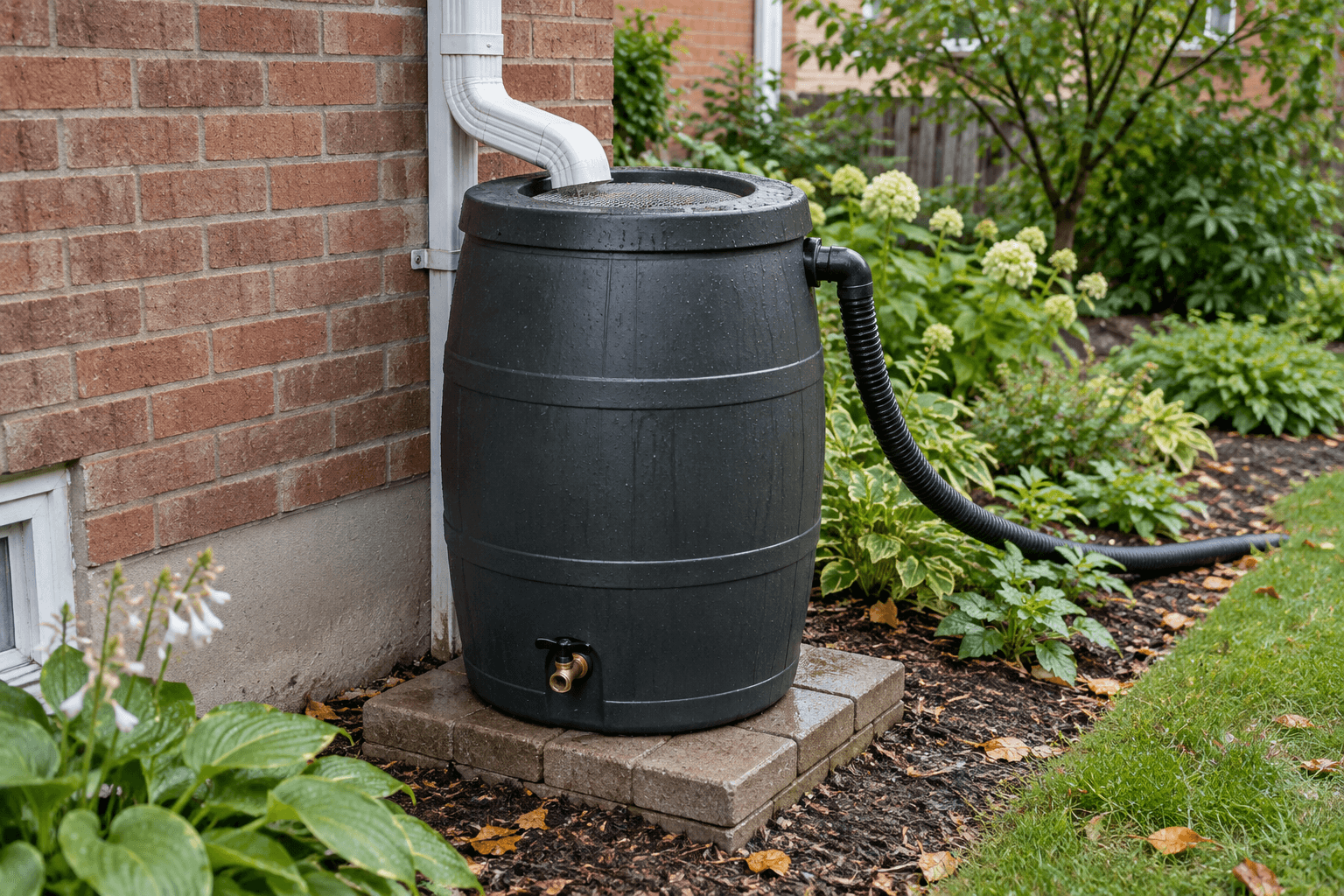
A metal roof, a clean gutter and a closed tank can look like a sensible cottage water supply. None of those observations tells you whether the water is safe to drink.
Do not use untreated roof runoff for drinking or food preparation. If the intention is to create a potable supply, speak with the local public health unit and a qualified water-system professional before buying collection or treatment equipment. A garden-water arrangement is a different project, even when the tank is large.
Start by naming the water's intended use
Write down every proposed destination: ornamental garden, toilet, laundry, shower, kitchen tap or drinking bottle. "Household water" is too vague for a design decision. A visitor filling a kettle should not need to know which valve somebody changed last weekend.
Ottawa Public Health's cistern guidance warns that roof-collected water can be contaminated, including by bird droppings, and does not recommend that supply for drinking or bathing. Take your actual proposal to the health unit serving the cottage; do not assume another province's off-grid installation or a supplier's general description establishes suitability in Ontario.
For toilet supply, our indoor non-potable guide covers the separate plumbing question. It is not a halfway step that automatically makes a kitchen connection acceptable later.
Four different questions
A good answer to one does not settle the others.
Source
What roofing, deposits and collection materials affect the water?
Treatment
What contaminants does the specified system address, and how is it maintained?
Testing
Which tests, sampling points and results support the intended use?
Plumbing
How is drinking-water plumbing protected from non-potable water?
The collection route includes more than the roof panels
List the covering, coatings, flashings, gutters, pipework and storage materials that touch the water. Include roof treatments and recent work. A claim about one roofing product does not describe the complete route or everything deposited on it between showers.
A mesh screen can keep leaves out while smaller contaminants pass through. An initial-flow diversion device may be part of a designed system, but its presence alone is not evidence that the remaining water is potable. Ask the designer to explain what each proposed treatment stage addresses and what it does not.
This is particularly useful when comparing two quotes. A proposal described only as "filter and UV" leaves questions about source suitability, equipment performance, pretreatment, alarms, maintenance and testing. Request a complete supply design and operating plan rather than trying to fill the gaps with another online component.

Understand what a test actually tested
Public Health Ontario's private drinking-water service tests for specified bacterial indicators. It explicitly states that these samples are not tested for other contaminants, including chemicals, and may still be unsafe despite an acceptable bacterial result.
Ask the health unit which tests are appropriate for the source, how the sample should be collected and which laboratory should receive it. A roof-runoff proposal may need information beyond an ordinary well-water result. Keep the actual report, sampling location and date rather than a handwritten note saying "water passed."
A useful comparison is the sample tap itself. Was the sample taken from raw storage, after treatment, or from the kitchen outlet? Those results answer different questions. Have the professional specify the sampling points and response to an adverse result, an alarm or an interruption in treatment.
Do not treat boiling as a universal answer to an unknown mixture of possible contaminants. Use a known safe drinking-water source while the proposed supply is being assessed.
Keep drinking-water plumbing protected
Ontario's non-potable rainwater provisions distinguish permitted uses and require a designed system. They do not turn a non-potable tank into a drinking-water supply. Have the plumbing professional confirm the applicable requirements and protection against cross-connections.
Avoid an improvised hose or changeover arrangement between the tank and drinking-water plumbing. Identify outlets and pipework as required by the approved design, and make the ordinary operating instructions clear to guests and future owners.
Storage needs attention too. Our cistern guide covers capacity, access and overflow. A larger tank changes how much water is available, not the quality standard the intended use must meet.
Plan the service visit and the next reroof
Ask who will maintain treatment equipment, respond to alarms and arrange testing when the cottage is vacant or closed for winter. Establish how the supply is taken out of service and returned to use. Do not enter a tank for inspection or cleaning.
Tell the roofing contractor about collection before cleaning, repairs or replacement. The water-system professional should decide when collection is isolated and what checks are needed before it resumes. Keep the roof products and service history with the water-system records.
Roof runoff can be useful without supplying a drinking tap. Choose the intended use first, then judge whether the complete system and its ongoing care make sense for that cottage.