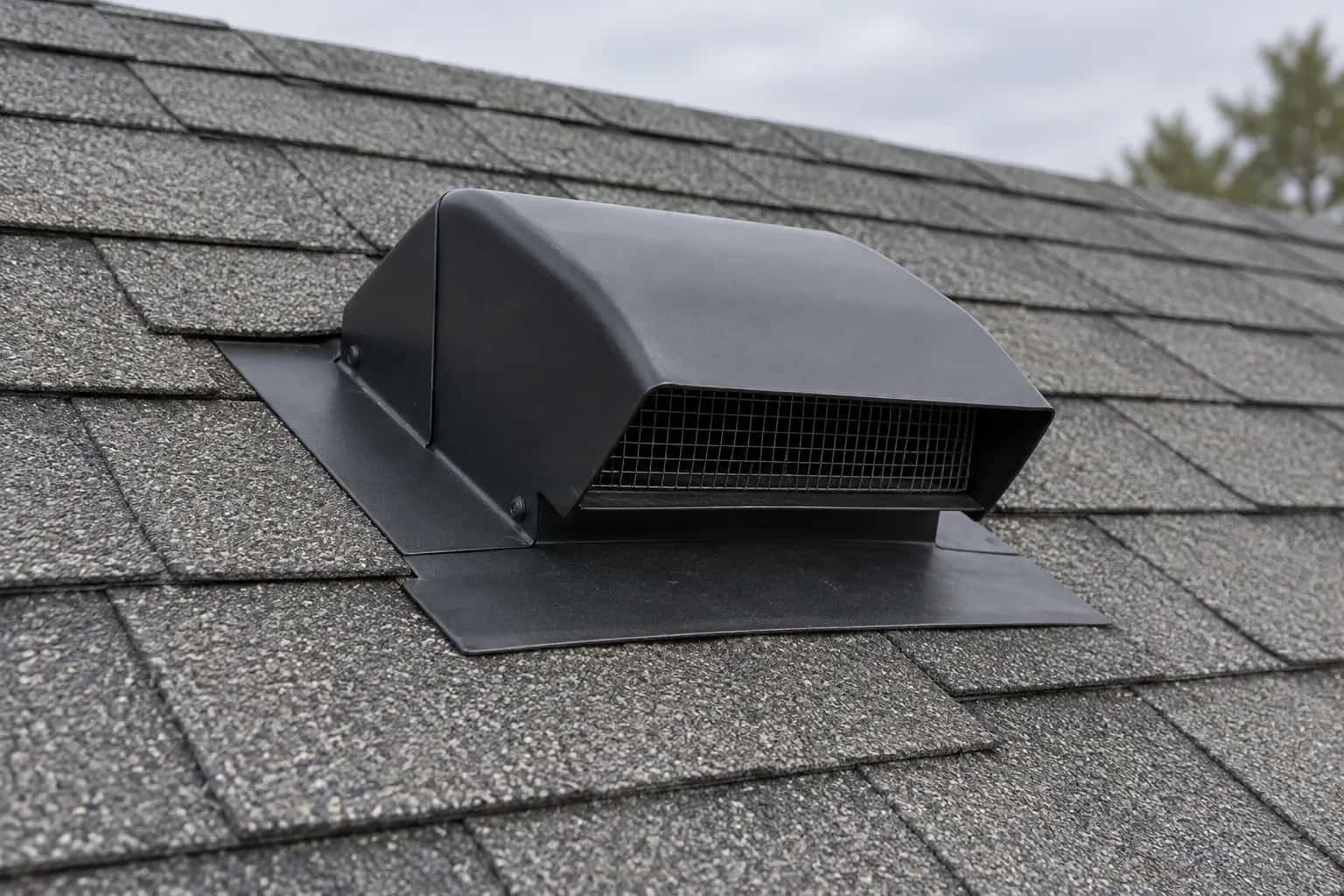
The black hood is new, the stain is back, and the homeowner has the invoice to prove the first part. Dave asks what happened to the wider base beneath it. Replacing the visible cap can leave the difficult uphill connection exactly where it was.
The vent cap looks intact from the driveway, but water still appears near it after rain. The failure may be around the wide base hidden among the shingles, not through the top you can see.
Separate three possibilities: water around the flashing base, water through a damaged vent body, and moisture from a duct below. They occupy the same small area of roof but need different repairs.
Identify the Vent's Job
A static attic vent, bathroom exhaust outlet and combustion vent are not interchangeable. Their openings, connections and safety requirements differ. Take a photograph and have the professional identify the component before anyone proposes sealing it.
Blocking an opening because it appears to admit weather can create another problem. In particular, a combustion vent needs the appropriate qualified trade involved. A roof leak is not permission to modify an appliance vent.
The US Department of Energy roof-vent job aid illustrates the connection between a vent installation and the surrounding roof materials. The exact product instructions remain the reference for your vent.
From Upslope Shingles to Lower Apron
Roofing above must deliver water over the protected base connection. Distinguish roof-side entry from water inside the duct.
Upper lap
Roofing above must deliver water over the protected base connection.
Side integration
Inspect side laps, fasteners and product-specific sealing.
Lower release
The apron must discharge onto the roof below.
Separate source
Distinguish roof-side entry from water inside the duct.
Follow Water Across the Base
A static box vent or exhaust hood has a broad base around the opening. On a typical shingle detail, the upslope roofing sheds water onto the upper part of that base, side integration keeps the junction protected and the lower apron releases onto the roofing below. The exact laps, underlayment and sealant locations come from the vent and roof-covering instructions.
The US Department of Energy's roof-vent job aid shows roof-vent installation as an integrated detail, not a cap placed over a hole. Use it to understand the relationship, then obtain the instructions for the actual Canadian installation. A sealant bead around every visible edge is not a substitute for correct laps and may obstruct intended drainage.
Back at the new hood, an old distorted base would explain why the visible improvement has not changed the uphill water route. Ask the inspector to photograph the base condition, surrounding shingle laps, fasteners and any deteriorated support before proposing another surface patch.
If the base is dry but the duct is wet, investigate the indoor route rather than repeatedly changing the hood. Water inside a duct and water crossing a roof flange need different repairs.
A Vent Still Has to Vent
A cracked flange needs a compatible roofing correction; a disconnected duct needs its connection restored. A weather problem through the body may call for the right replacement product. One can coexist with another.
What they do not need is indiscriminate sealing of every opening. The finished component must keep doing its intended job. Keep the exterior and accessible interior findings together, then check the original symptom under the conditions that caused it.