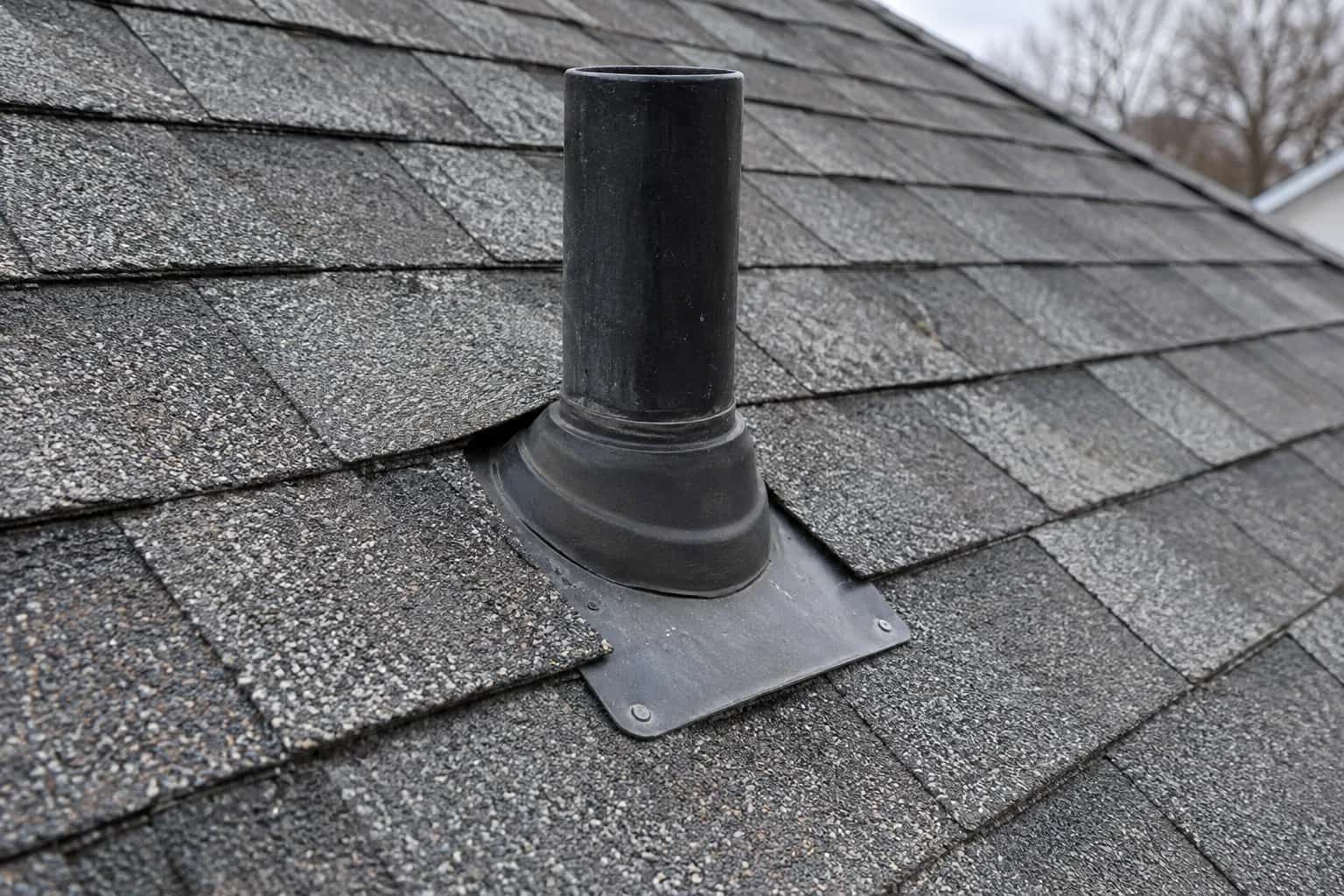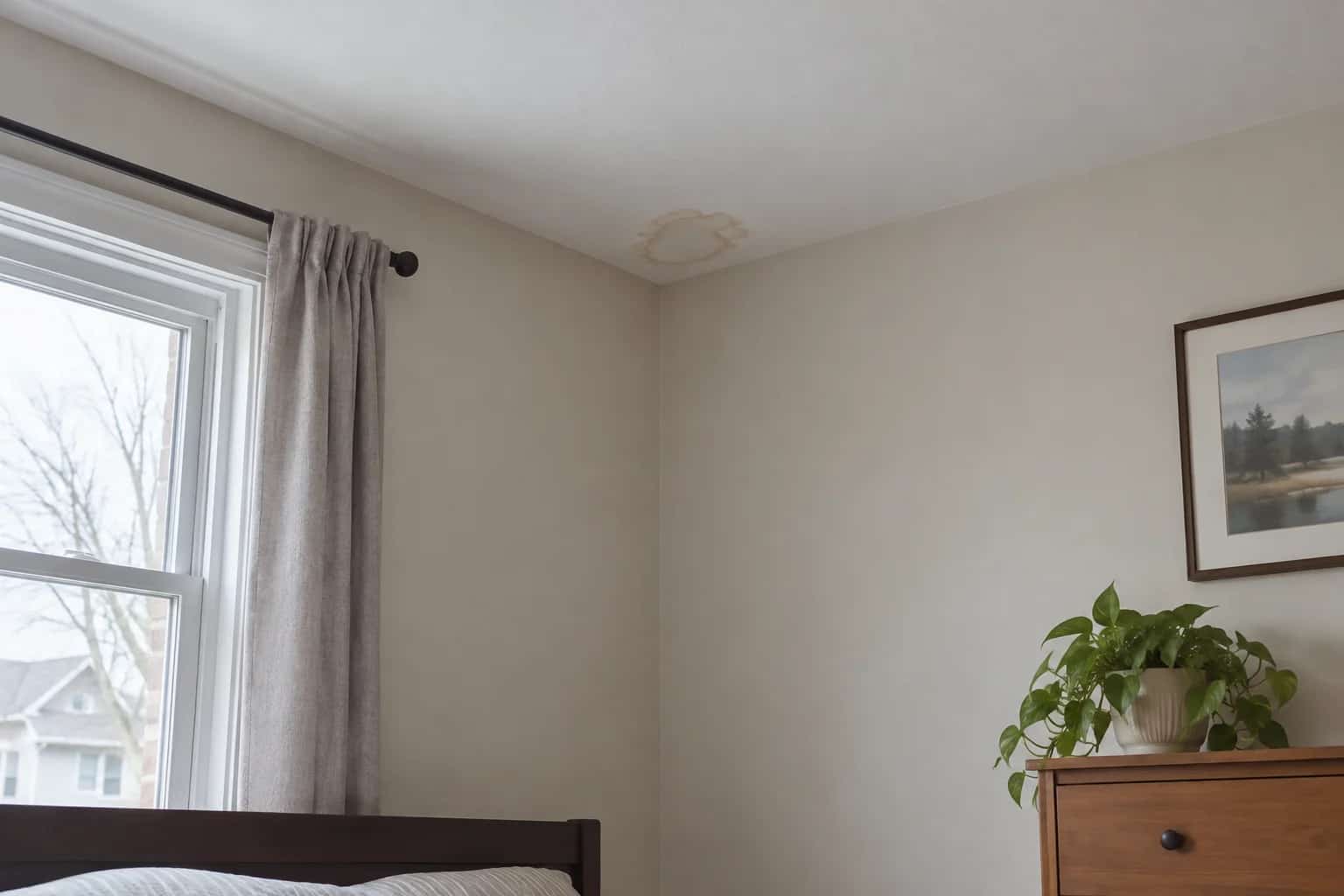
Rain appears beside the plumbing pipe, and a close-up reveals a cracked rubber collar. At last, something obvious. Before ordering only a collar repair, ask for the wider photograph.
The collar seals around the pipe; the flashing base connects it to the roof's drainage layers. Either can fail independently. The pipe's open top is intentional and must remain open. A sound roof with a failed component may need local work, but the repair has to address the connection that actually admits water.
A Good Collar Can Sit on a Bad Base
IKO's flashing guide explains roof-penetration protection. Indoor wetness beside a stack helps locate the investigation, but plumbing defects and condensation remain possible if the timing does not follow rain.
Collar and Flange Are Different Connections
A collar accessory does not rebuild a failed base.
Open pipe
The plumbing opening stays unobstructed.
Collar
Seals around the outside of the pipe.
Flange and roof layers
The wider base must join the surrounding water-shedding assembly.
Interior follow-up
Assess wet materials even after the exterior component is corrected.
What a Useful Inspection Shows
Useful findings include the collar's condition, whether the pipe is stable, whether the flange is damaged and whether adjacent shingles can be lifted and reinstated without breaking. Old brittle shingles can make a small component replacement a wider local repair. That is a practical scope issue, not automatic proof that the whole roof has failed.
A replacement collar or repair accessory may be appropriate for certain products and defects. It should match the pipe size, flashing type and manufacturer's intended use. Ask whether the proposed accessory fixes the identified failure or merely covers an area that has not been examined.
The close-up of the split collar looks persuasive. Mike almost has the repair note finished when Dave asks for the photograph with the surrounding shingles in it. The larger view is missing.
Pat gets the base and upslope detail into the inspection. "Rubber's confessed," he says, "but let's check the rest." A collar can fail while the base remains sound, or be the most visible fault in a wider connection problem. The final scope needs to distinguish those possibilities rather than reward the first obvious defect.
Match the Scope to the Failed Connection
A useful repair description names four things: the failed part, the compatible replacement or repair component, the condition of surrounding shingles and how concealed wet material will be assessed. If shingles break when lifted, the local patch may legitimately widen. Ask for the condition photograph that explains the extra work.
Keep plumbing and roofing findings separate. A sound external boot does not exclude a plumbing connection problem inside, and a ceiling-level air seal does not repair rain entry above. If the leak follows cold dry weather rather than rain, pass that timing on before approving an exterior component replacement.
Our sealant guide explains that distinction. After repair, check the wet materials beside the stack too; a tidy new collar does not dry yesterday's insulation.
The new collar should be the end of a confirmed repair, not the beginning of another guess. Follow the original symptom and finish the drying work below it.