

The builder's service team knows about the stain, but nobody can find a warranty claim number. For an Alberta homeowner, that is the first gap to close. Identify the home's warranty provider and submit the issue through its process, while keeping the builder informed. A builder's repair ticket and a warranty claim should not be assumed to be the same record.
First deal with immediate hazards and active damage. Stay away from sagging ceiling materials or wet electrical equipment and obtain suitable urgent help. Collect safe photographs, weather notes and dates; do not climb up to prove where the water entered.
A homeowner opens a search result for the warranty company whose name sounds most familiar. Pat asks for the property record. The provider listed there is different. "The house has already picked this one," he says. They save the correct details before anyone spends an afternoon explaining the stain to the wrong office.
Use the Property Record, Not a Familiar Brand Name
Alberta has multiple warranty providers. The provincial public registry identifies warranty status, provider and commencement date for registered homes. Find the actual policy and its claim instructions. A company with Alberta in its name is not automatically the provider for every Alberta house.
The province's new-home warranty overview sets out the minimum coverage framework, including five-year building-envelope protection. The roof forms part of that envelope. Coverage for labour, systems and structure operates in other categories; the particular defect and policy determine the relevant assessment.
Check the recorded dates before deciding an issue is either covered or too late. A later purchase does not necessarily start new construction-defect coverage. If the property record appears inconsistent with your documents, give the provider both records and ask it to resolve the discrepancy in writing.
Alberta Warranty Reporting From the Property Record
Use the property registry and actual policy.
Identify provider
Use the property registry and actual policy.
Confirm dates
Resolve the recorded commencement and applicable coverage.
Submit evidence
Report location, timing and prior repairs with acknowledgement.
Track the decision
Keep the assessment, repair and review route in one file.
Describe the Defect Without Choosing Its Cause
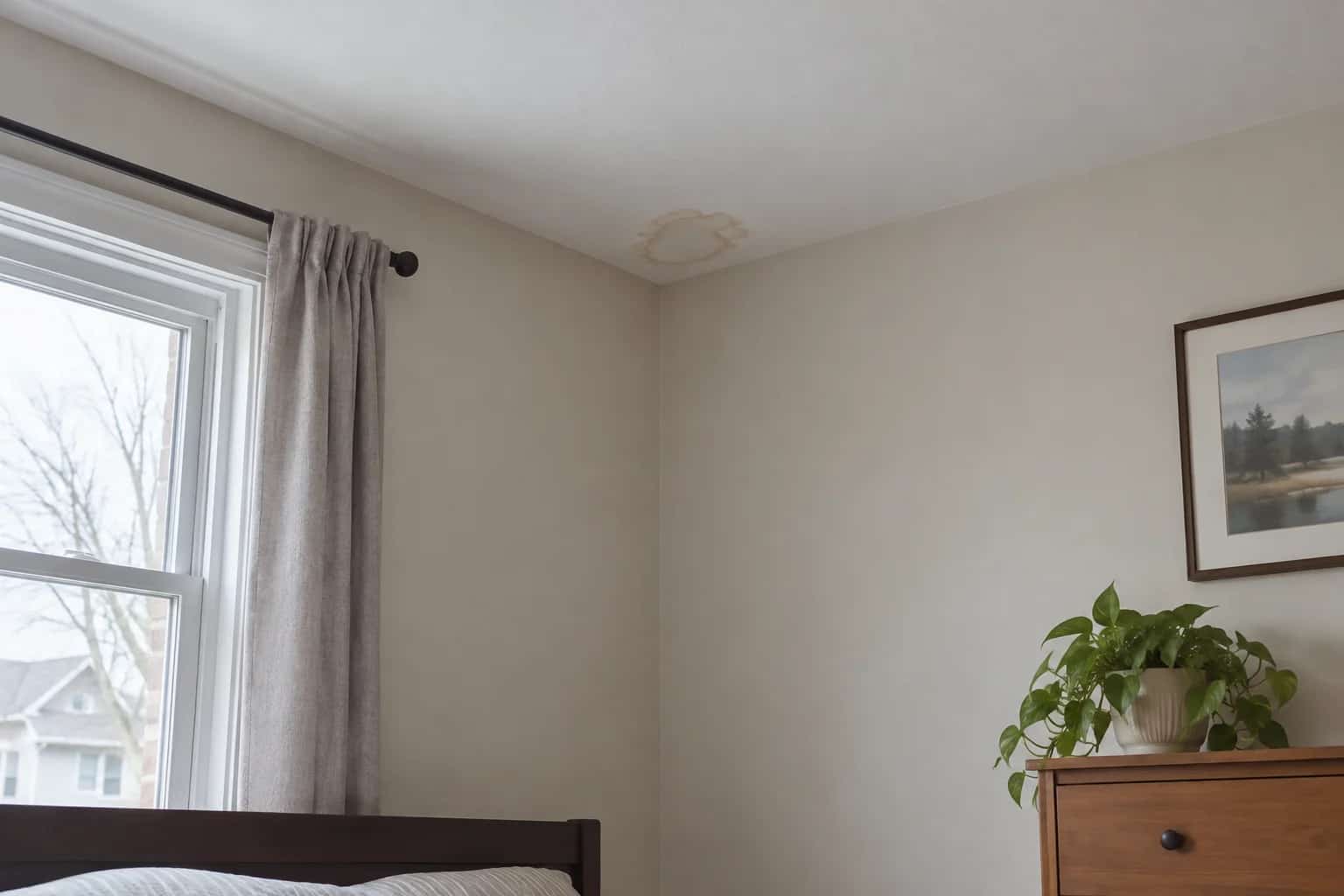
Report what you can observe: water at the bedroom ceiling during rain from a particular direction, recurring dampness after snow melt, or a stain that returns despite an earlier repair. Include the location and chronology. The assessment needs room to distinguish roof entry from condensation or another source.
Suppose a contractor has already sealed a vent base. Save that work order and explain whether the symptom stopped, changed or returned. The claim file should show the progression, not three disconnected messages saying the roof still leaks.
Ask the provider what documents it needs, how to add new evidence and how it confirms receipt. Keep the acknowledgement and assigned reference somewhere both household members can find. A useful file should not depend on the one person who remembers which text thread contains the photographs.
The next report describes a front-roof inspection; the household's photographs show the rear bedroom. That is a specific mismatch worth fixing. Mike marks both locations on the plan. The reply becomes a request to assess the unexamined area, rather than another frustrated paragraph saying nothing has been done.
Who Assesses the Claim?
Alberta's official claims guidance says the warranty provider assesses claims and works with the builder on warrantable defects. It also points homeowners to the Construction Performance Guide and the province's insurance-claims guidance.
Ask for the observed condition, applicable policy basis and proposed next step. If a finding is unclear, identify the specific discrepancy: the report inspected the front slope, but the documented water is below the rear junction; or the repair description does not address wet insulation. Concrete corrections help more than repeating that the result is unacceptable.
For a denied or unresolved claim, request the decision and available review or complaint process in writing. Follow the official route appropriate to the issue rather than assuming that a complaint to a regulator itself authorises repair or extends a deadline. This guide does not set a universal reporting deadline for every policy.
The repair appointment moves, and the homeowner updates the same record instead of starting a new message chain. It is not glamorous work. It does mean the next person answering the phone can find the roof's last chapter without making the family tell it again.
Keep Damage Control and Permanent Work Connected
Ask how urgent mitigation should be documented and who will arrange the permanent correction. Keep photographs before materials are concealed or removed when safe professional access permits. Interior drying and restoration need their own assessment even after exterior water entry stops.
Notify your ordinary home insurer where required by the circumstances and policy. It is separate from the new-home warranty; temporary living expenses and damaged belongings should not be assumed to fall within the builder's roof repair.
At completion, keep the findings, photographs, dates and any remaining follow-up with the house's roof record. If the next storm produces the same symptom, reference the existing claim and repair. That gives the next assessor a useful starting point.