
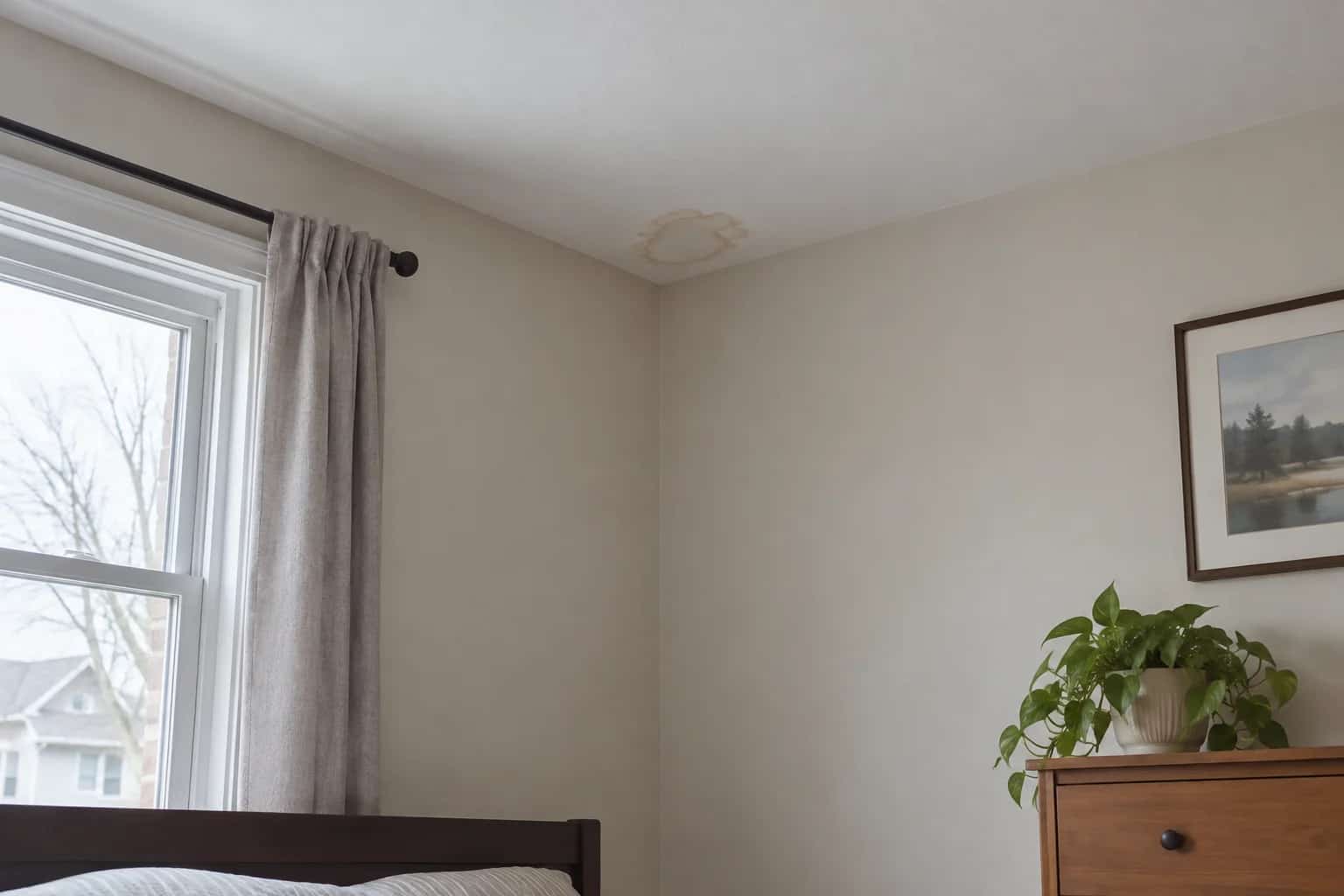
There is a bucket in the bedroom, drying equipment in the hallway and nowhere sensible for a child to sleep. If the house cannot be safely occupied after a roof loss, ask your insurer about additional living expenses before assuming the hotel bill will be reimbursed. First get everyone out of any unsafe area; coverage paperwork must not delay an urgent safety response.
A house can need temporary accommodation for reasons beyond a visible hole. Electrical isolation, unsafe ceiling materials, drying work or the loss of essential rooms may affect occupancy. Describe those conditions specifically rather than telling the adjuster only that the roof is leaking.
The family has packed overnight bags but has not booked anything. Mike helps them describe the unusable rooms and the work still needed, leaving the coverage decision to the adjuster. "Tell them what you cannot safely use," he says. "Leaking roof is the headline. They need the rest of the page."
The Insured Loss Comes First
The Insurance Bureau of Canada's claims guidance explains that many personal property policies provide alternate accommodation and living-expense coverage when a home becomes unliveable after an insured loss. Whether that applies, for how long and to which expenses depends on your policy and the circumstances.
The cost of a roof replacement and the cost of living elsewhere are separate parts of the discussion. A contractor cannot approve an insurance benefit. Ask the insurer to identify the coverage being considered and any immediate requirements for authorisation or documentation.
A planned elective reroofing job also differs from displacement after an insured event. If you simply prefer a quiet hotel while ordinary work proceeds, confirm the cost yourself rather than assuming the loss benefit applies.
Explain the Household You Need to Accommodate
Tell the adjuster how many people need accommodation and any material access, mobility, medical-equipment, school or work requirements. Mention pets before a booking is made. A room that technically sleeps four may still be impractical for the household's actual needs.
Suppose the expected absence is initially three nights but interior drying may take longer. Compare a cancellable short stay with a longer booking, and ask who can authorise an extension. Do not book a non-refundable month because the roofer casually guessed the repair would be slow.
Get the agreed arrangement in writing where possible: accommodation, dates, rate or approval basis, direct billing versus reimbursement, and the person to contact if conditions change. If urgent circumstances force an immediate expense, keep the reason and receipt and contact the insurer promptly.
The first hotel has no kitchen. The second costs more per night but would let the family cook. They send both practical options to the adjuster before committing. The cheapest room is not always the simplest living arrangement, particularly once breakfast becomes a daily expedition.
From Unsafe Occupancy to an Approved Stay
Identify why the home cannot be occupied safely.
Safety and condition
Identify why the home cannot be occupied safely.
Coverage decision
Ask whether the insured event and policy support living expenses.
Approved arrangement
Confirm accommodation, dates and extension contact.
Expense record
Keep itemised additional costs and updates on return readiness.
Record Extra Costs Against Normal Costs
Additional living expense is not a promise to reimburse every dollar spent away from home. Ask how the policy distinguishes increased costs from ordinary household spending.
For example, suppose a household normally spends $30 on a particular day's meals and spends $55 because its temporary accommodation has no cooking facilities. The difference is $25. That simple illustration explains why an adjuster may ask about usual spending; it does not establish that the $25 is covered under a particular policy.
Keep itemised receipts and a short note of their purpose. Separate accommodation, meals, transport and other approved categories. Ask about mileage records or other documentation before several weeks of expenses have accumulated. Credit-card totals without details are harder to explain later.
The exterior repair is complete, but drying work continues inside. Pat makes sure the family has that distinction in the update. Finished roof and ready bedroom are different boxes on this particular checklist; ticking the first does not quietly tick the second.

Keep the Return Date Connected to the House
The roof may be watertight before the rooms are ready to occupy. Interior drying, electrical checks and reinstatement can follow a different timetable. Ask the relevant professionals what remains and share that update with the adjuster before the accommodation approval expires.
Conversely, a delayed cosmetic finish does not automatically mean the house remains unliveable. The insurer and appropriate professionals need the actual condition, not simply the roofing contractor's final invoice date.
Use the wet-ceiling material guide to understand the recovery questions. If the exterior claim scope remains disputed, keep that scope discussion separate from the immediate living arrangement. A single named contact, clear approved dates and an orderly receipt file can make a difficult week substantially easier to manage.