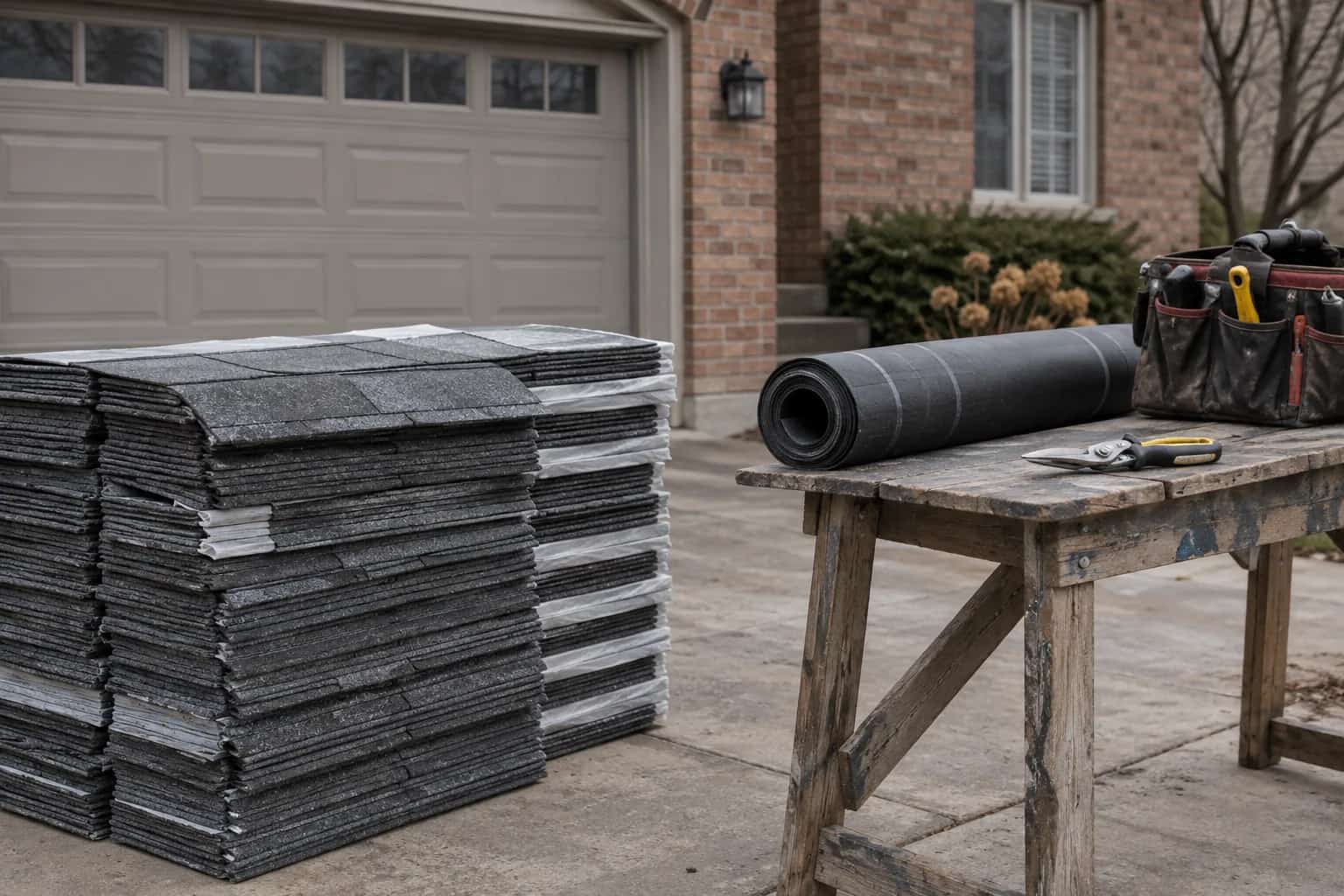
The street is bright, the forecast is dry, and the crew is leaving one slope untouched. From the garden it looks like an early finish. Pat explains the other view: the sunny shingles are soft enough to mark, and the opened section can be completed without creating a second unfinished area.
Hot weather changes both the workday and the shingle surface. A good plan limits exposed roof area, protects unfinished junctions and avoids traffic that can leave marks in softened shingles.
Before work begins, ask how the forecast could affect the daily scope, start time and temporary protection. A reliable plan includes the possibility of changing the plan.
The Roof Can Be Too Soft Before the Day Feels Finished
The homeowner sees a bright afternoon and wonders why the crew is changing the plan. The installer sees a sunny slope that has become vulnerable to marking. Both are looking at the same weather; only one is standing on the material.
GAF's Timberline HDZ seasonal guidance advises shaded storage in hot weather and soft-soled footwear to reduce scuffing and shingle damage. Use the actual product's Canadian application instructions for the job. The air temperature alone does not describe a dark surface in full sun, and a footwear recommendation is not permission for homeowners to inspect on foot.
A phased plan might complete the opened rear section, secure its junctions and leave the front covering in place until suitable conditions return. The contractor should explain what is finished, what remains intact and what temporary protection is in place. "We will finish tomorrow" is much easier to accept when you know what is keeping tonight's rain outside.
A weather-app number is not the whole assessment
Ontario's heat-stress guidance considers workload and workplace conditions as well as temperature. Sun, humidity, clothing and how accustomed workers are to the heat all matter.
The employer is responsible for organising safe work. Homeowners can help by keeping agreed access and shaded staging areas available, but a jug of water on the porch does not replace the contractor's heat plan.
Do not pressure a crew to push through because a bin has been booked or visitors are coming tomorrow. Those inconveniences are easier to resolve than an unsafe workday.
A Heat-Day Handover
Crew and material conditions determine the workable scope. If scuffs appear, preserve location and access history for assessment.
Assess
Crew and material conditions determine the workable scope.
Limit opening
Avoid stripping more roof than can be protected.
Complete the section
Resolve edges and penetrations before pausing.
Record marks
If scuffs appear, preserve location and access history for assessment.
If Footprints Appear After the Visit
Boot-shaped marks may be dust, a change in surface texture or actual scuffing. Record when they became visible and all recent roof access, including chimney, antenna or solar work. Low evening light can reveal a mark that was hard to see at noon; the last person on the roof did not necessarily create every patch.
Ask for located close photographs showing whether granules moved, coating was disturbed or the shingle changed shape. The remedy should follow the finding. Do not try to tidy it with a wire brush, paint, loose granules or a coating. That adds a second investigation nobody wanted.
Where replacement is proposed, ask about matching material and handling neighbouring shingles. If responsibility is disputed, preserve the chronology and seek an independent assessment rather than allowing more roof traffic to erase the evidence. For loose particles alone, see granules in gutters.
The End-of-Day Update
Ask which area was opened, what protection is complete, what remains temporary and when the crew will reassess conditions. A short update and photographs tell you more than the number of hours the nail guns ran.
Agree on one contact for revised timing, including any local noise restrictions on an earlier start. At completion, the normal inspection and cleanup still apply. Heat explains a changed schedule; it does not excuse damaged shingles or unfinished details.