
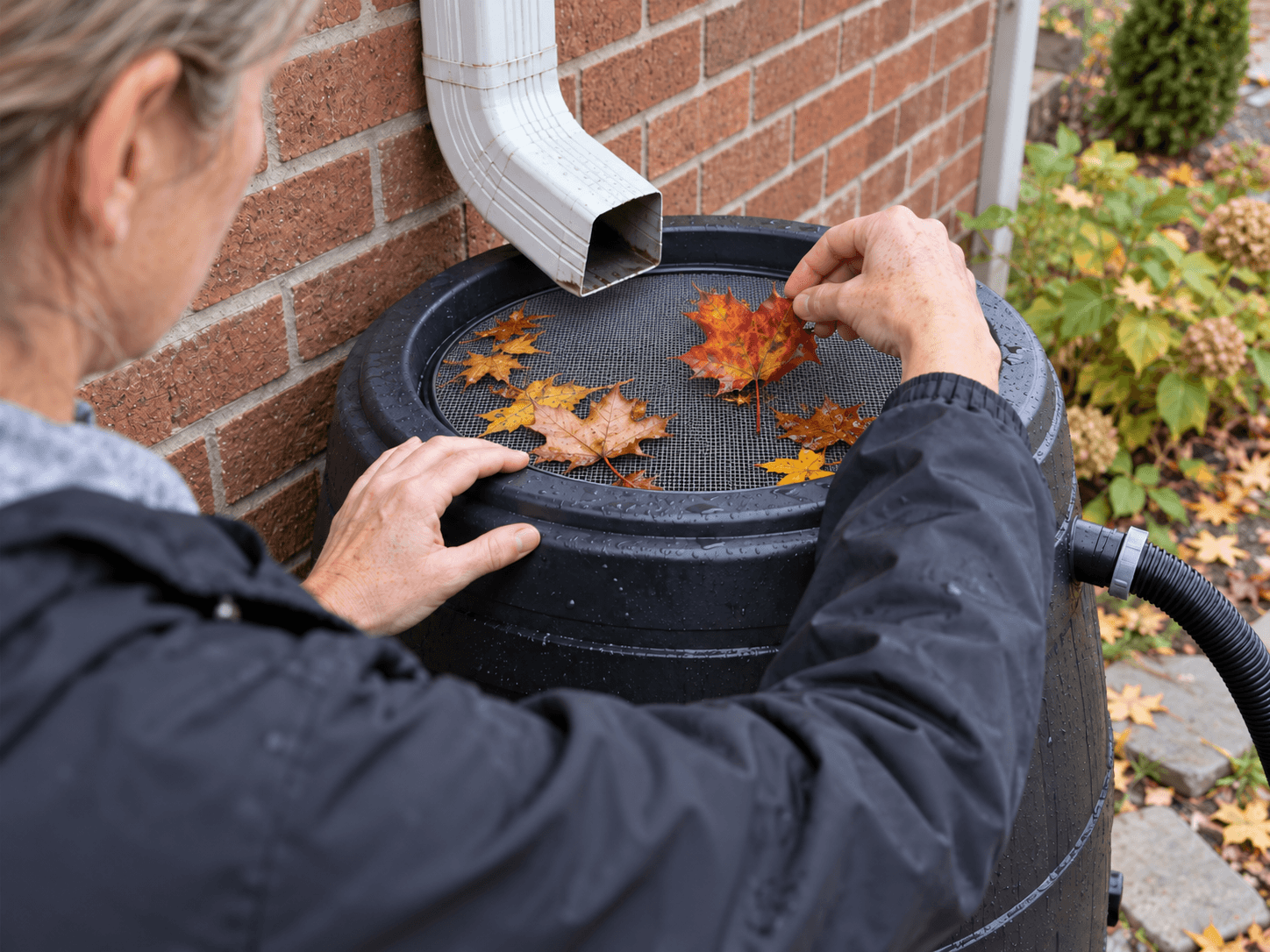
The barrel has a lid. The mosquitoes have found the gap beside the downspout. Both things can be true.
Protect every route into the stored water with the barrel's fitted cover and suitable insect screening. A leaf basket with generous openings is not necessarily an insect barrier. Check the inlet, the lid edge and the overflow arrangement, then look for little pools beside the barrel that are much easier to overlook.
Start with exclusion
Ontario's mosquito-control guidance recommends tight-fitting fly screening over rain barrels. Look for an intact screen seated around its whole edge. Leaves can pull it out of place, and a removable panel may have been put back loosely after cleaning.
The roof-water connection needs attention too. A pipe pushed through a roughly cut hole can leave an open crescent beside it. Use the fittings and screening arrangement intended for the barrel or diverter rather than accepting a gap because it is at the back.
Do not seal a barrel into an improvised airtight container or plug an overflow to keep insects out. It still needs to receive and release water properly. Ask the manufacturer how its inlet, vent and overflow are protected and which replacement screen or fitting is compatible.
If an old open-top container cannot be covered securely, replacing it with an appropriate closed barrel can be a simpler improvement than maintaining a collection of makeshift covers.
Follow the openings
The lid is only one part of the check.
Inlet
An intact fitted insect screen covers the route into stored water.
Lid edge
The cover sits securely without gaps left by improvised pipe cuts.
Overflow
Use the maker's compatible protection while maintaining free drainage.
Surroundings
Check lid recesses, hoses and nearby containers for standing water.
Follow the overflow before adding a screen
The City of Toronto's rain-barrel explanation distinguishes water leaving a full barrel through an overflow hose from a diverter that returns flow to the downspout. Identify which arrangement you have before changing anything.
A screen in the wrong place can catch debris and restrict flow. The aim is an insect barrier that the system can use and that you can inspect, not fabric stuffed into a pipe. Confirm the compatible detail with the product supplier, including how it is cleaned and how water escapes if it becomes blocked.
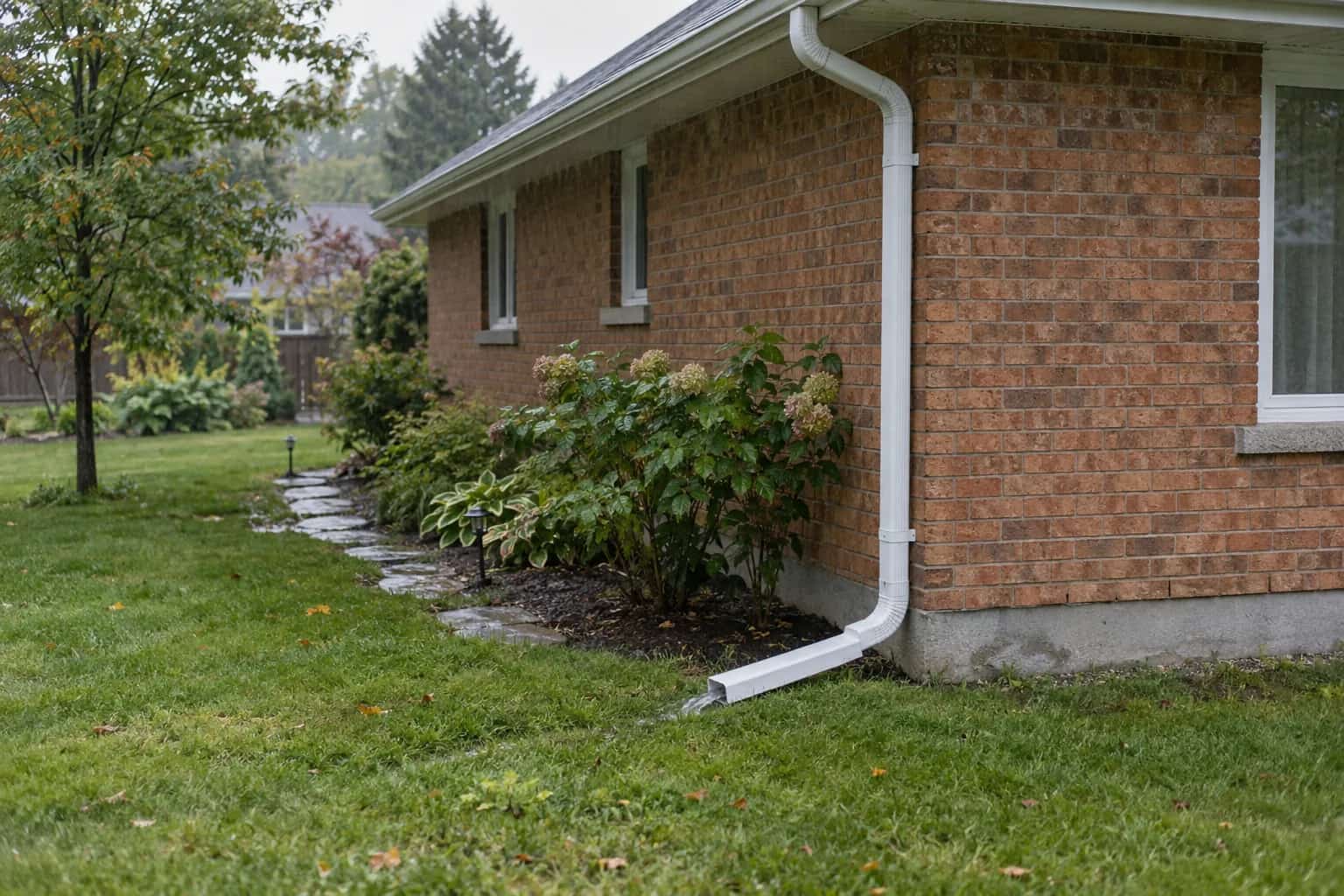
Follow the hose to its end. A sagging length that holds water, a disconnected fitting beside the foundation or an outlet buried beneath mulch deserves correction. Our overflow guide addresses the water route; keeping insects out should preserve that route.
The puddle on the lid counts too
Ontario's West Nile prevention advice includes removing standing water around the home, including small amounts. During your barrel check, look at the lid recess, saucers, buckets and folded tarps nearby. Water outside a perfectly screened barrel remains outside the protection.
After rain, note where water sits. Clear debris using the manufacturer's maintenance instructions and check that the barrel remains stable on its base. If the lid or housing is distorted so it repeatedly holds a pool, ask about repair or replacement rather than drilling an unplanned hole into it.
Include the gutter above. A clogged outlet can leave roof water standing while the barrel below seems to be working normally. You can arrange gutter service without climbing up to investigate it yourself.
Use and maintain the stored water
Make the inspection part of watering the garden. Check the screen before putting the lid back, and inspect again after a storm or service visit that disturbed the inlet. Use the water regularly and follow the barrel maker's cleaning instructions; a neglected container is harder to keep covered and functioning.
If you can see wriggling larvae, address the access route as well as the water already inside. Empty and clean the barrel where this can be done according to its instructions without flooding the foundation or sending water into an unsuitable drain. If the container is too heavy or the drainage route is unclear, get help with that part instead of tipping it over.
Avoid adding oil, detergent or an improvised chemical mixture. If considering a mosquito-control product, check the registered label for the specific use and water destination, and ask your local public health unit when uncertain. Garden water, aquatic habitats and drinking water are not interchangeable uses.
Close the loop at the end of the season
Before freezing conditions, follow the manufacturer's winter storage instructions and restore a working downspout route. An empty barrel left with a loose lid can collect water again while nobody is looking at it. Keep it secured as specified for storage.
The winter disconnection guide covers that handoff. In spring, inspect the lid and screens before reconnecting. Replacing a torn screen at the beginning of the season is a much smaller job than wondering why the corner beside the watering can is suddenly so lively.