
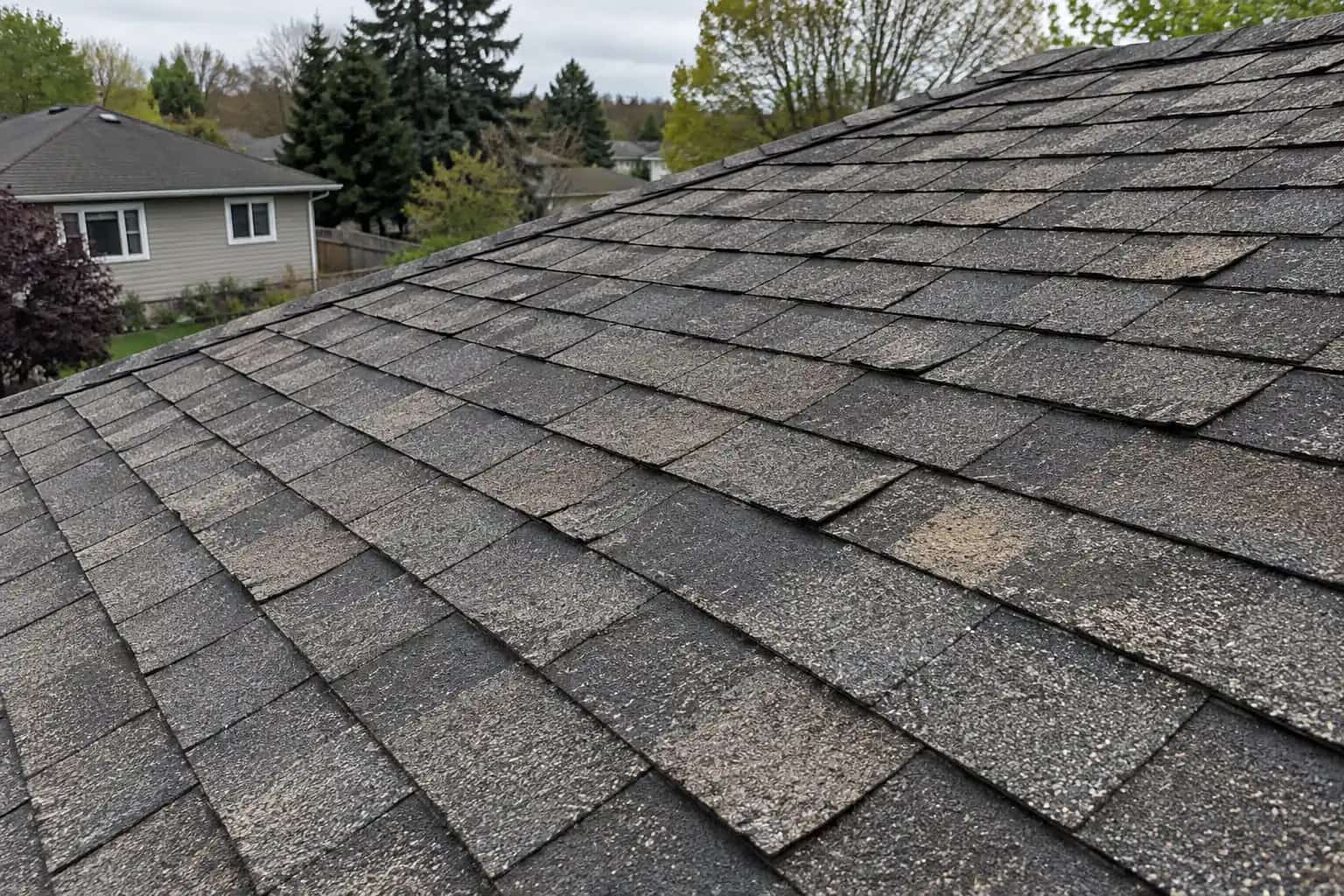
A small bump catches the afternoon light on your roof. Now that you have seen it, you can find it from every upstairs window. Someone calls it a nail pop. Before accepting that diagnosis, establish what is actually lifting the shingle.
A confirmed raised fastener can be a local repair when the covering and support are sound. A puncture, brittle shingles or deteriorated decking changes the scope. The useful inspection identifies the fastener, the damage and what holds it. One inconvenient shadow does not write a whole-roof replacement order.
One Bump Is Not a Whole-Roof Diagnosis
IKO's raised-nail bulletin notes that some nails may never have been seated correctly. It also distinguishes conditions that can be corrected from shingles that need replacement. A visible bump therefore does not automatically mean that every shingle is defective.
Ask the roofer to show whether there is an actual nail beneath the bump, whether the shingle has a hole or split and whether the nail is part of the shingle fastening or another underlying layer. The word "nail pop" is a description, not a complete explanation.
If there are several bumps, their pattern matters. Are they isolated, concentrated around one repaired area or associated with a broader unevenness in the roof? Keep a wider photograph alongside each detail shot.
Pat points to the bump and calls it a nail pop. Dave asks which nail. That small interruption matters: a shingle fastener and a deck fastener do not lead to the same investigation.
Mike wants the lifted area and its support identified before pricing the repair. The afternoon shadow has already convinced the owner something is wrong; it has not established the repair scope. Pat takes the correction cheerfully. "One bump, fewer guesses." The inspection now has an actual question to answer.
Ask Which Fastener Moved
The term nail pop can hide two different inspection findings. A shingle fastener may stand proud of its intended position. A deck fastener beneath the roofing may also lift the layers above it. The contractor needs to identify the actual fastener before choosing the repair, because re-securing sheathing is not the same scope as correcting a shingle nail.
Keep the proposed repair beside three observations:
- Covering intact, supporting material sound: a local manufacturer-compatible fastener correction may be enough.
- Covering punctured or split: restoring the fastening does not undo that hole; the damaged covering needs its own repair decision.
- Backing deteriorated or several points following a wider distortion: investigate the deck/support condition and moisture source before treating each bump separately.
IKO's raised-nail bulletin specifically warns that simply hammering a raised nail back can allow it to rise again. It describes repair in the context of its asphalt shingles; use current instructions for the installed product. A completion note should identify the fastener, substrate and restored covering, not only say the bump was flattened.
A Nail Bump Has Three Questions
The visible bump alone cannot choose the repair.
Which fastener?
Identify shingle nail, underlying deck fastener or another cause.
What covering damage?
An intact tent and a punctured shingle need different restoration.
What holds it?
Sound backing differs from wet or deteriorated support.
What changed?
Record corrected fastening and restored layers, not just a flattened bump.
Why Homeowner Hammering Can Make It Worse
Reaching the fastener may require separating shingle layers. On an aged roof, those layers can crack when disturbed. A blow through the top shingle can also damage the material without correcting the underlying cause.
A roofer should use the product's repair guidance, suitable replacement fasteners where needed and compatible sealing materials where specified. Ask whether the damaged shingle will be replaced and how any old penetration will be dealt with. "We knocked it flat" leaves important questions unanswered.
One Defect, or a Pattern?
If the repair remains local, good. If the findings justify more work, the photographs should explain why. Either result is more useful than letting the bump become a debate about everything on the roof.
