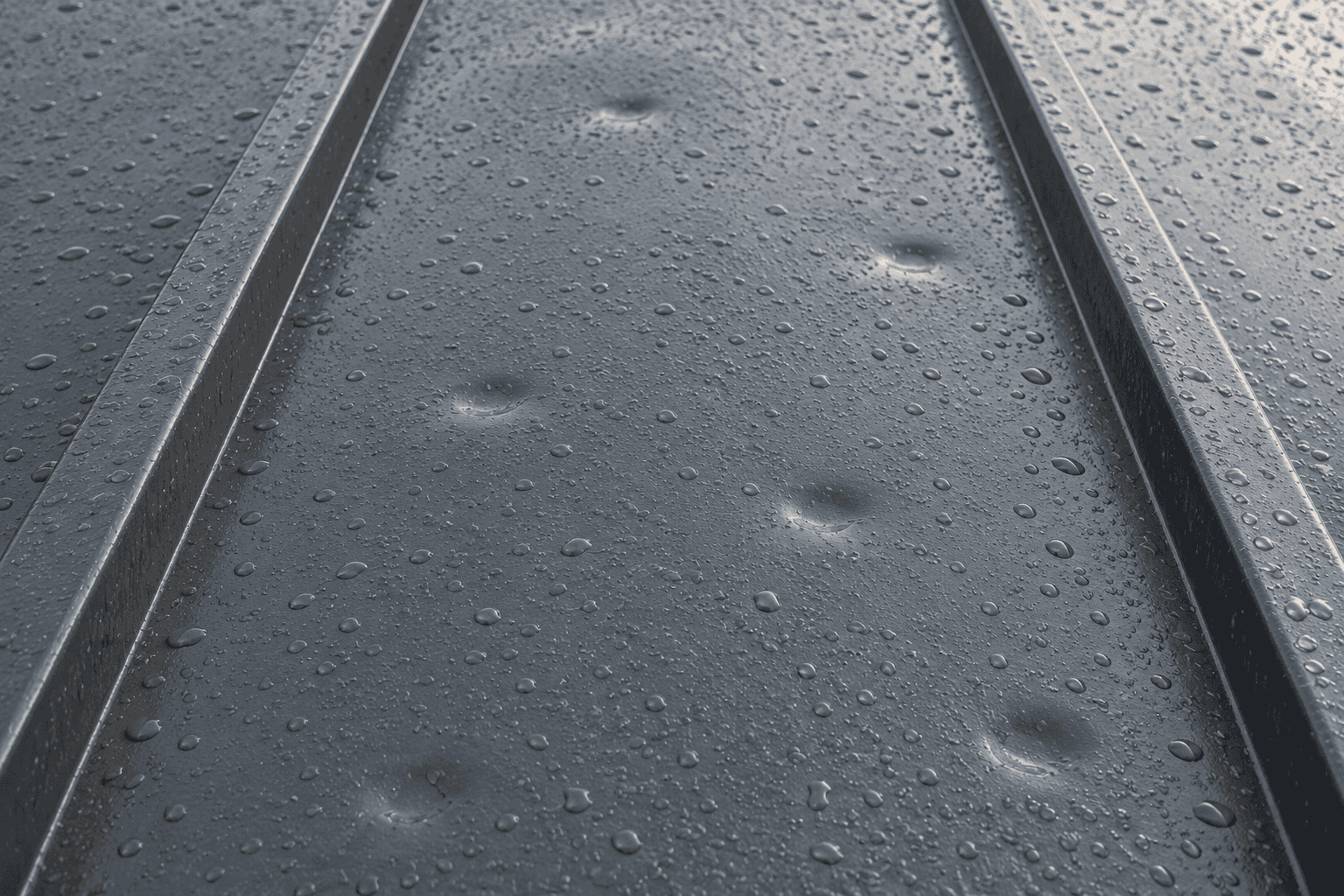
The hail has stopped, and low afternoon light has found every small dent in the metal roof. Yesterday the same slope looked smooth. It is reasonable to want an explanation before someone offers either a whole new roof or a cheerful "it's fine."
Ask whether the storm changed the roof's ability to perform, its appearance, or both. A dent is an observation. The repair recommendation needs to explain what was damaged and why the proposed work addresses it.
Start with the condition, not the dent count
IBHS's roof-weathering research distinguishes the visible denting of metal from damage modes in other coverings. Its current summary reports no evidence that dents alone reduce roof functionality. That is useful context, but it is not an inspection of your roof's seams, coating, flashings or attachments.
Have the assessor identify the exact panel system and inspect the affected areas. Ask whether there are openings, distorted joints, damaged finishes or water-entry evidence, and whether those findings appear related to the storm. A report should locate each concern on a roof plan or an overview photograph.
If water is entering, arrange prompt assistance and keep people clear of affected electrical equipment or a bulging ceiling. Do not wait for an appearance assessment to address an active hazard.
Three separate decisions
Keep the evidence attached to each question.
Appearance
Locate dents and compare earlier photographs.
Roof performance
Assess coating, joints, attachments and water-entry evidence.
Repair and coverage
Define the suitable repair, then obtain the policy decision separately.
Ask what the finish and joints show
The MBMA contribution to the RICOWI roof guide explains that hail can leave aesthetic damage while the metal roof retains its integrity. It also notes that coating damage can create a corrosion concern and that repair decisions require assessment of the overall roof.
For an Ontario house, have those general principles applied to the actual manufacturer, metal and finish. A smooth painted steel panel, aluminum panel and granular metal tile do not have identical repair methods.
Ask for separate findings for the panel face and the nearby seams or fittings. "Twenty dents on the south slope" describes appearance. "An open joint at the lower end of the affected panel" identifies a different question that needs a specific repair detail.
Long waviness that was visible before the storm may be oil canning. Earlier photographs can help establish that history. Neither the date of the storm nor a newly noticed shadow proves when a mark formed.
Keep the evidence useful
Photograph what is visible from stable ground or indoors, and record the date and rooms affected. Do not climb onto wet metal to count marks. Professional access should be planned for the roof and conditions.
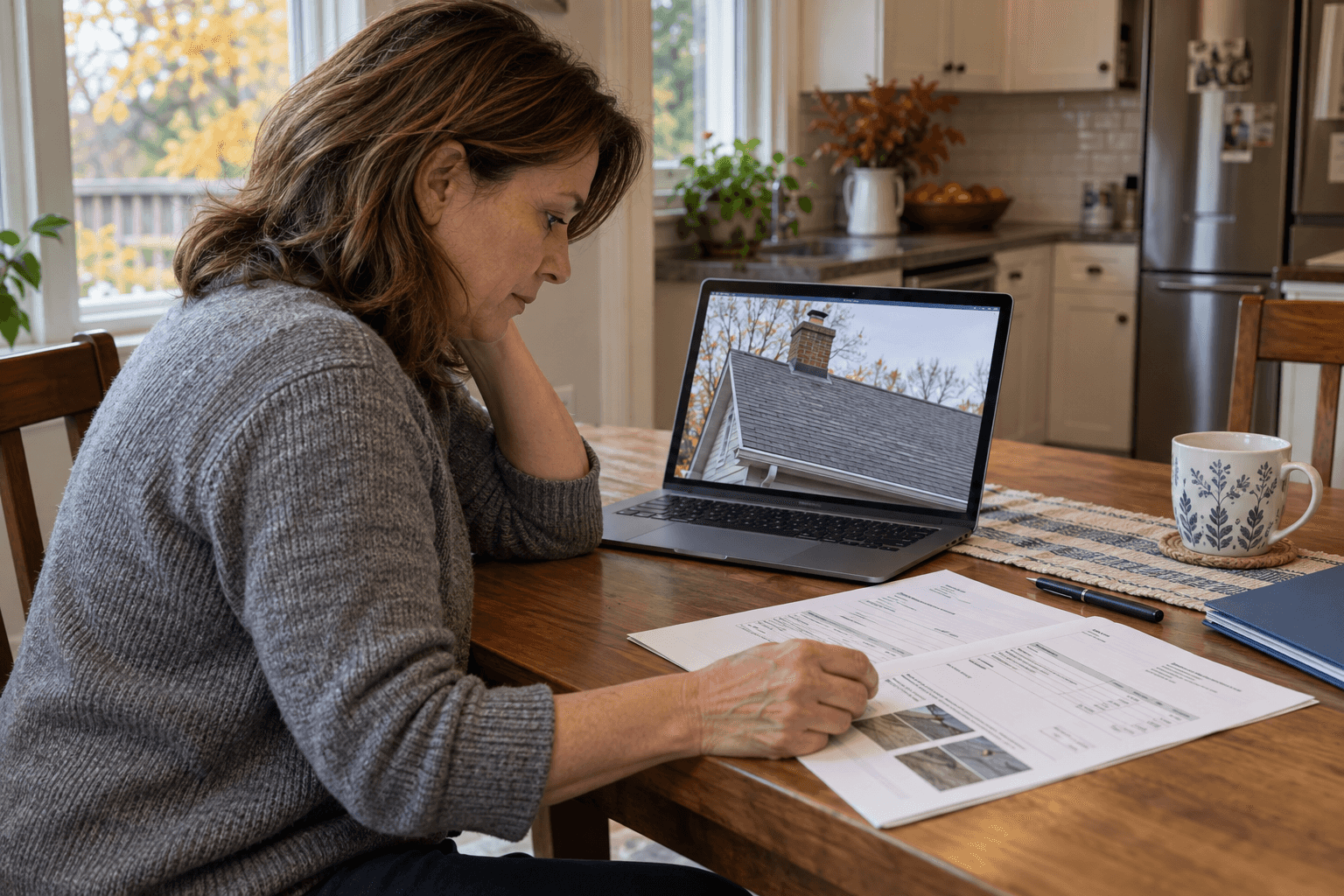
Ask the inspection report to distinguish observed facts, inaccessible areas and conclusions. A useful photo set includes an overview, close views and enough orientation to find the same location later. Keep previous roof photographs, product documents and repair records together.
For a proposed repair, request the reason for its boundaries. Can the affected panel be replaced without damaging adjacent seams? Does the matching profile remain available? What appearance difference should you expect between old and new finish? These questions make a partial-repair estimate easier to compare with a larger scope.
Separate the roof assessment from the claim decision
Whether a policy responds to cosmetic damage is a question for the actual policy and insurer. A roof's impact rating is not a coverage promise, and this guide cannot determine a claim. Request the insurer's decision and explanation in writing, using the same documented findings reviewed by the roofer.
Do not approve hammering, filler or touch-up paint simply to make the marks disappear. Ask the panel manufacturer or qualified metal-roof specialist which repair, if any, suits the exact finish and damage.
If the assessment supports leaving sound panels in place, keep that finding and any follow-up recommendation. If work is needed, the estimate should identify the defect, method and expected appearance. The roof deserves a decision based on its condition, rather than the most alarming photograph.