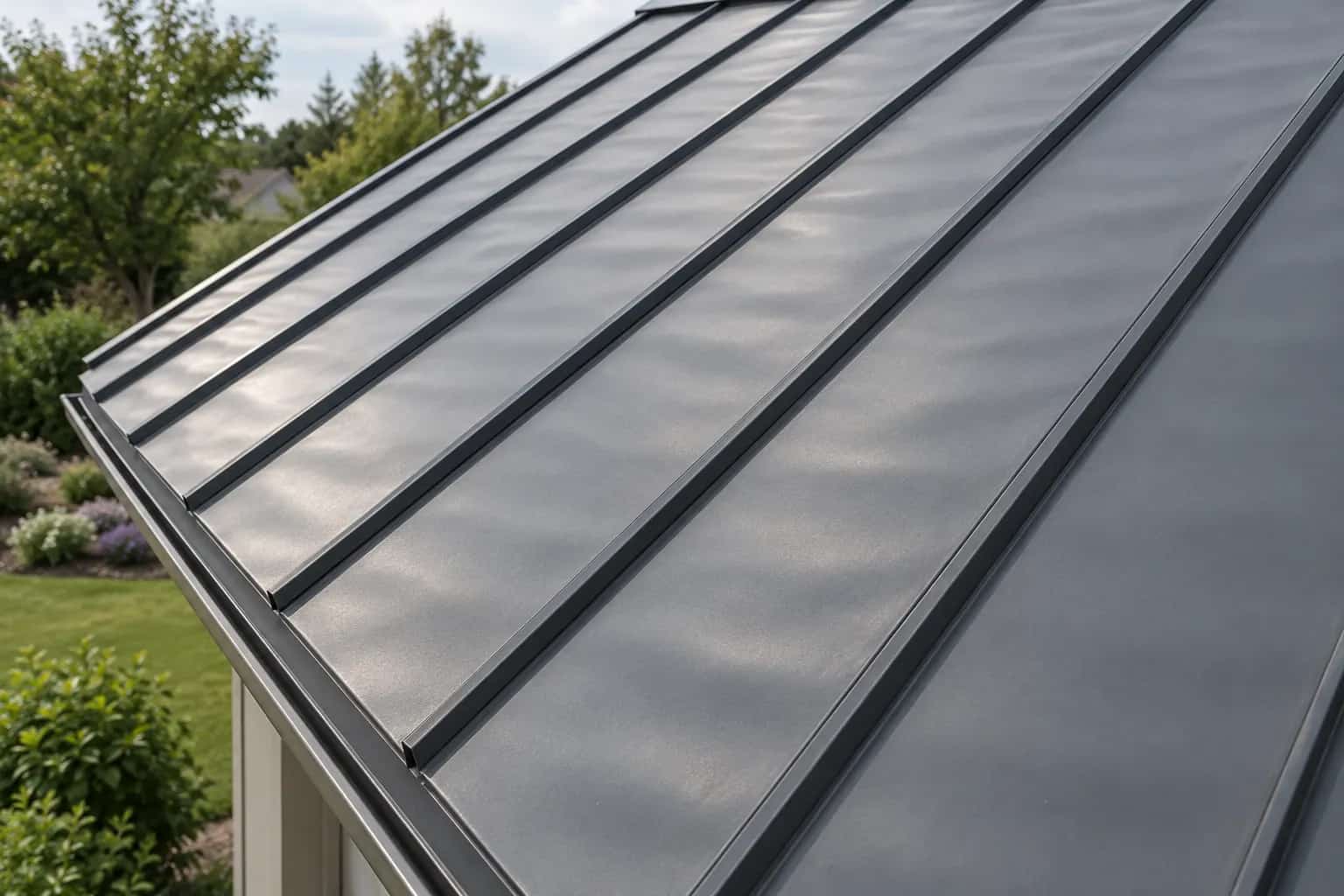
At noon, the new metal roof looks smooth. At six, long ripples appear between the seams. The homeowner sends Mike both photographs and asks which one is real. Both are useful: the light has changed, and that gives the inspection a better starting point than either picture alone.
A metal roof can look smooth at breakfast and noticeably rippled by late afternoon. That change is real to the eye without necessarily being a new defect in the roof. Oil canning is visible waviness in the flat areas of metal panels. It is commonly an appearance issue, but the words do not explain why it happened on your house.
That distinction matters when a new roof disappoints. A homeowner deserves more than either "all metal does that" or "every panel must come off."
Photograph One Panel Twice
Choose a ground position and identify the same long panel by a nearby seam or window. Take one photograph in diffuse light and another when low sunlight catches it. Keep the viewpoint as similar as possible. Broad waves that become conspicuous in raking light present a different review question from a sharp local crease or damaged seam that remains clearly defined.
The Metal Construction Association's oil-canning bulletin describes visible waviness in flat metal areas and factors including material, fabrication, installation and support. Appearance alone cannot assign responsibility. Equally, calling every visible dent oil canning can obscure a specific defect worth inspecting.
A roof that looked smooth on a cloudy handover day and wavy at six the next evening gives you two conditions to compare. Start with paired pictures, the agreed panel specification and photographs of a comparable installed roof. Do not demand that the installer flatten panels by adding random screws; that can change attachment and movement behaviour.
For an existing concern, ask the reviewer to separate broad waviness, a local handling crease, uneven support and problems at seams or fasteners. Record which finding is cosmetic and which needs corrective work, with a reason. For a new order, discuss panel width, finish and any manufacturer options for reducing visible waviness before the metal is fabricated. A small colour chip cannot reproduce a long panel's reflections.
Compare the Same Panel
Record the whole panel from a repeatable ground position. Relate the finding to support, attachment and the specified panel.
Diffuse light
Record the whole panel from a repeatable ground position.
Raking light
Repeat when low sun reveals surface reflections.
Local crease
Identify sharp isolated deformation separately from broad waves.
System review
Relate the finding to support, attachment and the specified panel.
Choose the Appearance Before Fabrication
Ask to see the intended profile on a full roof in angled light. Small stiffening ribs and finish gloss change the visual effect; they are choices to compare, not guarantees of perfect flatness. A hand-sized colour sample cannot reproduce a long panel.
Record the profile, finish and how an appearance concern will be assessed in the contract. Keep the noon and evening photographs for an existing concern. We want an explanation tied to the panel and its support, not a contest to find the hour when the roof looks best.