
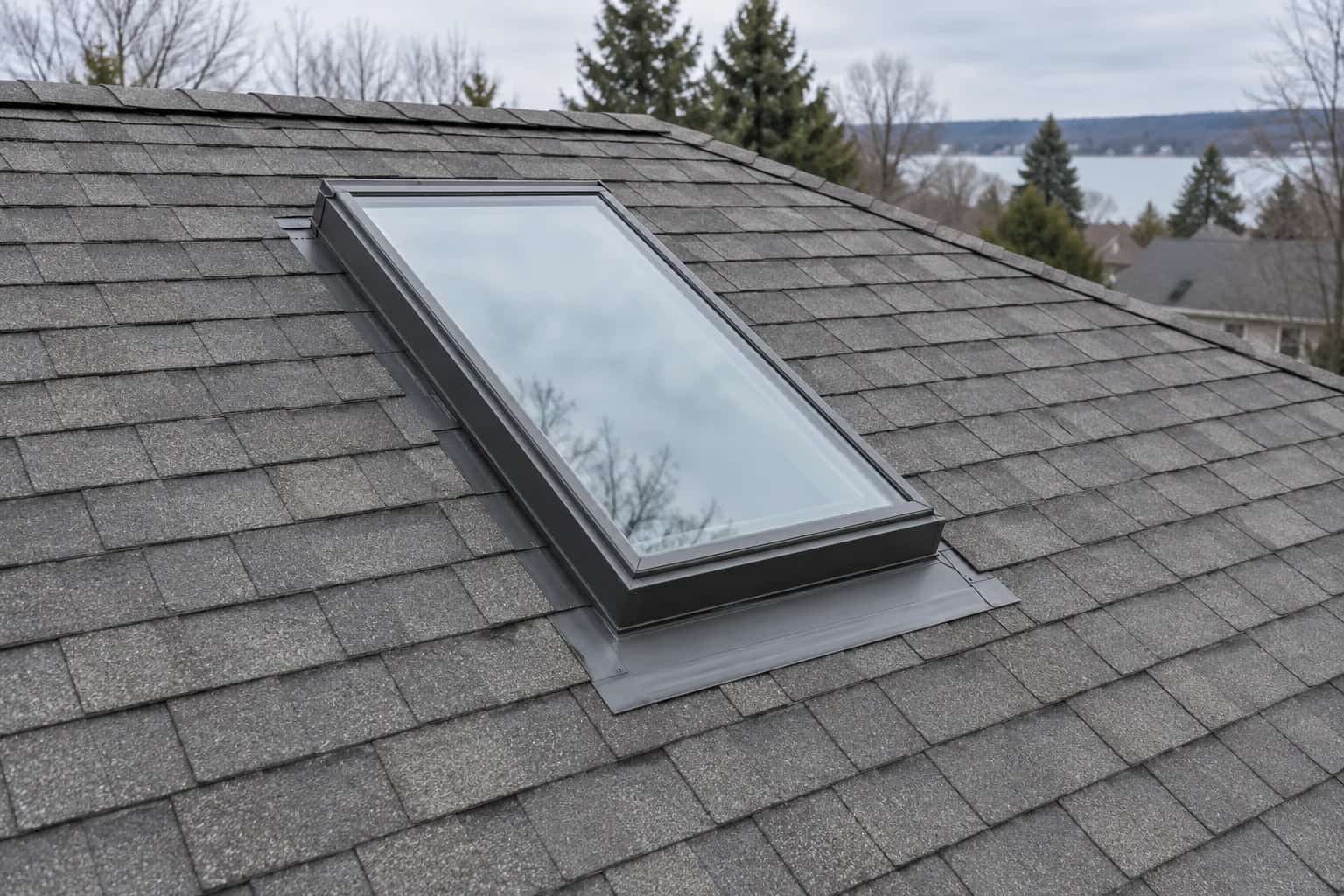
The old owner left three paint tins, a mysterious remote and no skylight paperwork. That is inconvenient, but it does not mean the unit has to be replaced. A product identification record is the most useful first step before ordering glass, a shade or an opening mechanism.
Mike puts the orphaned remote beside the paint tins. "Useful exhibit. Wrong witness." The first useful witness is the skylight itself.
Start from inside the room. Record what you can see safely, then use the manufacturer's identification guide to determine what still needs a service visit. There is no need to get onto the roof to begin this small detective job.
One skylight can carry several numbers
For VELUX products, the Canadian product-ID guide is the starting point for locating the frame plate. Its location varies with the product and age. A brand logo on a remote does not establish the identity of the skylight above it, particularly if accessories have been replaced.
The manufacturer FAQ also distinguishes the glass identification on the spacer between panes from the unit's data plate. Photograph both when safely visible and label them separately. Sending a glass number as though it were the complete skylight model can send a parts enquiry in the wrong direction.
Keep the whole string, including letters, spaces and suffixes. An apparently unimportant final code may be exactly what the service team needs. Take a wider image showing where the marking sits, then a readable close-up. If a character could be a zero or the letter O, send the photograph rather than confidently transcribing the wrong one. Dave circles the doubtful character on a copy, leaving the original intact. The parts desk gets both; nobody has to pretend their eyesight is a technical specification.
Describe how it works before measuring it
Is the unit fixed, operated with a handle or pole, or controlled electrically? Does the whole glazed section lift, or are you looking at a window that pivots within its frame? Note those observations without forcing a stiff mechanism to demonstrate it.
A round ceiling diffuser is a different starting point from a rectangular glazed opening. It may belong to a tubular daylight device, with its own identification and accessory system. Our sun-tunnel comparison helps separate the two before a supplier starts looking for the wrong parts.
Record the room and location as well: upstairs landing, rear roof, unit nearest the chimney. Two skylights installed in the same house can be different generations. A photograph named only "skylight" becomes surprisingly unhelpful when there are three.
Build a usable skylight identity
Different observations answer different parts of a service enquiry.
Frame identity
Record the full data-plate code using the maker's guide.
Glass identity
Keep any spacer marking separate from the unit model.
Location and operation
Name the room, unit position and operating type.
Service request
Ask for the exact compatible part and installation scope.
Measurements should say what was measured
Imagine a ceiling opening that flares outward below the glass. Measuring the plasterboard at room level tells you the size of that opening, not the skylight frame. A supplier cannot safely turn it into a product number.
If you can measure an accessible interior feature from a stable position, label it accurately: inside trim width, visible glass width or ceiling-opening length. Include units. Let the installer obtain roof-side and concealed dimensions needed for replacement or mounting decisions. Do not lean a ladder across furniture or reach over a stairwell to complete the form.
If the plate is painted over, damaged or inaccessible, say so. Supply the visible frame, operating hardware and glazing photographs and ask the manufacturer what further evidence would narrow the search. Scraping a seal or dismantling the sash to find a label can turn an identification problem into a repair.
Turn identification into the right next question
The enquiry should state what you need: a replacement glazed assembly, a compatible glare-control shade, or help with operation. Include the symptom separately from the identity. A correct model number does not explain why a shaft is wet.
Save the manufacturer's response, identified model and supplied part number together. Ask whether any proposed substitute also changes the fitting kit or installation work. An available part that is almost the right size is still the wrong order.
The remote can join the record once its connection to the unit is established. Until then, keep it in the small pile of things the house has not explained yet.
Once the answer is confirmed, put it in the house records. The next owner may appreciate it more than the paint tins.
