
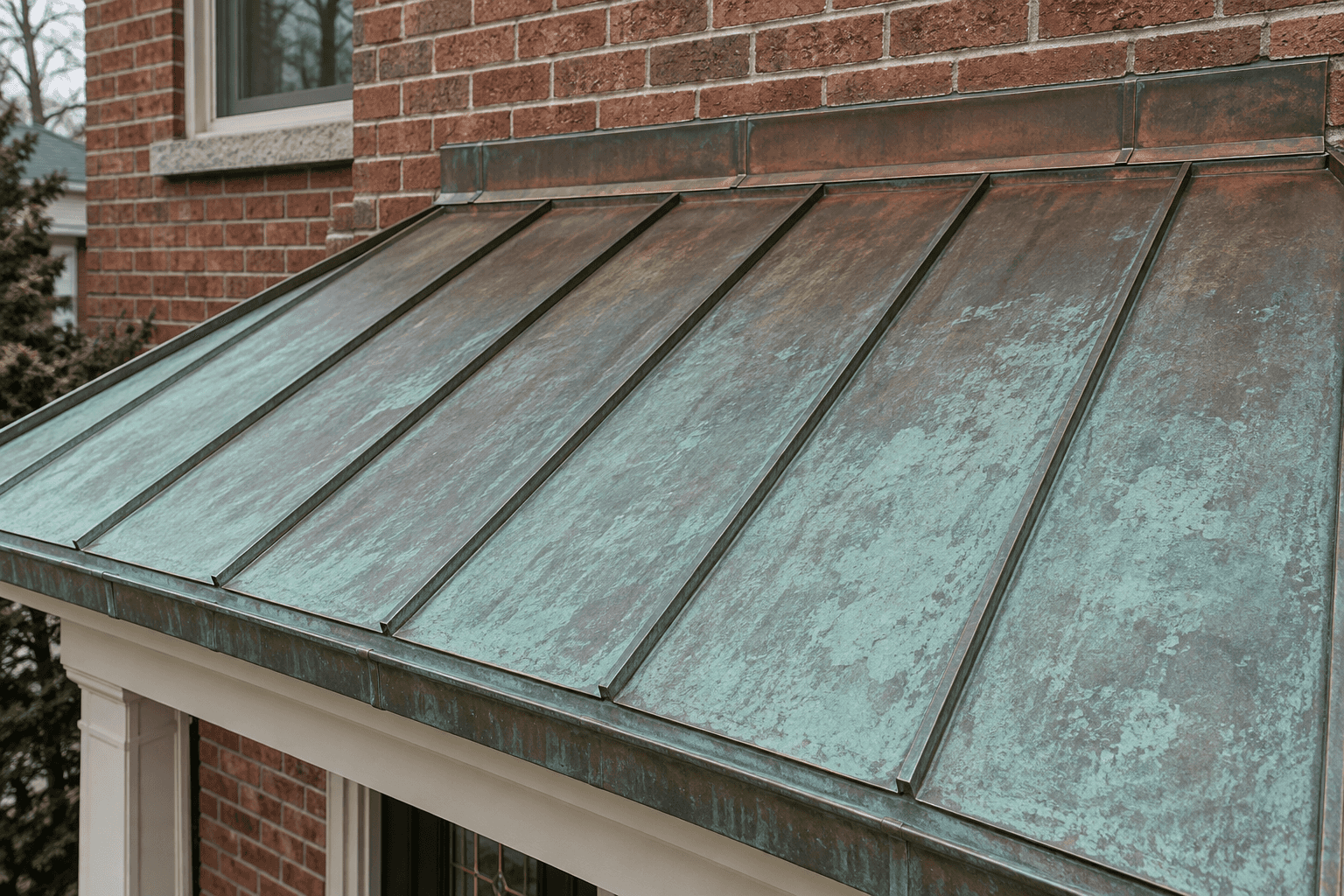
The porch roof was brown in an old photograph. Now parts of it are green, while the strip sheltered by the wall remains darker. That difference can be ordinary copper weathering rather than evidence that the roof is wearing through.
A green patina on copper is generally an expected surface change. It does not prove that the seams and flashings are sound, and it does not by itself justify replacing the roof. Start with the actual complaint before agreeing to cleaning or repair.
Expect variation across the same roof
The Copper Development Association's architectural handbook explains that atmosphere, moisture, exposure and roof slope affect patina development. Different faces of one roof may change at different rates.
That makes a neighbour's roof a poor colour deadline. A sheltered porch, an exposed bay roof and a vertical copper face do not have identical exposure, even on the same street. Do not assume that a patch still showing brown needs a chemical treatment to catch up.
Keep dated photographs if appearance is the concern. Use a similar viewpoint and lighting where practical. A wet surface in flat light and a dry one in strong sun can make a casual phone comparison misleading.
Three different observations
Give each the right question.
Uneven patina
Consider the exposure and natural weathering history.
Leak or loose joint
Locate and document the actual defect and water route.
Staining below
Follow runoff and assess receiving materials separately.
Separate surface colour from a defect
Describe whether there is an indoor leak, a loose edge, a newly opened joint or impact damage. Ask the inspector to locate the finding on a wide photograph and show the detail separately.
The CDA-authored RICOWI guide identifies roof edges, seams and physical damage as inspection concerns. A colour survey is not a substitute for examining those connections. The adjoining deck and the water route may need attention too.
For example, a new ceiling stain following wind should not be dismissed because green copper is normal. Equally, an intact roof should not be condemned merely because its colour is uneven. The repair scope should explain the observed fault, not just repeat the most visible feature.
Keep inspection and maintenance access with people equipped for the roof. A porch may look conveniently low while still offering poor footing and delicate seams.
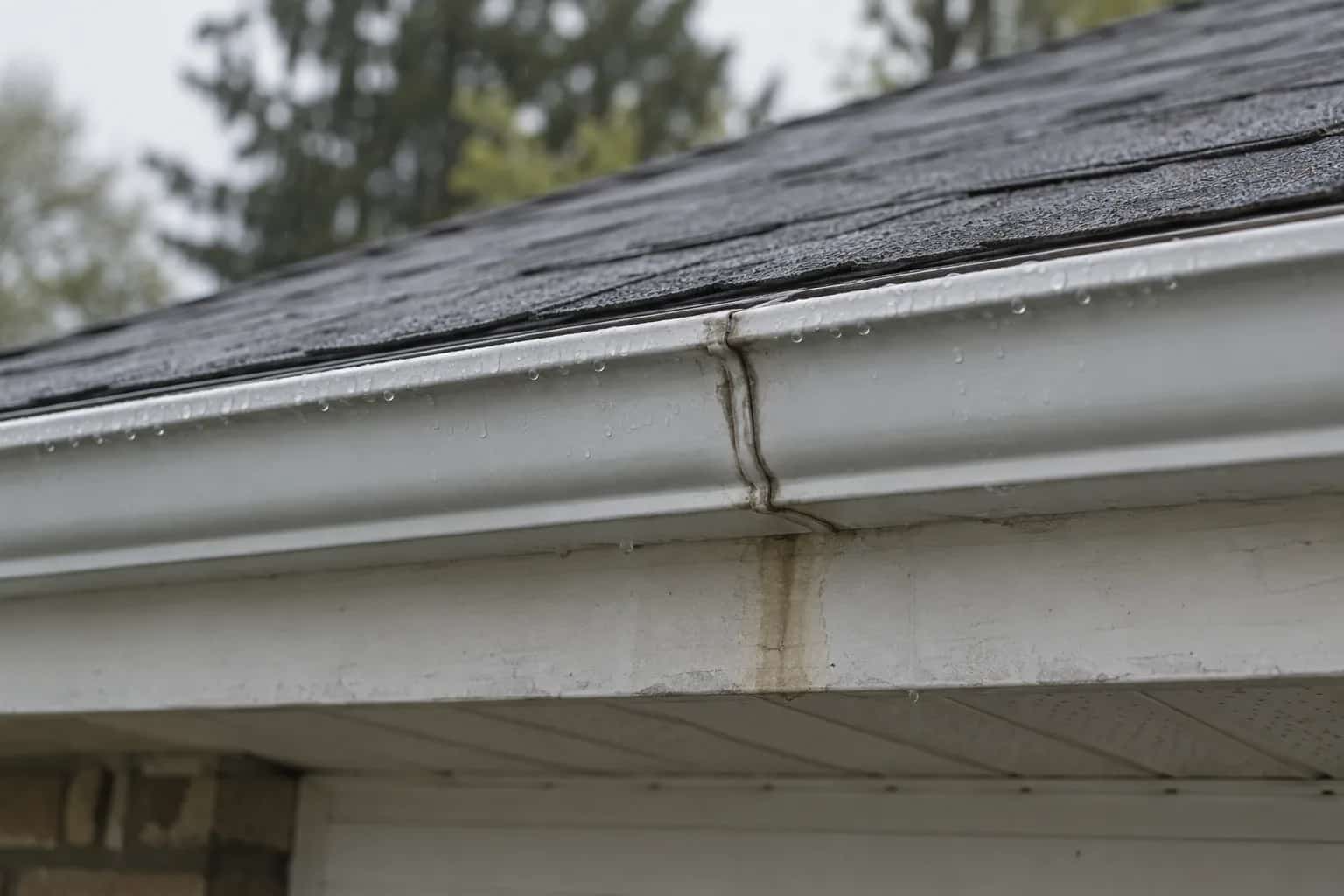
Follow staining below the copper
Greenish marks on pale masonry or a receiving surface are a different question from patina on the metal itself. The CDA's runoff explanation describes how weathering products can travel with water.
Have the inspection follow where that water goes. Is the concern appearance on the wall, a deteriorating receiving gutter, or an actual leak at the copper edge? Each needs a defined finding.
Our dissimilar-metals guide covers compatibility and runoff exposure at gutters. Replacing a stained fitting with an identical-looking but incompatible metal can add another problem. Specify the receiving materials and connection, rather than choosing only by colour.
A small new patch may be conspicuous
New bare copper normally looks different from a weathered roof. The RICOWI guide explains that new material will weather in its own exposure; a supplier cannot simply match an existing natural patina with bright sheet from stock.
Discuss that before approving a localized repair. Ask which area would be replaced, why that boundary was chosen and how visible it will be from the usual viewpoints. A useful repair can remain visually obvious for a time without being defective.
If pre-patinated material or a specialist finish is proposed, review a suitable sample and the maintenance implications. Do not rely on a promise that the patch will become an exact match by a particular month. Natural weathering remains variable.
Do not polish away the question
Ask what a proposed cleaning process is intended to remove. Dirt and blocked drainage, an unwanted surface finish and a sound natural patina are different subjects.
The CDA handbook warns that cleaning can permanently damage copper. Leave chemical patination, stripping and cleaning methods to an appropriately qualified specialist who has assessed the metal and adjacent materials. An online recipe intended for a small ornament is not a roof specification.
For a designated heritage property or a proposed appearance change, check the relevant municipal requirements before commissioning the finish work. The heritage-material guide helps organize that discussion.
Keep sound copper where the assessment supports it. Repair the actual defect, preserve clear records and agree on appearance before work begins. A roof can change colour naturally while still needing ordinary attention to its joints and drainage.