
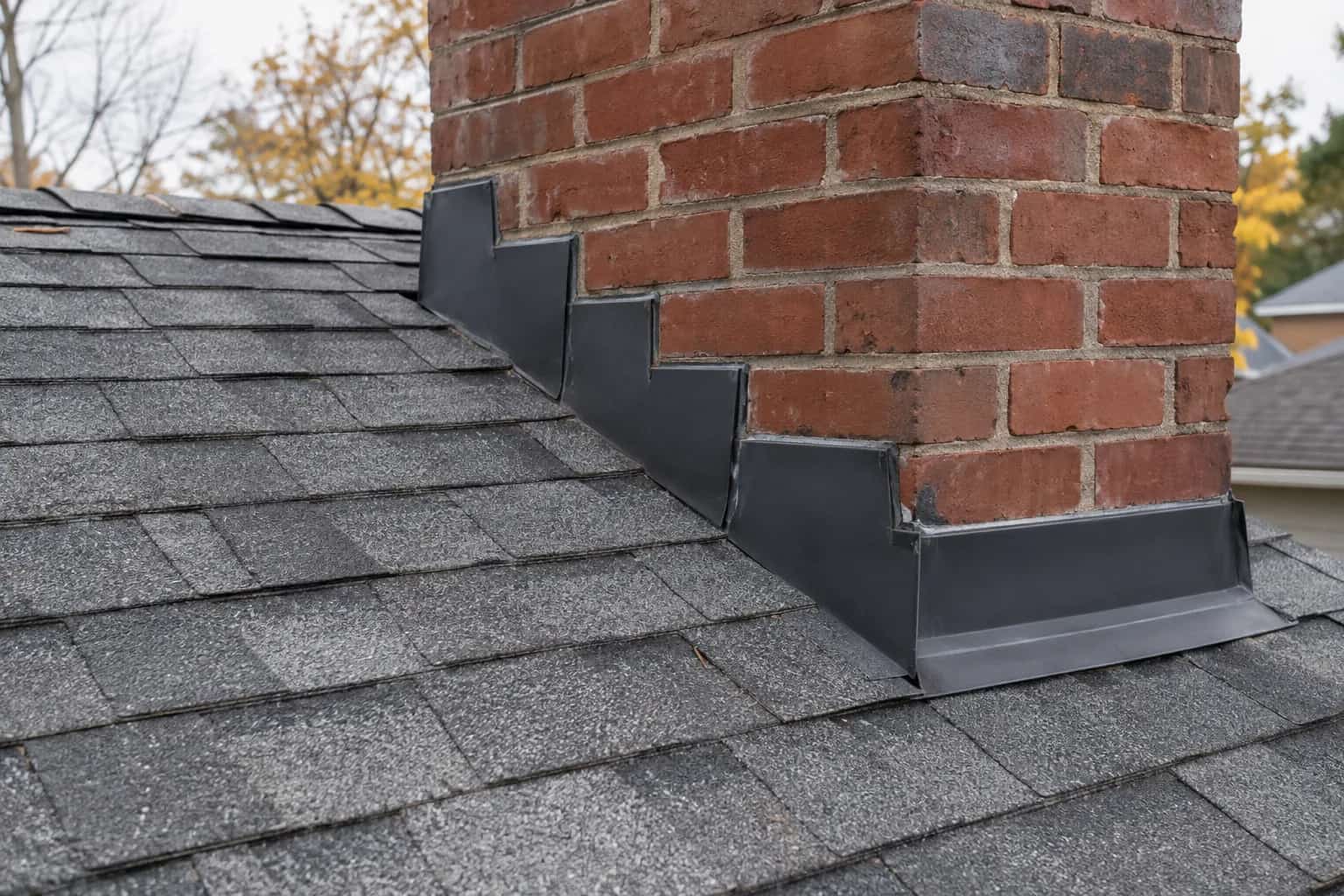
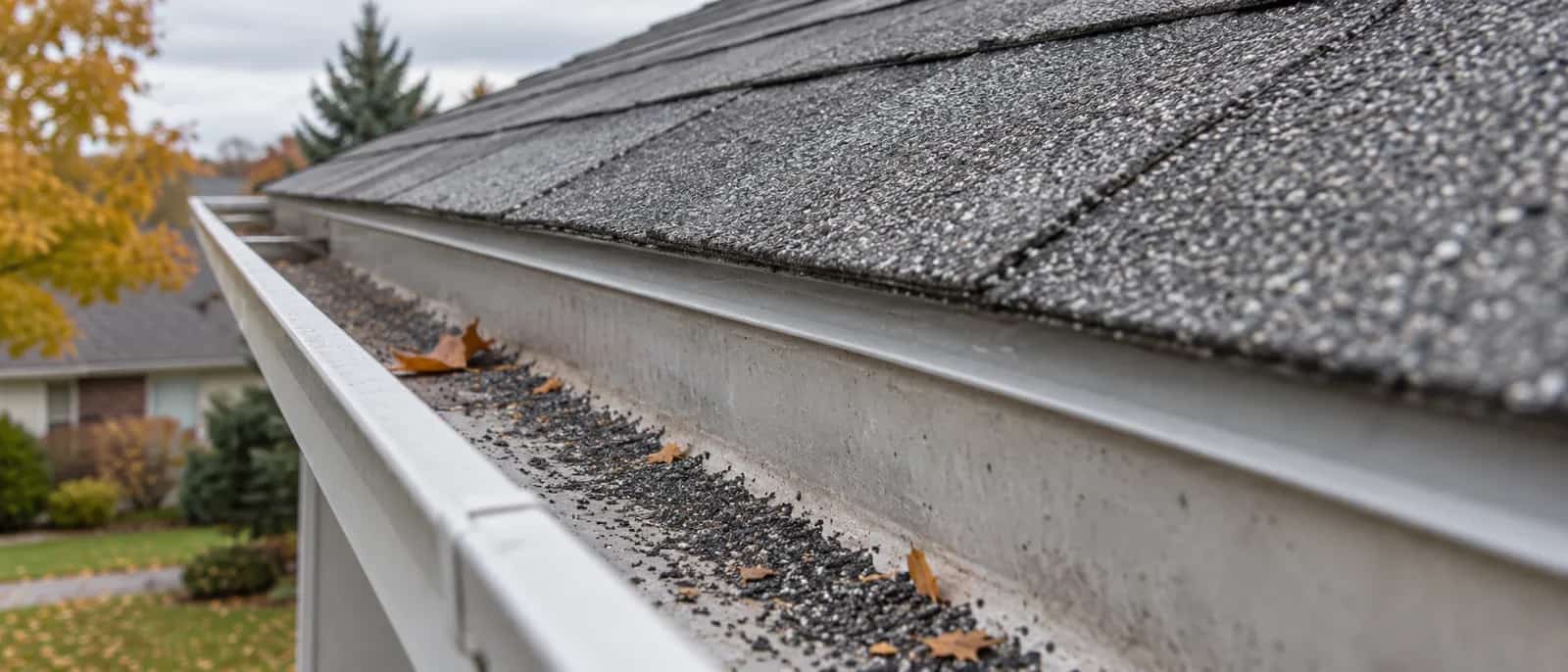
A gutter cleaner finds thin red fragments mixed with the leaves. The matching chimney above has patches where brick faces are missing. Have the chimney assessed before treating this as ordinary gutter debris. Surface loss, loose joints and instability need different repair scopes, and a ground photograph cannot establish how much sound masonry remains.
Keep people and vehicles away from a location where pieces are falling. Do not stand beneath the chimney to collect evidence or try to knock loose material down. If there is movement, major separation or an immediate collapse danger, leave the affected area and contact emergency services.
The gutter contractor sends a photo of a red fragment beside a leaf. The owner zooms in and asks whether it is a shingle. "A rather ambitious shingle," Pat says once everyone is clear of the falling-material area. The matching bare patch on the chimney changes who needs to attend first.
Start by Identifying the Pieces
Asphalt granules are small mineral particles; a broken brick face is a different object. Mortar fragments may be pale or grey and need their own inspection. Ask the person who already has safe access to photograph the debris and its likely source without disturbing the chimney.
Record which gutter contained the fragments and whether they appeared after winter, a storm or recent work. Those facts help locate the problem. They do not date every piece or prove a single weather event caused the damage.
A gutter that has collected material for years can contain old fragments. Conversely, finding only a few pieces does not establish that the upper masonry is sound. The inspection needs to look above the collection point.
From Falling Fragment to Repair Scope
The gutter catches evidence from above; inspect the source before cleaning it away.
Keep the area clear
Avoid collecting pieces beneath suspect masonry.
Identify the source
Record debris and inspect the corresponding chimney area.
Assess the assembly
Separate brick, mortar, top, flue and roof-junction findings.
Coordinate reinstatement
Assign roof protection, flashing and final debris removal.
Spalling Describes What Happened, Not the Whole Cause
Spalling means pieces have broken away from the surface. The Chimney Safety Institute of America describes moisture-related chimney deterioration and separately identifies signs professionals investigate after a chimney fire. The assessor needs the condition and history of this chimney, not a diagnosis based on one fragment. A missing face alone does not prove a past chimney fire.
Have the assessor consider the chimney top, mortar, brick condition, flue system and roof junction. If the chimney serves an appliance, the appliance and venting history belong in that conversation. A roofer replacing flashing cannot certify the inside of the flue.
White deposits nearby are another observation, not the same defect. Efflorescence guidance explains salt movement to a surface; it does not make every pale patch evidence of structural failure. Keep the distinction visible when reviewing photographs.
Dave marks the affected gutter on a wide photograph while the masonry inspection is arranged. The fragments collected below one corner do not tell him that only that corner is damaged. He wants the assessor to examine the whole exposed stack, including faces invisible from the driveway.
A Small Patch and a Rebuild Need Different Evidence
Picture one damaged brick beside otherwise sound masonry. Now picture several courses with loose joints and widespread face loss. Both might be described on a quote as chimney repair, but the labour, access and remaining risks differ considerably.
Ask the recommendation to identify the extent by face and height, the condition of surrounding material and any areas that could not be examined. If rebuilding is proposed, ask where the sound starting point is expected to be and how concealed deterioration will be handled if found.
A cosmetic coating cannot put lost brick back. Repointing addresses mortar joints; it does not automatically restore damaged brick units. The proposed materials and method should suit the existing masonry, particularly on an older home.
Protect the Roof During the Masonry Work
The work plan should explain where debris goes, how shingles and gutters are protected and who restores the flashing junction. Do not let the roofer and mason each assume that the other owns the final weatherproofing.
Some work requires removing nearby roofing or metal to reach sound construction. Record that scope before the job, along with temporary protection if the weather changes. Ask for useful completion photographs before scaffold or other access equipment disappears.
Finally, have the gutter and roof below checked for remaining fragments or impact damage. That cleanup is necessary, but it follows the source repair. An empty gutter is not proof that the chimney has stopped shedding material.
If the chimney has recently been involved in a fire, use the post-fire inspection sequence. The permission to use the appliance again and the condition of the roof are separate questions, and both deserve a clear answer.
The cleaning line remains on the work order, but it moves below the masonry and roof-protection items. The owner can see why: paying to empty the gutter before the source keeps shedding would provide a very tidy place for the next fragment to land.