

The blower-door report landed on the workbench beside the insulation proposal. Dave saw the improved number and started to smile. Pat tapped the other invoice underneath it: new windows. "Which part of the improvement are we taking credit for?"
A blower-door result measures whole-house airtightness. It can help judge attic air sealing, but it does not allocate the improvement between the hatch, wiring holes, basement rim and new windows. Pair the number with inspection and leak-location checks before insulation hides the work.
What the fan is measuring
A blower door places a controlled fan in an exterior opening and measures the airflow needed to maintain a test pressure. A tighter tested enclosure needs less fan airflow at the same pressure. Natural Resources Canada includes this airtightness test in an EnerGuide home evaluation, alongside inspection of insulation and the home's systems.
Reports may show CFM50, airflow in cubic feet per minute at a 50-pascal pressure difference, or ACH50, that flow expressed as air changes per hour using the assessed building volume. The Energy Conservatory explains these test metrics and how building volume affects the comparison. The "50" describes an imposed test condition. It is not the ordinary pressure across your walls every hour of the year.
If you compare reports, compare the same measure. A lower CFM50 number from a larger house is not directly interchangeable with another home's ACH50, and changing the volume used in the calculation changes ACH50 without physically sealing anything.
A useful before-and-after example
Suppose comparable tests show 2,000 CFM50 before work and 1,600 CFM50 afterward. The reduction is 400 CFM50, or 20% of the original tested airflow. That is a calculation of leakage reduction under the test conditions, not a promise of 20% lower heating bills.
That was the problem with our two invoices. Windows had changed between the tests too, so the final result could not give the attic contractor the whole reduction. We listed every intervening change, including any change to the tested boundary. Dave crossed out his triumphant margin note. The arithmetic was fine; the attribution had got ahead of it.
The advisor should also keep test preparation consistent and document relevant conditions. An opening temporarily taped on one visit and left open on another can distort the comparison you thought you were making.
Separate the number from the location
These stages establish what changed and whether the attic work addressed its intended paths.
Establish the baseline
Record the test pressure, result, building boundary and preparation.
Locate attic pathways
Use appropriate diagnostics to identify leakage at the ceiling and attic connections.
Seal and inspect
Address the specified paths before insulation conceals the work.
Retest comparably
Compare like units and conditions, then investigate remaining leakage.
Leave the sealing visible long enough to check it
The Department of Energy's attic air-sealing guide describes using blower-door depressurization and leak-location work to validate attic sealing. A number establishes overall performance; diagnostic inspection helps locate the remaining paths.
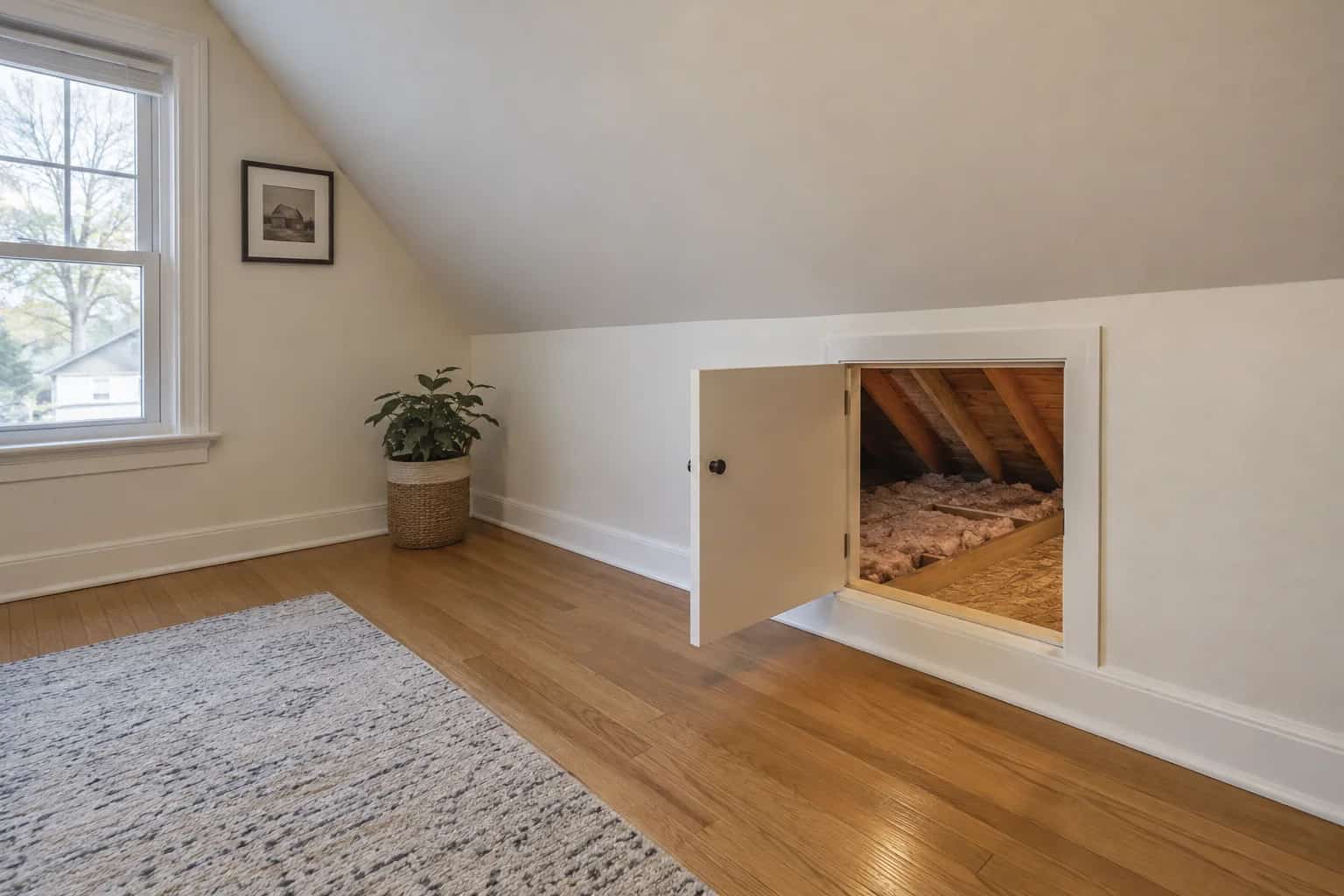
We put a hold point before the insulation top-up. The hatch, dropped ceiling and any chase connecting floors deserved inspection while their air-sealing details were still visible. Loose-fill can reduce heat transfer while leaving air paths open. A photo of a lovely even layer afterward would not tell us what had been sealed below it.
Prepare safely, then interpret the result
Tell the advisor about suspect vermiculite, significant rodent contamination and fuel-burning equipment before testing. Those conditions need assessment before a fan changes pressure through the house. Follow the service organization's preparation instructions; NRCan specifically explains precautions for fuel-fired and wood-burning appliances during its evaluations.
A tighter house also needs suitable ventilation and safe appliance operation. Those belong in the retrofit assessment rather than being left until after the score improves.
For the actual order of attic repairs, see air sealing before insulation. Use the test to verify the work you intended to buy, with enough detail to separate a better number from a complete repair.
We kept the number, the work record and the diagnostic findings together. That made the result useful without making it say more than it could. Pat let Dave keep the smile, provided it stayed off the heating-bill prediction.