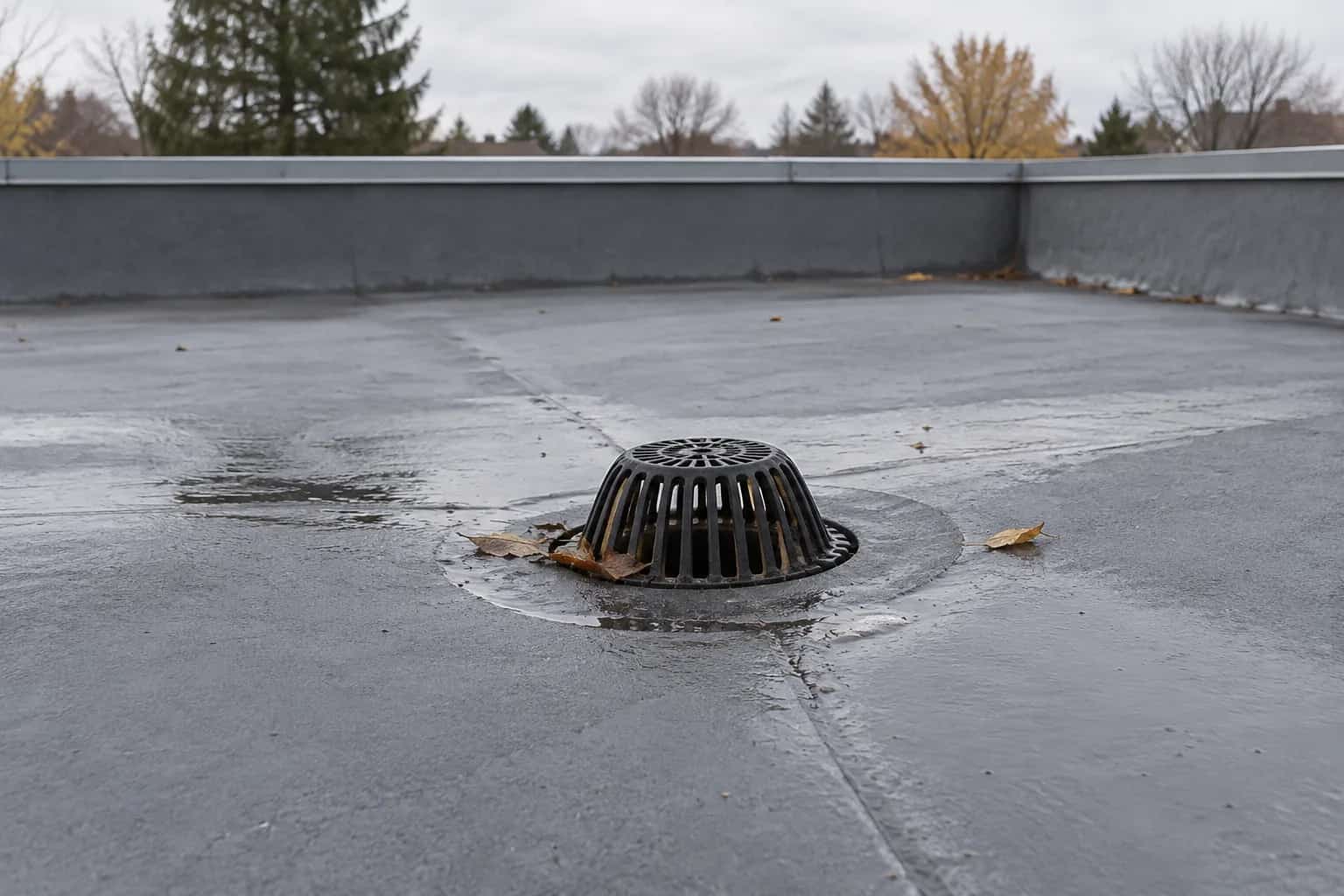
A few pale marks beneath a favourite perch are different from a thick accumulation beside a blocked roof drain. Both deserve a suitable cleaning decision, but they are not the same job. Choose the scope from the amount, location and roof material, not from a promise to make everything white disappear.
Do not climb up with a stiff brush or blast dried deposits into the air. For a high roof or significant accumulation, arrange a contractor who can explain safe access, contamination controls and compatibility with the covering.
Under a favourite bird perch, the owner sees a cleaning job. Around the nearby outlet, Mike sees a second question: where will the wash water and loosened material go? Pat suggests that relocating the mess into a downspout would be an unusually literal interpretation of getting it off the roof.
Start With What Is Being Affected
Ask whether the problem is surface marking, recurring deposits, obstructed drainage or damaged material. Photograph the overall location from safe ground. A narrow line below a perch suggests a different maintenance pattern from debris spread around equipment or a nest.
IKO's bird-damage guidance describes effects on roof materials and drainage. Its commercial-roof context should not be treated as a cleaning recipe for every residential shingle. The actual roof manufacturer and product still matter.
If the gutter or drain is blocked, the proposal should include clearing and checking that route, not only washing the visible surface. Water must have a suitable destination during and after cleaning. Sending contaminated wash water into a rain barrel used for the garden creates a different problem.
A Cleanup Quote Should Name the Method
Ask the contractor to identify the roof covering, proposed cleaner if any, tools, runoff management and access method. They should explain how the work avoids removing shingle granules, damaging coatings or driving water into laps.
A powerful pressure washer can make an impressive before-and-after photograph without demonstrating a sound result. Nor does a disinfectant's suitability for a hard household surface establish suitability for a roof membrane, metal finish or asphalt shingle.
For substantial accumulation, ask how dust and direct contact will be controlled and how affected material will leave the site. Keep children and pets away from the work area. ECCC's wild-bird influenza guidance advises avoiding contact with wild-bird body fluids and faeces. It does not mean every dropping is infected, or that an ordinary visual inspection can determine infection.
If sick or dead birds are present, tell the contractor before the visit and follow current local reporting guidance. Do not handle them to clear the roofer's path.
The first quote covers a clean-looking slope. The revised scope also identifies the outlet, the collected material and whether birds are using an opening nearby. The owner had not thought to mention the morning activity at the soffit; that small observation changes the sequence.
Do Not Seal an Occupied Opening
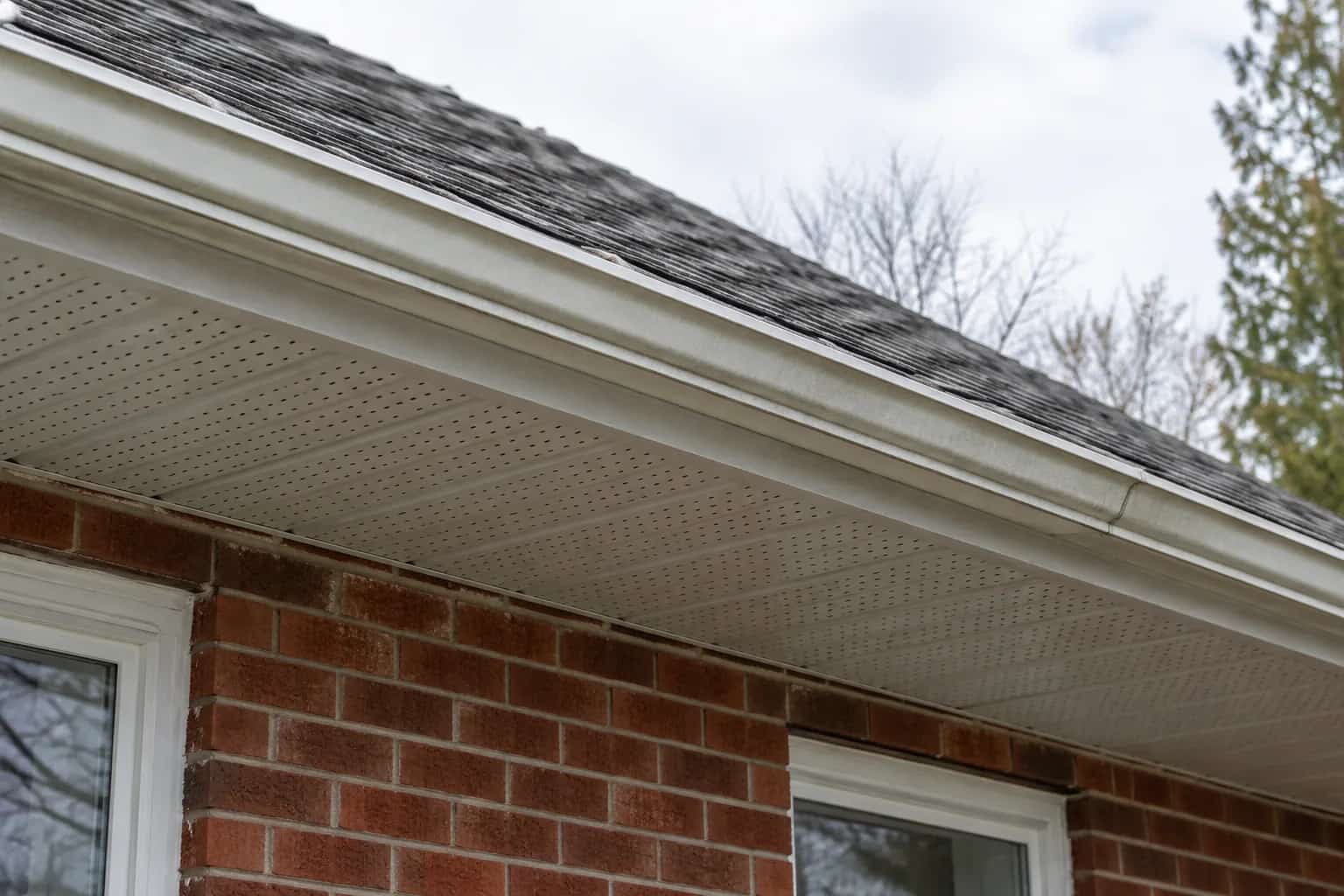
Cleaning and exclusion may need different timing. If birds are entering a soffit or vent, have the species, occupancy and applicable wildlife protections assessed before closing the opening or removing a nest. A clean roof is not worth trapping animals or blocking an operating exhaust.
The nesting guide covers that handoff. Ask who confirms the opening is ready for repair and what replacement guard or terminal is appropriate. An improvised mesh covering can alter airflow or access for future service.
Where birds simply perch above a surface, discuss why that location attracts repeated use and which lawful, roof-compatible deterrents might help. Avoid a device that adds unplanned holes to the covering or catches debris at the same drain you just paid to clear.
Choose the Scope From the Condition
Match access, cleaning and exclusion to what is actually present.
Light surface marks
Identify covering-compatible care and whether treatment is worthwhile.
Heavy accumulation
Plan contamination controls, collection and safe access.
Restricted drainage
Include outlet and downstream flow checks.
Occupied nest or entry
Coordinate lawful exclusion before closing or cleaning that location.
Inspect the Surface After It Is Visible
Cleaning may reveal a condition that could not be judged beforehand. Have the contractor document remaining staining separately from cracks, surface loss, loose components or failed joints. A stain that remains does not automatically mean the cleaning failed; a bright surface does not prove it is undamaged.
Agree how additional repair findings will be shown and approved before the visit. This avoids turning an open-ended cleaning job into unexplained replacement work.
Finally, record where the accumulation returns and how quickly, using ordinary dated observations rather than daily roof visits. That helps set a practical maintenance interval. If roof water is collected, read the food-garden water guide: a cleaner-looking roof does not certify the quality of stored water.
The finished review needs two views: the exposed roof surface and the drainage route. Dave asks for both before the access equipment leaves. A bright patch photographed from the street is nice, but it cannot speak for the elbow below it.