

The drywall crew is booked for Thursday. On Wednesday afternoon someone remembers that the framing repair has not been reviewed. Suddenly the project has a scheduling emergency that was visible on the calendar all along. An inspection hold point prevents the next layer from hiding work that still needs acceptance.
It is not a vague promise to check everything. It names the detail, the reviewer and the condition that allows work to continue. For an attic renovation, a few well-placed pauses can save a surprising amount of reopening.
Start with the permit and the actual project
Toronto's building-inspection guidance explains that mandatory stages depend on the work. Obtain the inspection requirements for the issued permit and coordinate them with the contractor. Other municipalities have their own booking and review arrangements.
A statutory inspection is not the same as the owner's quality walkthrough or a specialist's review of a designed repair. The project may need more than one kind of check. Put each in the programme with a named person responsible for requesting it.
Do not assume that a photograph sent to the contractor counts as municipal acceptance. Equally, do not expect a general inspection to replace every manufacturer or designer requirement in a specialist detail.
Structure should be visible when it is reviewed
If the work includes a designed truss repair, altered support or new floor framing, establish the required review before insulation and finishes obstruct it. Keep the current drawing available at the site.
SBCA's repair guidance emphasises that truss repairs depend on the individual condition and practical installation. If the installer discovers that the drawn repair cannot fit, the change needs to return through the agreed design route. It should not be hidden behind the phrase adjusted to suit.
For the owner's file, a located photograph and the final accepted detail are much more useful than six nearly identical close-ups with no indication of which member they show.
A hold point has three parts
Put the pause in the programme before it becomes a delay on site.
Visible work
Name the structure, service or enclosure detail that must remain accessible.
Required reviewer
Identify the inspector, designer or responsible trade for that check.
Recorded result
Document acceptance, deficiencies or needed changes.
Release to cover
Confirm who tells the next trade that the stage can proceed.
Let the services finish before sealing around them
Electrical, plumbing and ventilation work can create openings through enclosure layers. If the insulation crew seals a connection and another trade cuts it the next morning, the first photograph no longer represents the finished condition.
Coordinate the sequence so the relevant service work and required inspections happen before final enclosure closure. Then identify who repairs the air-control and other protective layers around the completed penetrations.
A small responsibility gap can sit between very competent trades. Everyone may have installed their own component correctly while nobody owns the connection around it. That is the gap the schedule should catch.
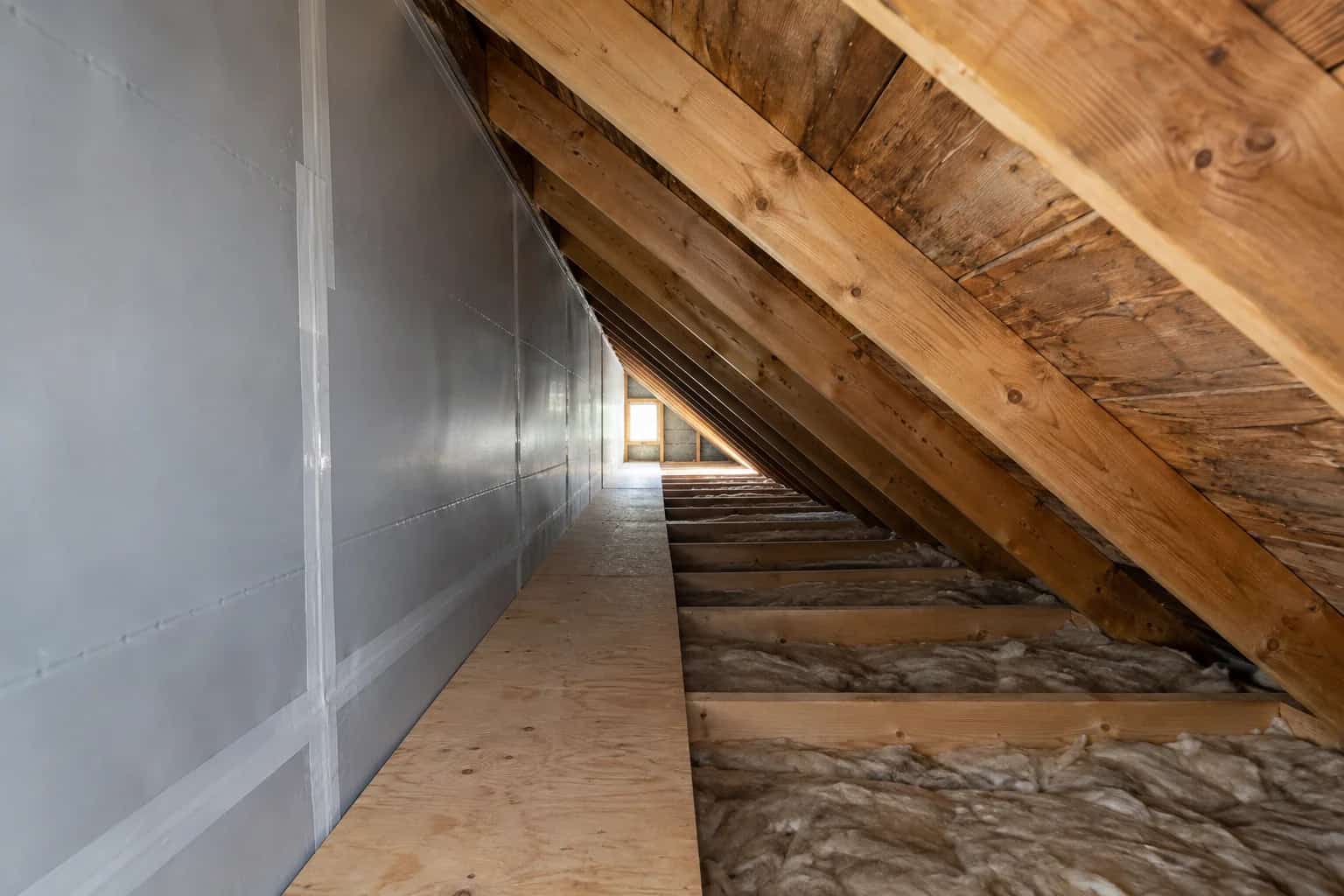
The inspection nobody can perform through loose fill
Dave arrives to review a ceiling connection and finds a beautiful new blanket of insulation. The installer is pleased. Dave is pleased about the coverage, less pleased about his new career in archaeology.
The useful correction is not blame. It is to decide in advance which details need photographs or review before that blanket arrives. The insulation-removal guide explains why access and material condition are separate reasons for moving insulation.
At an eave, hatch, partition or party-wall junction, identify what the review is meant to establish. A picture of an open attic does not prove a continuous seal, and an insulation-depth marker does not prove the layer beneath it was repaired.
Give a failed check a clear route forward
A hold point needs a response when work is not accepted. Who records the deficiency? Who specifies a correction? Who confirms it before the next trade returns?
The answer can be simple, but it must exist. Otherwise the pressure of a waiting crew encourages an informal decision that disappears from the record.
Allow for weather protection and safe access during the pause. Do not expose a roof or leave a hazardous opening merely because a reviewer has not arrived. The contractor's temporary arrangements remain part of the work plan.
A compact record beats a giant photo folder
For each stage, keep the location, drawing revision, date, reviewer and outcome. Add the useful photographs and any corrective instruction. Mark unresolved exclusions honestly rather than calling the whole attic complete.
Before final payment or handover, compare the record with the original scope. Make sure required inspections are closed out and the homeowner knows where service access remains.
The point is not to slow a renovation down. It is to stop the project from paying twice for access to the same hidden detail. Thursday's drywall crew can still arrive; Wednesday should simply contain fewer surprises.