

One contractor offers a clean sweep. Another offers a top-up. The homeowner has put both quotes on the table and asks Dave which one is being thorough. Dave turns the pages over, looking for the findings. Neither pile of paper has told him yet. Both can sound sensible until you ask why. Old insulation does not automatically need removal, and a top-up does not automatically make the old material suitable to keep. Condition and access determine the useful scope.
Begin with an assessment of what is present. If material may contain asbestos, do not disturb it to identify it yourself. Health Canada warns that vermiculite-based insulation may contain asbestos and advises against owner removal. That changes the work process before anyone brings in a vacuum or blower.
Ask two questions separately
First: is the existing insulation suitable to remain? Second: does it prevent the planned work from being completed and inspected?
A dry, serviceable layer may still need localized movement to reach a ceiling air leak or electrical work. Conversely, easy access does not justify retaining contaminated or moisture-damaged material.
NRCan's attic guidance distinguishes dry existing insulation from wet, damaged or contaminated material and puts moisture correction before covering it. The practical implication is a scope based on findings, not a rule that every old attic needs a clean sweep.
Keep, move or remove?
Choose by evidence and the work that must remain accessible.
Retain suitable material
Dry, suitable insulation outside the required work area may be worth keeping.
Move selectively
Defined access can expose air leaks or services without stripping the entire attic.
Remove affected material
Contamination, damage or the selected installation method may require removal.
Pause for assessment
Suspect hazardous material changes who can handle the work and how it proceeds.
What does full removal actually buy?
It can expose the ceiling surface and simplify access for a defined renovation. Some installation methods also require a prepared substrate. The contractor should name that reason and explain how the newly exposed area will be used.
If the plan is simply remove everything and immediately refill, ask what inspection, sealing or repair happens between those steps. A clean attic floor is not itself an improvement in air control, and the important work can still be missed if the schedule leaves no inspection stage.
Include protection of the occupied house, handling, disposal and reinstatement in the price. The lowest removal line may exclude the work that makes removal worthwhile.
Compare three realistic scopes
The first scope on Dave's sketch has generally dry insulation and one accessible service chase needing air sealing. Selective access may be enough if the contractor can inspect and complete the connection properly.
In another attic, extensive contamination affects the material and the cause has not been controlled. The investigation and remediation plan need to address both. New insulation over the top would not solve the underlying problem.
In a third house, a major ceiling renovation provides access from below. The best sequence may differ from a retrofit performed entirely through a small hatch. Discuss the ceiling opening, services and insulation together before committing to a removal method.
"We are paying to solve something," Dave says, "not to make the attic look newly vacuumed." These examples are different reasons for work, not a ranking from cheap to thorough. A well-defined selective repair can be more useful than an indiscriminate full removal.
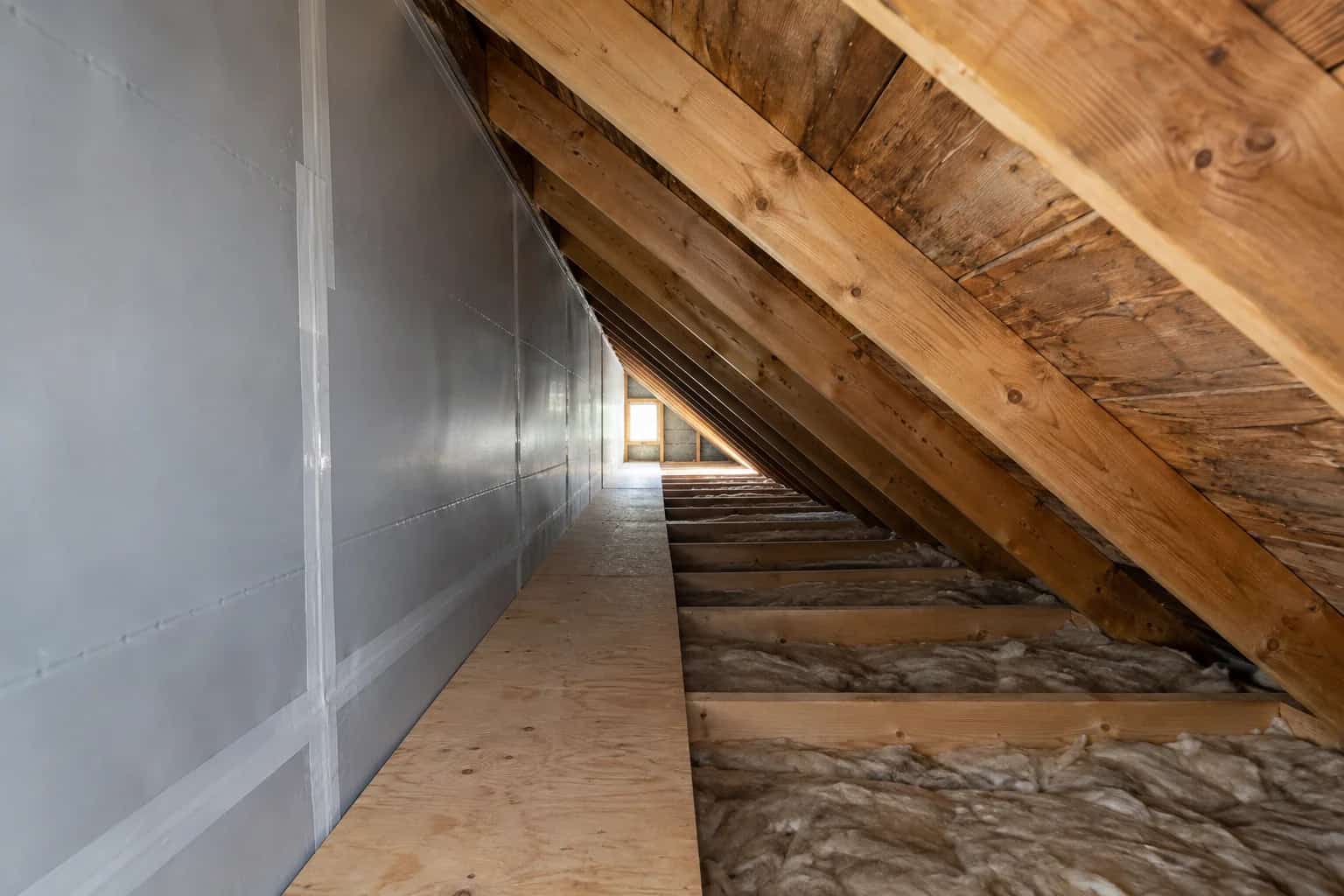
Find the evidence behind a contamination claim
Ask what was observed, where and how it affects the proposed scope. A dark patch can have several explanations. A contractor should not treat every discoloured area as proof of the same hazard.
For suspected hazardous material, use the appropriate qualified assessment and handling process. Do not collect a handful for a home experiment or disturb the material to get a clearer photograph. Our vermiculite guide explains why the material question belongs before ordinary insulation work.
Moisture findings also need a source investigation. A leak, indoor air leakage and an exhaust defect call for different corrections. Removing wet insulation without addressing the source leaves the next layer exposed to the same conditions.
Set a hold point before the refill
The work order should identify what will be visible after removal or localized access, who reviews it and what must be complete before insulation returns. That may include air sealing, repairs, electrical checks and required inspections.
Request located photographs of the completed concealed work. Record the replacement material and installation scope separately from the removed quantity. The renovation hold-point guide helps coordinate this handover.
At completion, you should be able to explain why each area was retained, moved or replaced. That is a better result than knowing only how many bags left the driveway.