
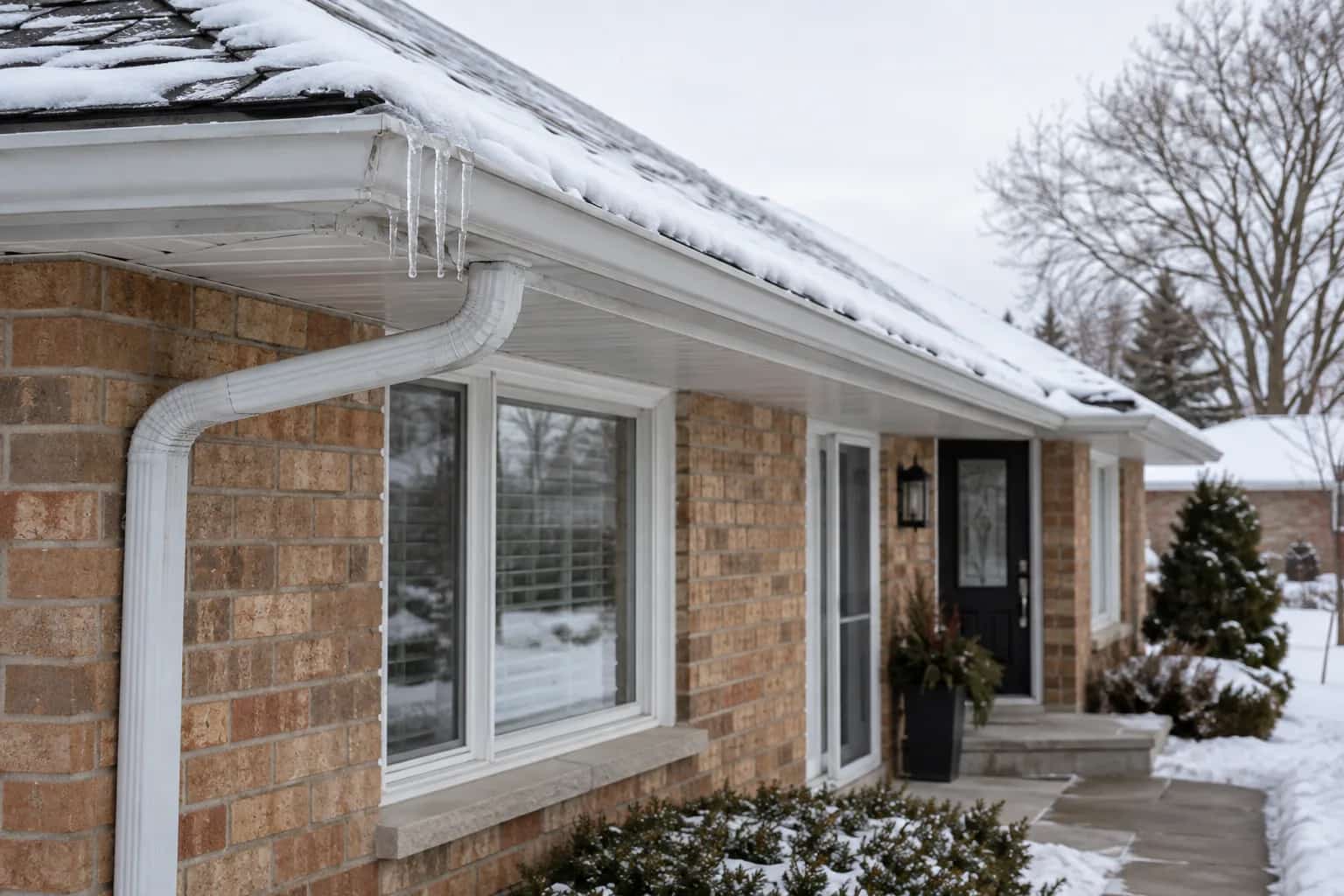
The bathroom tap works in November, sulks in January and becomes a household topic every time the forecast turns blue. The pipe is inside the roof, so surely it is inside the house. Not necessarily. A ventilated attic or side cavity can leave a water line outside the heated enclosure. Pipe insulation slows heat loss; it does not manufacture heat.
If the pipe is frozen now, arrange plumbing help and prepare for leakage when flow returns. Know the water shutoff location if you can reach it safely. Toronto warns against open-flame thawing and unattended heating devices. Do not take a torch, portable heater or improvised heating cable into an attic.
Follow the pipe, not the room name
An upstairs bathroom may be warm while a short supply run passes through a cold space beside it. A pipe can also cross the wrong side of insulation for only part of its route. That short section may decide whether the tap works.
Have the plumber and enclosure contractor locate the line against the insulation and air-control boundary. Where does it leave the heated space? Is there a gap admitting cold air? Has new insulation separated it from heat that previously reached it by accident?
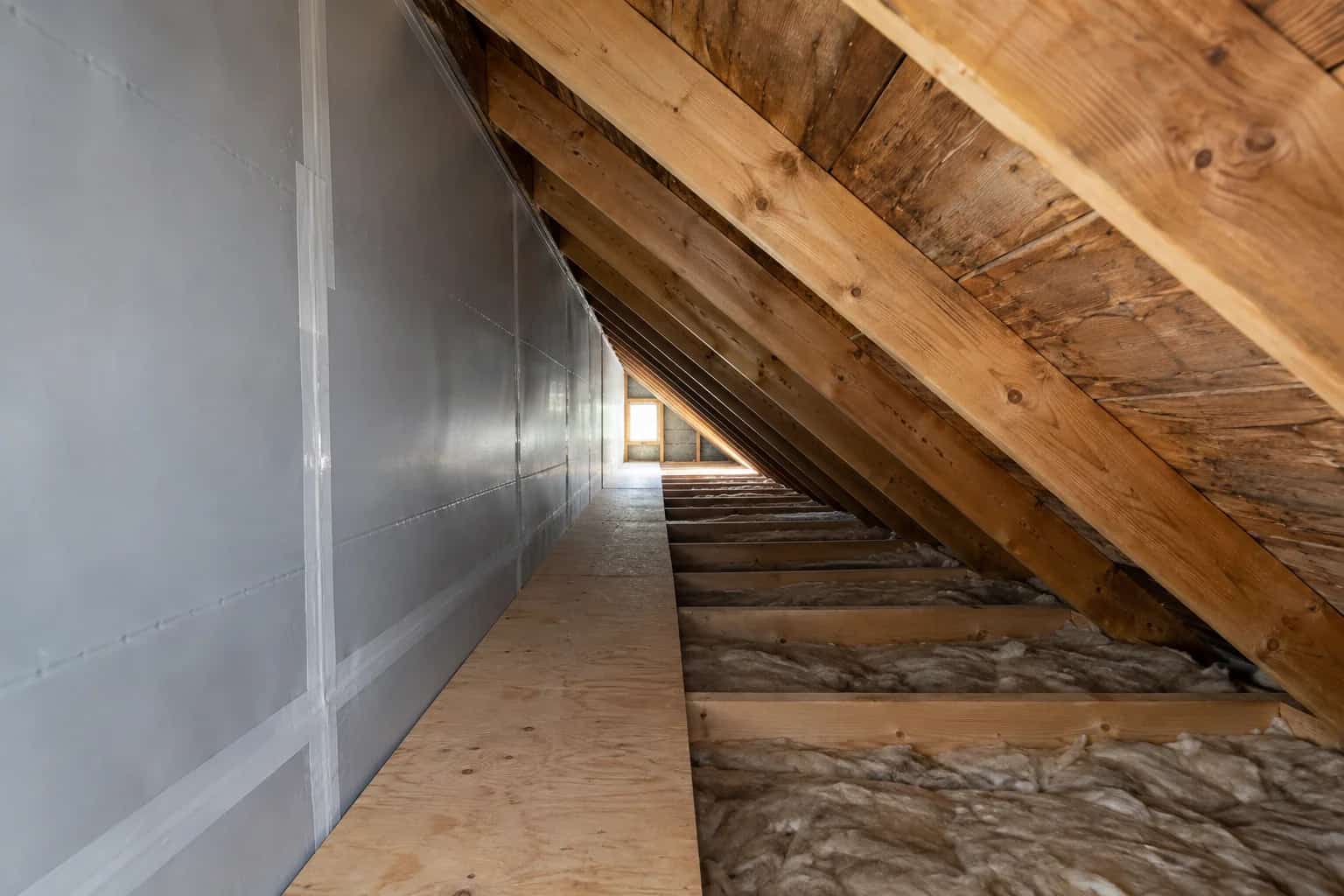
NRCan's half-storey guidance places pipes on the warm side of the enclosure layers. That is a more useful starting point than counting the number of foam sleeves already around the pipe.
The neat little box that became a refrigerator
Take a bathroom renovation where the water line crosses a side attic. The owner wants the pipe hidden, the carpenter builds a neat box and everyone agrees it looks much better. Then the first hard cold spell arrives.
Mike's first question in that conversation is where the box connects to the heated room. If it is isolated from the room and surrounded by cold space, its tidy lid has not solved the thermal problem. The box has excellent presentation skills and no heating plan.
The inspection should establish the actual arrangement before anyone opens more surfaces. A draught at one corner might be a key defect, or the entire route might be poorly located. Those findings call for different corrections.
Where is the pipe actually living?
Trace the water line against the room enclosure rather than the outside roof.
Heated room
Establish which space supplies dependable warmth.
Air and thermal boundary
Locate the insulation and continuous air-control layer.
Water line
Identify any section left on the cold side or exposed to leakage.
Permanent correction
Compare a suitable new route with a designed enclosure or protection solution.
Compare a new route with a better enclosure
Rerouting within the heated space can remove the vulnerable stretch from the cold cavity. It may require interior access, new holes or changes to fixtures. The plumber should coordinate structural penetrations and finishing rather than treating every available gap as a pipe route.
Repairing the enclosure around an appropriate route may work where the intended warm-side location has been compromised by missing insulation or air leakage. The detail needs a continuous boundary and an understood source of heat.
Specified active freeze protection can have a role where the designer and plumber consider it appropriate. Any heating product must suit the pipe, location, power supply and installation requirements. It is not a reason to wrap an unidentified cable around concealed plumbing and forget it.
Ask what happens during a power interruption where the solution depends on electricity. That question often clarifies the difference between a convenient supplement and the only thing preventing a repeat freeze.
Do not warm the whole attic by accident
Opening the house to a cold attic can introduce moisture and undermine the intended enclosure. Adding a heat register to a ventilated attic is not a casual plumbing repair.
If a proposal genuinely changes the attic to conditioned space, it needs the whole enclosure and ventilation plan. A pipe problem should not silently turn into half an attic conversion.
Keep garage air separate too. A cavity shared with an attached garage cannot simply become a convenient source or return path for house air.
Check the result before the next January surprise
Record the new route or repaired boundary before covering it. Ask the plumber what was inspected for freeze damage and how the system was checked after work. The enclosure contractor should document the connection that keeps the pipe on the intended side.
If monitoring is recommended, agree where temperature is measured and what action follows an unsuitable result. A sensor in the warm bathroom does not describe the hidden pipe cavity.
The useful permanent repair changes the condition that caused freezing. Getting water moving again is welcome; keeping the bathroom out of the weather forecast requires the second part of the job.