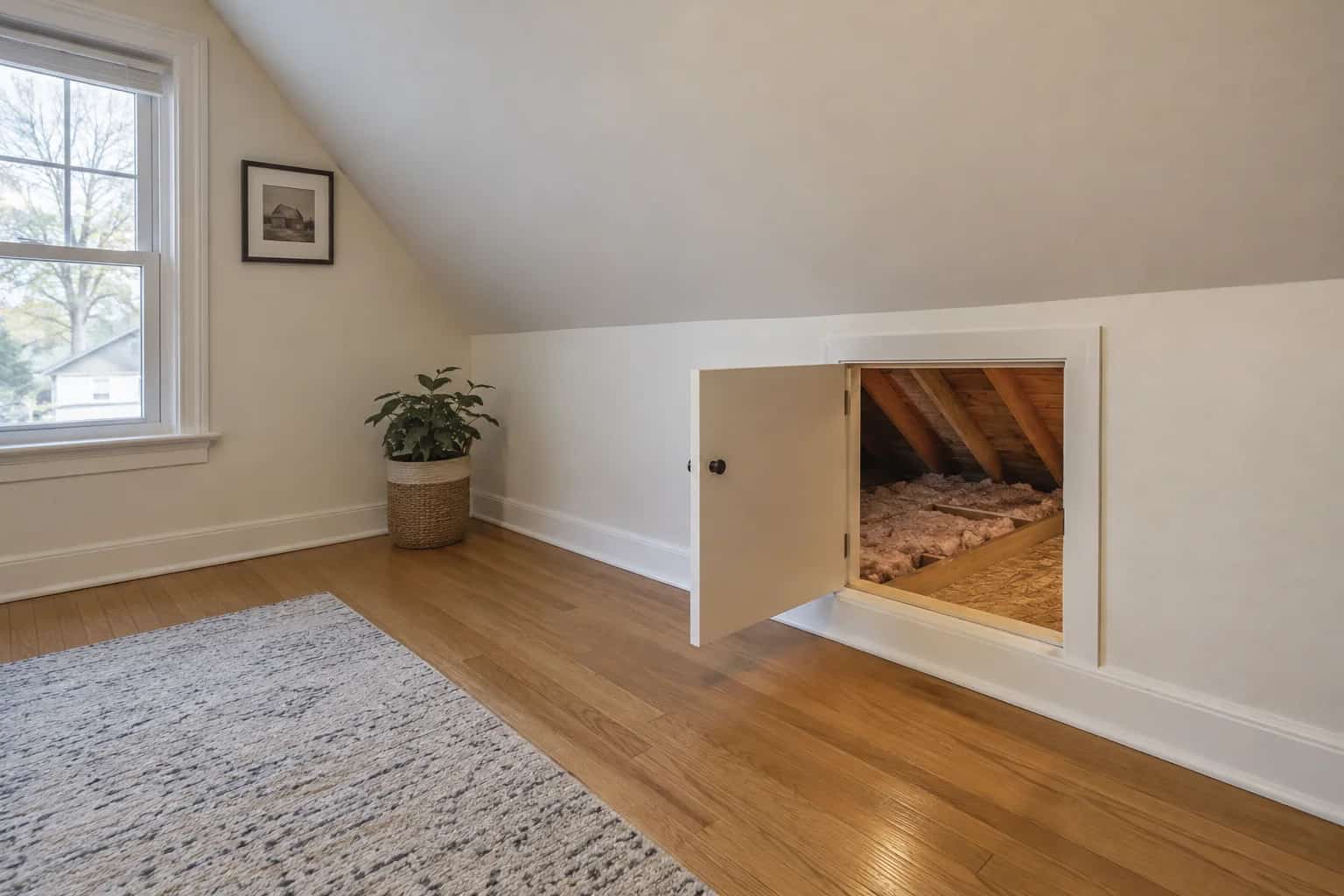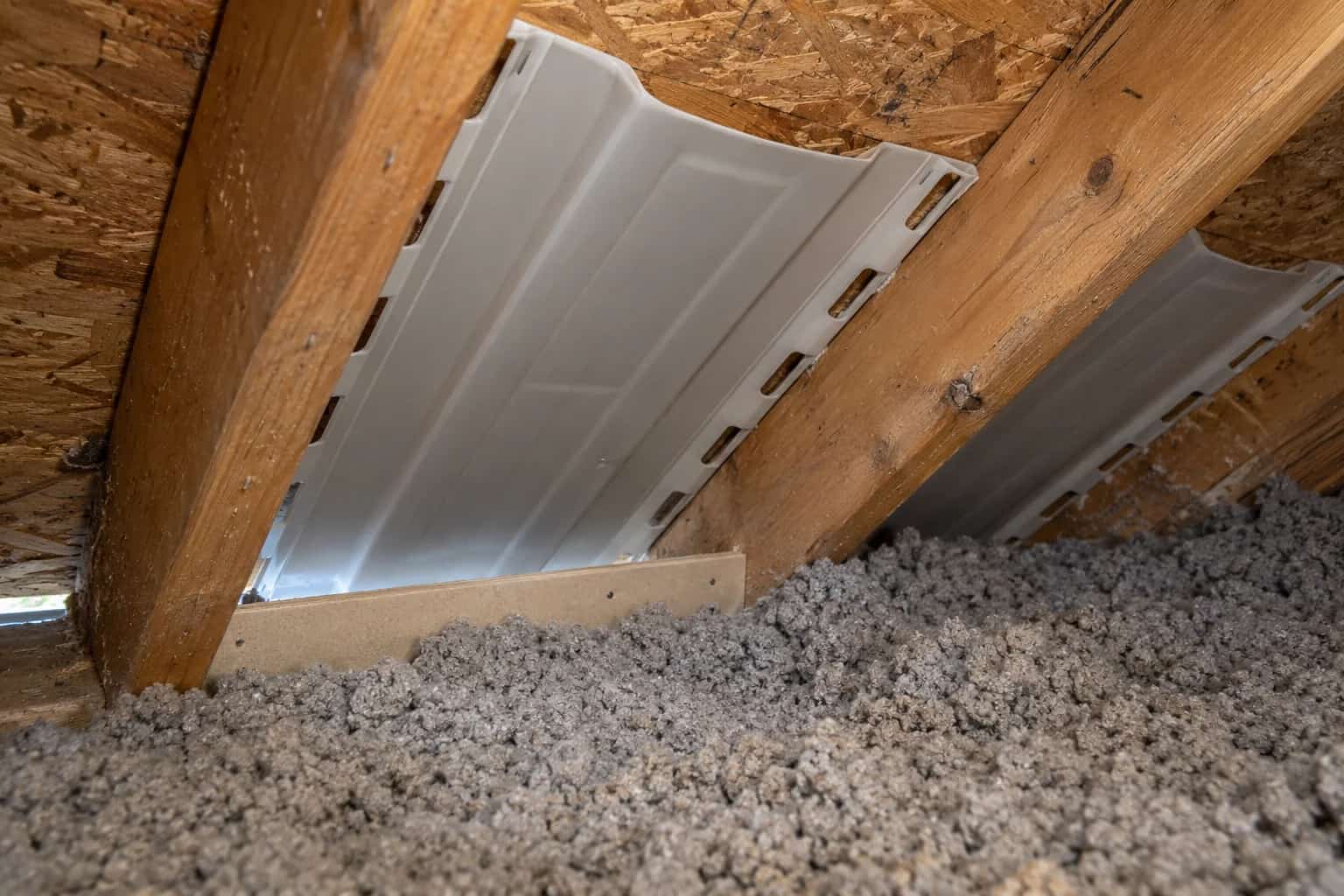
The insulation samples look very tidy on the kitchen table. The attic above them contains diagonal braces, cables and a far corner nobody has included in the sales pitch. Cellulose, fibreglass and mineral wool can all be useful. "Which one gets installed properly over there?" Pat asks, pointing toward that corner. That is the comparison worth paying for.
A broad, open attic floor is a different job from a narrow side attic behind a bedroom. Compare the installed result for your geometry. A brand preference is not much comfort if the last metre beside the eaves gets missed.
Loose-fill follows an irregular floor
Blown cellulose and blown fibreglass are practical candidates where many joists, braces and other obstructions interrupt the attic floor. The material can surround these shapes without hundreds of individual cuts. That is an installation advantage, not permission to bury everything indiscriminately.
The distinction between depth and performance matters. The installer needs the particular product's coverage instructions, including the specified quantity for the area and target R-value. A fluffy-looking layer is not a measurement. Natural Resources Canada describes the different insulation forms and why proper application matters; there is no single depth that makes all products equivalent.
Cellulose is paper-based fibre treated for resistance to fire and fungal growth; its installation must allow for settling. Fibreglass uses glass fibres, and some blown products specify negligible settling. For example, Owens Corning publishes separate installed-depth, settled-depth and bag-coverage data for its loose-fill product. These differences belong in the calculation, not in a blanket claim that all blown insulation behaves alike.
On the two estimates, Pat circles "another few inches" and writes a question mark. Inches of what, over how much area, to which specified performance? Ask for the product, area, target performance and installation quantity or coverage specification. The bags may differ; the scope should be comparable.
Batts reward careful fitting
Fibreglass and mineral-wool batts suit accessible areas where pieces can be fitted properly. Their visible edges make it easier to see the intended arrangement while installing, but every obstruction creates another joint to get right. A cable, diagonal brace or uneven joist spacing can turn a quick-looking job into quite a lot of cutting.
Mineral wool is available in more than one product form; do not assume every mineral-wool board or batt belongs in an attic. ROCKWOOL's Comfortbatt guidance identifies its intended applications. Use the instructions for the actual product on the quote, rather than transferring details from a wall board or exterior roof product.
The clear bay beside the hatch makes batts look like an easy afternoon. Then the view turns toward the low roof and cross-bracing. Dave puts the sample down. "The attic has declined to be a rectangle." That second area needs a credible fitting or blowing plan, including its awkward edges. Buying the material that looks simplest beside the hatch does not settle the installation at the eaves.
Choose for the space you actually have
The installation geometry can change which product form is practical.
Open, irregular floor
Blown material can surround many obstructions; verify product quantity, coverage and the completed layer.
Reachable, regular bays
Batts can fit well when every edge and obstruction receives careful cutting and placement.
Low side attic
Resolve access and the last stretch beside the eaves before choosing any material.
The old layer changes the decision
A top-up is not automatically a removal job. First establish whether the existing material is dry, reasonably continuous and suitable to remain. If it is uneven, our guide to settled attic insulation helps separate redistribution from a broader deficiency.
Do not rake or sample possible vermiculite to settle the question yourself. Suspect vermiculite needs a separate assessment before disturbance. Similarly, a wet area needs its cause resolved before more insulation conceals it.
Mike keeps returning to the hatch and ceiling penetrations before discussing the top-up. Insulation slows heat flow; it does not close an air gap. Adding more of a favourite material while leaving those gaps is an expensive way to avoid the preparation.
What we would compare on two estimates
Look for equal coverage at the edges, a protected route to serviceable equipment, preserved ventilation openings and a clear treatment of the hatch. Then compare the specified installed thermal performance and total scope.
At the table, the premium bag is still attractive. But now the estimate has to explain the hidden corners, preparation and finished coverage. If one contractor includes that work and the other only names the material, the prices describe different jobs. Choose the result you want above the ceiling, not the sample you like below it.
Compare the effective assembly value, including framing paths, alongside the material label.