
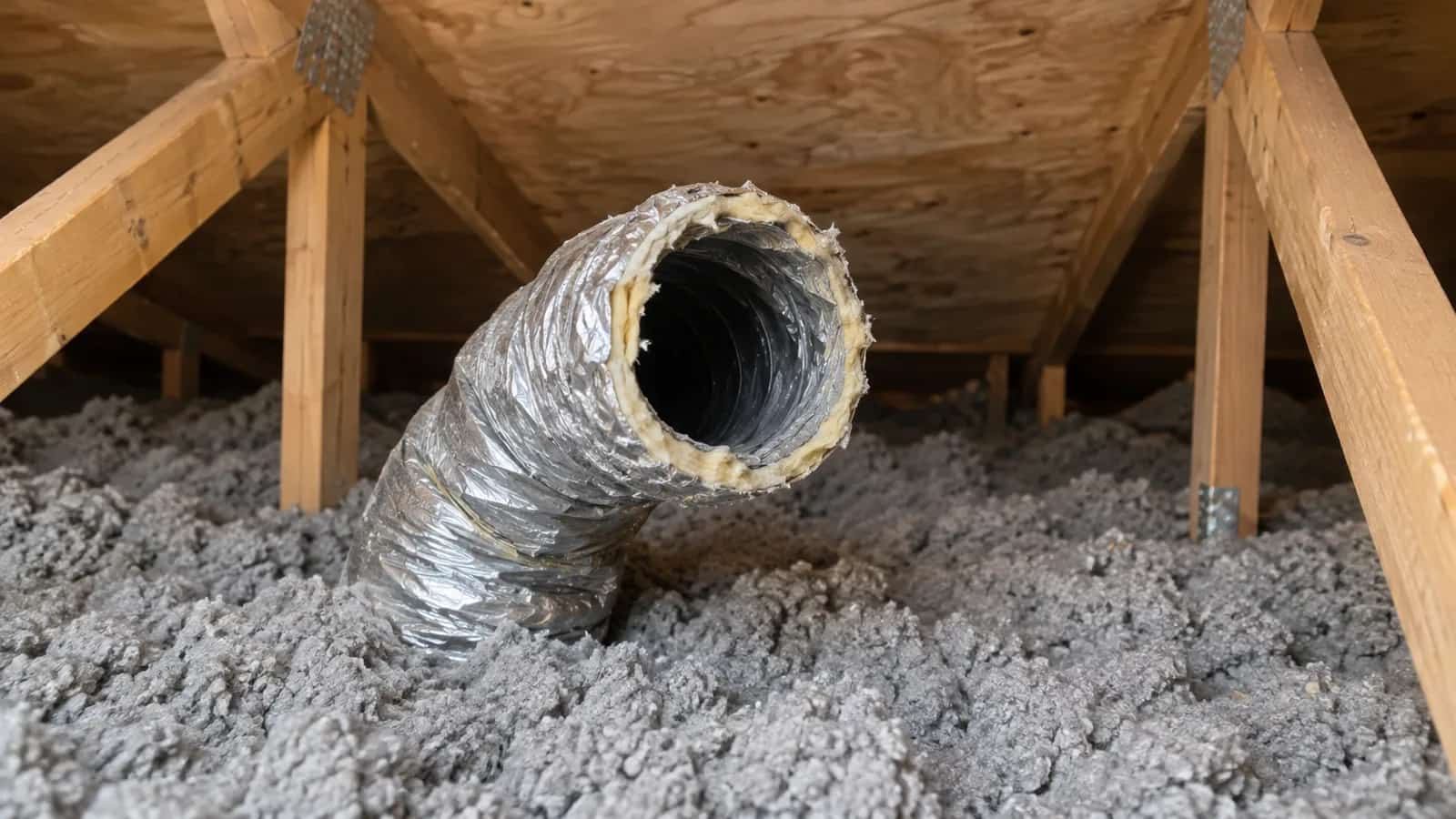
The bathroom fan is making plenty of noise. The mirror is still fogged. "At least we know the motor is working hard," the homeowner says. Noise does not establish useful extraction. A backdraft damper that sticks closed can restrict flow; one that stays open can admit cold air when conditions drive it inward.
Closed When It Should Be Open
A stuck-closed damper increases resistance. Bathroom moisture may linger, and the fan may become noisier without providing useful extraction. Packaging left during installation, distortion, debris or icing can interfere with movement.
The PNNL bathroom exhaust guidance includes checking that exterior dampers open freely. For a roof cap, that inspection belongs to someone equipped for safe roof access, not a homeowner leaning out of an upstairs window.
A flap that does not return can allow outdoor air to enter the duct when conditions drive it inward. You may notice a cold fan grille or fluttering noise in wind. Those observations are useful, but air leakage around the fan housing can also cause a draft.
A damper is not necessarily an airtight seal. Its normal performance and orientation depend on the product. The product instructions are the reference for its movement and leakage, especially if both the fan housing and exterior terminal contain dampers.
Removing the flap to make the fan stronger is no better than taping it shut to stop a draft. Both change the intended operation. Service or replace a damaged component with a compatible one rather than inventing a new operating mode.
The owner wants to tape the cold flap shut for winter. Dave asks what will happen during the next shower. They abandon that shortcut and arrange a check of the intended movement, the housing and the whole exhaust route. The aim is a working exhaust, not a quieter argument with the weather.
Three Damper Conditions
Compare behaviour with the fan running and stopped.
Stuck closed
The running fan faces a restriction and extraction may fall.
Stuck open
Outdoor air can enter when the fan is not operating.
Moves correctly
The flap opens and returns as specified, but the duct still needs checking.
Distinguish a Draft From a Drip
Your symptom gives the service visit a useful test:
- Steam lingers while the fan runs: check the whole route for resistance and measure delivered airflow.
- The grille feels cold with the fan off: inspect damper return and leakage around the housing.
- Water drips after showers: examine insulation, support and condensation as well as the flap.
None of these observations identifies the failed part alone. They help avoid replacing a working motor while leaving the obstruction in place.
After the service, Mike asks for the fan-on and fan-off checks and, where extraction was poor, delivered airflow measurement. "It sounds better" is welcome. It is not the only result the household came for.
Condensation within the duct can accompany cold-air entry, but the damper is not the only factor. Duct insulation, support and routing matter. Rain entry at a poorly flashed terminal is another possibility.
Keep the terminal model with the service record. Next time a part is needed, the conversation can begin with the actual product instead of another round of guessing which flap lives above the bathroom.
If water has collected in the run, follow the duct-condensation guide as well. Fixing the moving flap should not leave an unsupported water-filled dip hidden above the ceiling.
