
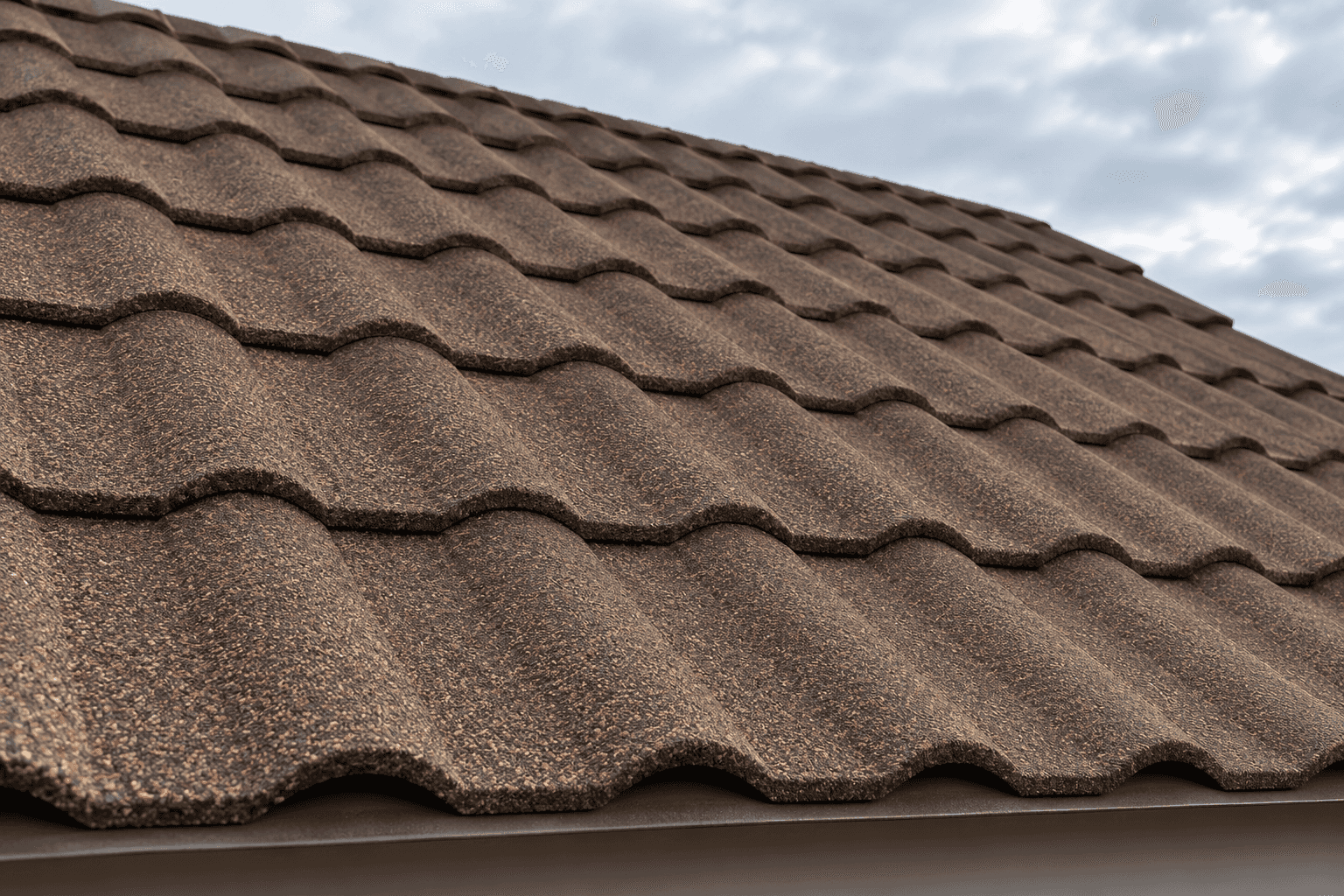
From the driveway, a stone-coated steel roof can resemble shingles, shakes or tile. Up close, the formed metal panel and granular coating explain why it needs its own comparison.
Choose by the exact roofing system and completed installation scope. The texture may suit a house where smooth metal would look out of place, but it does not tell you how the panels attach, what sits beneath them or how a later repair will work.
Ask for the profile, not just the material name
Have each quote name the manufacturer, panel profile, colour and applicable installation instructions. Ask to see a sample that includes its edges and attachment area, not only a small square of the finished face.
Tilcor's CF Shingle, for example, uses a concealed-fastening arrangement and a shingle-like profile. Other stone-coated systems can use different shapes and details. A demonstration of one product does not establish the method for another.
Separate this choice from the broader steel-versus-aluminum comparison. Here, the question is how the particular granular steel-panel system fits the roof, house appearance and service arrangements.
A larger installed sample or a completed roof viewed from public ground can help with colour and scale. Ask whether it is the same profile and finish. The photograph of a deep tile shape is not a useful colour promise for a low-profile shake.
Read beyond the sample
Four parts of a useful comparison.
Profile and finish
Match the exact panel, colour and appearance you are choosing.
Support and roof layers
Show removal, deck condition, underlayment and any battens.
Junctions and attachments
Include system-specific edges, valleys, walls and accessories.
Service
Confirm local replacement supply, access and product care.
See the assembly beneath the panel
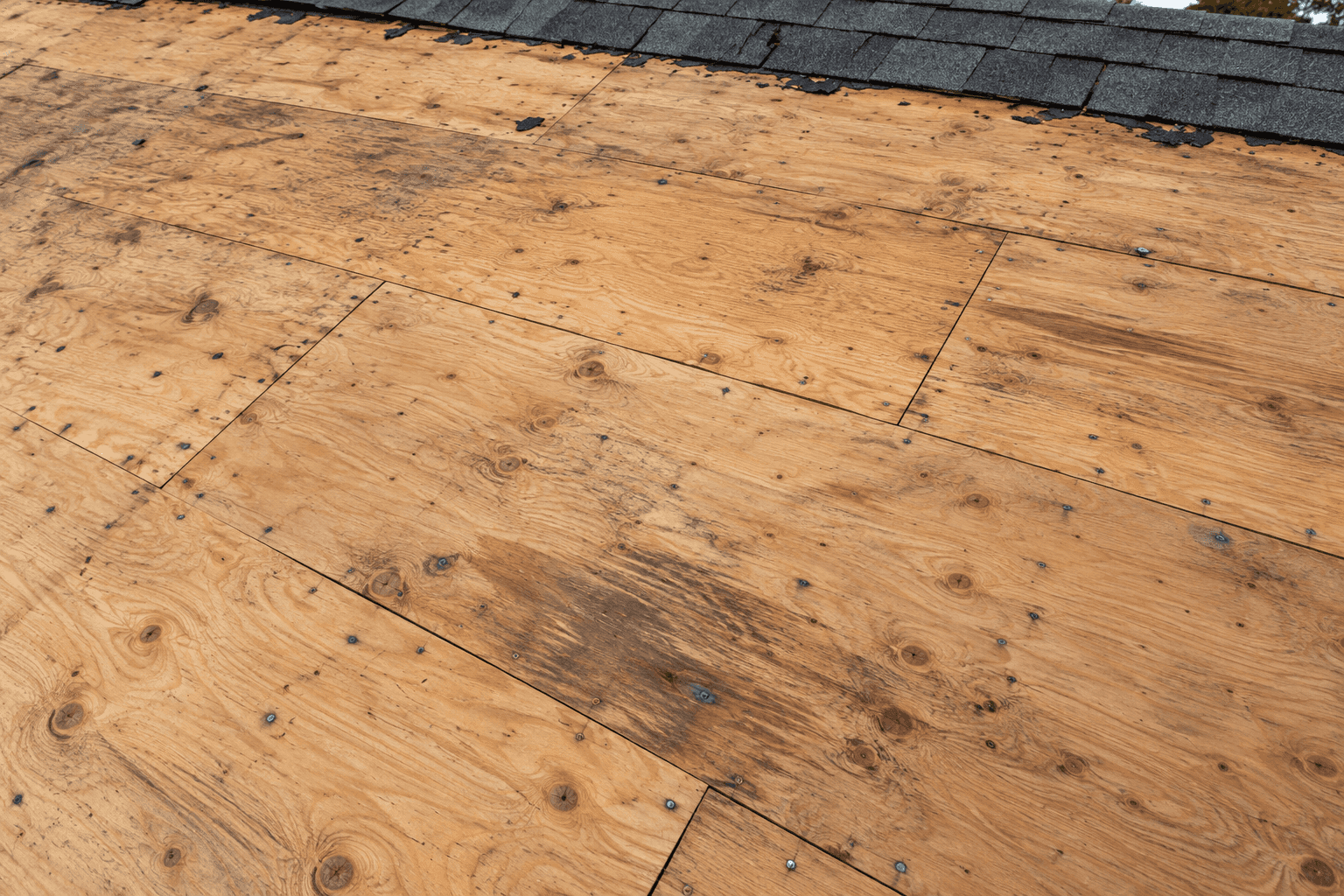
Request a simple section showing the existing roof, proposed removal, deck repairs, underlayment and panel support. If battens are proposed, have their role and attachment identified. If the panel is installed over solid sheathing, ask which instructions govern that arrangement.
Do not assume that every stone-coated roof needs battens or that every product can cover an existing shingle roof. Tilcor advertises an overlay option for its CF Shingle; that does not establish whether your existing covering, deck, roof geometry and local requirements make overlay appropriate.
Consider a roof with an old leak beside a dormer. An overlay price and a tear-off price have not addressed the same inspection opportunity. Ask how each proposal establishes the condition of the hidden deck and resolves the existing junction before the new panels conceal it.
Price the valleys, walls and accessories
The main panel gets the sample board. The smaller parts deserve the detailed quote. Include ridges, hips, eaves, valleys, wall junctions, penetrations and any required ventilation changes.
Tilcor's resource centre publishes separate details for those junctions. That is a useful reminder that a roof system is more than repeated panels. Have the installer identify the applicable details for the selected product and Ontario project.
Discuss future equipment at the same time. If solar, a satellite dish or another roof attachment is likely, ask how it can be accommodated without improvising later. Snow retention needs a system-specific assessment as well; a textured surface alone does not settle the risk over an entrance.
For retained metalwork, use the flashing-reuse questions. A quote that says "all trim included" should still make the important junctions understandable.
Get the maintenance instructions before buying
A granular finish is a reason to follow the manufacturer's care instructions. DECRA's current cleaning guidance warns against forceful removal of its stone coating and identifies incompatible treatments. Its directions should not be treated as permission to use the same cleaning method on every brand.
Ask how roof access for chimney service, gutter work or repairs will be managed. Keep people off the roof unless the visit is appropriately planned; the fact that the roof is metal does not make every panel a walking surface.
Keep the care document with the product information. A future contractor should be able to identify the covering before bringing a cleaner, sealant or replacement fitting onto it.
Find the future repair route
Ask who supplies individual replacement panels and accessories locally, how a damaged unit is removed and whether the repair needs a specialist installer. Confirm the exact warranty offered for this Canadian installation and distinguish product coverage from workmanship.
You may still choose the roof mainly because you like its appearance. The useful preparation is making sure that the attractive sample belongs to a complete system you can inspect, maintain and repair.