
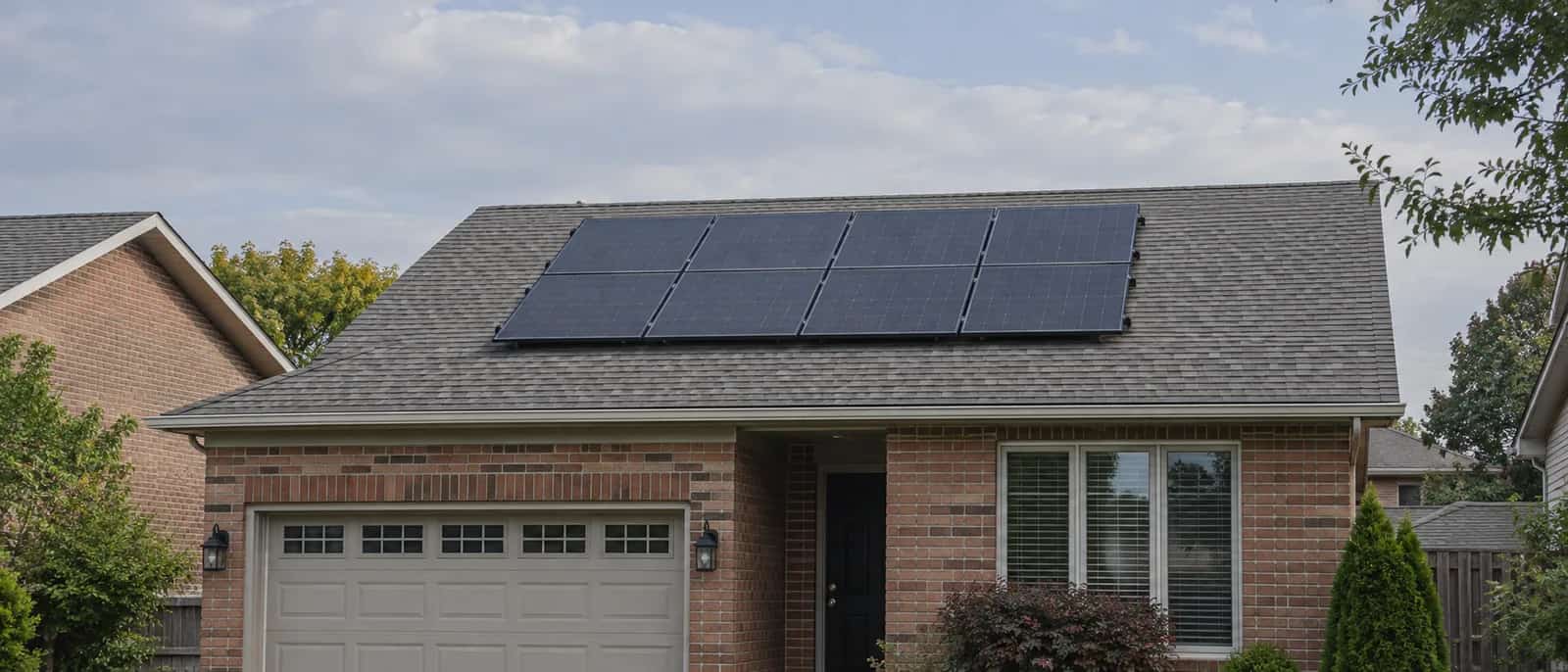
The solar-shingle picture looks excellent. The house in the picture is not in Ontario, and the quotation has somehow skipped that detail. Pat asks for the exact product and installation address before anyone starts matching the roof colour to the car.
Treat availability as a product-and-address enquiry. Before planning the reroof around solar shingles, establish the exact system, a local supplier and installer, and the Canadian documentation for the proposed installation.
As checked on October 13, 2026, GAF's current solar FAQ says Timberline Solar is not available outside the United States. That is a statement about that product, not every roof-integrated solar system. Confirm any proposed alternative directly for your postal code before tying it to a roof-removal date.
First establish what "solar roof" means
Conventional panels sit above a separate roof covering. Roof-integrated solar units form part of the roofing assembly. Some portions generate electricity while other areas use compatible non-generating roofing components.
The photograph at the top shows mounted panels over asphalt shingles, not solar shingles. That distinction matters when comparing proposals: one price may include a complete replacement roof, while another assumes the existing roof remains serviceable.
Ask for a roof layout identifying generating areas, ordinary covering, valleys, penetrations and access provisions. A roof with several small slopes, shading or awkward intersections can produce a different design from the broad uninterrupted roof in a brochure. Compare the proposed annual generation and the assumptions behind it, not just the number of units or a rendering of a completely dark roof.
Mike separates three questions: can it be supplied here, can it be installed and approved here, and who services it here? A convincing answer to the first is not permission to leave the other two blank.
Availability needs a named installer
We would expect the supplier to identify the current product version, who can install it locally, who can service it and whether the quote includes all the components required for your roof. "We can order solar tiles" leaves several of those questions unanswered.
For a reroof already becoming urgent, keep a conventional roof-and-panel option in the comparison. Our roof-before-solar guide covers that sequence. Do not let an uncertain product launch leave a leaking house waiting indefinitely for a preferred appearance.
Turn a solar-roof enquiry into a buildable proposal
Each confirmation should refer to the same product and property.
Exact product
Identify the roof-integrated system, model and current Canadian technical documents.
Local delivery
Confirm an installer serving the postal code, supply and a realistic project schedule.
Approvals
Resolve building, electrical and utility connection requirements for the property.
Long-term responsibility
Separate weatherproofing, electrical service, product coverage and future replacement work.
The electrical approval is a separate piece
Ontario's Electrical Safety Authority explains that hired electrical work must be carried out by an appropriately licensed electrical contractor, subject to the stated exemptions. A roofing credential alone does not establish electrical authority.
The proposal should identify that contractor and who handles the ESA notification and review. ESA's inspection process is distinct from a municipal building permit. Have the team confirm the proposed equipment's approval, municipal requirements and the local electricity distributor's connection requirements. Supply, permission to install and permission to connect are separate milestones.
Dave is less interested in the glossy roof rendering than the service arrangement. If one part needs attention, who coordinates weather protection and electrical work? That belongs in the proposal while everyone is still answering emails promptly.

Read three different promises
Roof weatherproofing, electrical equipment coverage and a power-output warranty answer different questions. Ask who attends if a unit leaks, who diagnoses a failed electrical component and what removal or access labour is covered. A long performance period does not automatically include every service cost.
Also ask how a damaged generating unit is replaced, what happens if its model is discontinued and how future roof work is coordinated. Those are practical ownership questions, not reasons to reject the technology.
We like a clear product proposal more than a futuristic picture. Verify the current local offering before budgeting around it, and keep conventional panels in the comparison if the integrated product is not actually available for your address.