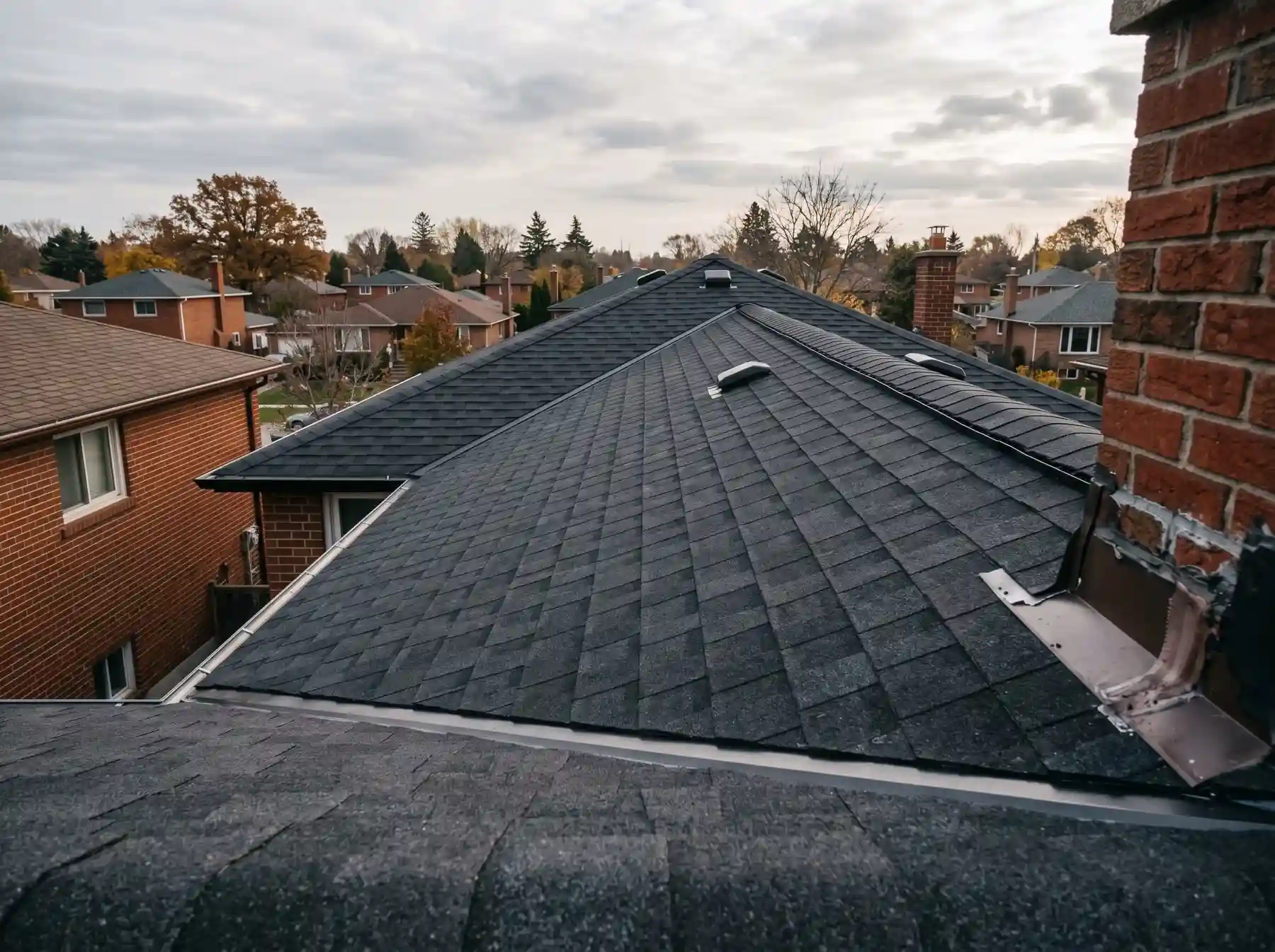
The telephone number no longer works. The installer who promised a long workmanship warranty has closed, and the roof now needs attention. Find the issued warranties before assuming all protection has disappeared. A contractor's workmanship promise and a manufacturer's product warranty can be separate arrangements with different claim routes.
Neither document makes an active leak safe to ignore. Arrange appropriate temporary protection and document the condition before repairs obscure it, where safe professional access allows. Keep the urgency of stopping water separate from the question of who ultimately pays.
Sort the File by Who Made the Promise
Start with the installation invoice, product name, registration or certificate, installation date and any transfer record. Separate the contractor's own terms from manufacturer documents and any enhanced system warranty. A brochure explaining available coverage is not proof that a particular tier was issued for your roof.
The IKO Canadian limited warranty is one manufacturer example. It states that the applicable warranty is the one in effect when the shingles were installed, and distinguishes the manufacturer from the independent roofing contractor. Read the document for your actual product and installation date rather than substituting current marketing language.
Dave's filing rule is simple: "Whose name is above the promise?" It saves a lot of time trying to make a shingle manufacturer answer for a contractor's separate cleanup, labour or installation commitment.
Separate the Promises When an Installer Closes
Read the contractor's workmanship terms and legal entity.
Installer promise
Read the contractor's workmanship terms and legal entity.
Manufacturer policy
Find the issued product or enhanced coverage and claim route.
Observed defect
Connect the documented condition to the relevant promise.
New repair
Keep the replacement contractor's scope and warranty separate.
Identify What Failed
A manufacturing defect, incorrectly installed flashing, storm damage and ordinary wear raise different coverage questions. Ask an appropriately qualified roofer to describe the observed condition and likely cause, with labelled photographs and limitations. The phrase bad roof is too broad for a useful claim.
Suppose shingles remain serviceable but water enters at a poorly integrated wall junction. That finding should be reported accurately; it should not be renamed a product defect because the installer is unavailable. Conversely, a documented product concern deserves review through the manufacturer's actual channel even if the original roofer cannot assist.
Our workmanship-versus-manufacturer guide explains those boundaries. Enhanced coverage may differ, so identify the issued tier before deciding which category applies.
The homeowner finds a warranty brochure in a drawer but no certificate. Pat keeps the brochure as a clue and asks for the invoice and registration record. "This tells us what they offered. Now we need what this roof received." It is a small distinction until someone has to make a claim.
Contact the Provider Before Evidence Disappears
Ask the manufacturer what documentation it requires and whether inspection, samples or authorisation are needed before permanent removal. Do not climb onto the roof to cut out a sample. Have safe collection and repair coordinated professionally if requested.
GAF's warranty claims guidance illustrates a direct manufacturer claim route and documentation process. Use the appropriate provider for your roof. Retain the claim reference, submissions and response rather than relying on an informal conversation with a supplier.
If urgent work cannot wait, document why and notify the provider promptly. Keep removed material only as instructed and where it can be handled safely. The goal is reasonable evidence preservation, not leaving a household under an active leak to protect a hypothetical claim.
A new roofer offers to repair the leaking junction. The owner asks whether that revives the old workmanship warranty. Mike separates the two documents on the table: the new repair can have clear terms without pretending the closed business has come back to life.
If manufacturer coverage may still apply, assemble the product, ownership and defect evidence for a claim before disturbing the affected shingles.
Closure Does Not Identify a Successor
A similar company name, former employee or new owner of a phone number does not by itself establish responsibility for the old contractor's warranty. Ask any proposed successor to state what obligations it has accepted in writing. Business closure, sale and insolvency can have different legal consequences; obtain advice using the actual company and contract records where recovery is in dispute.
If you bought the house after installation, also check warranty transfer conditions. The original owner's coverage may not describe yours, and a missing transfer can matter independently of the contractor closing.
A new roofer should define and warrant its own repair scope. That does not automatically adopt the entire old roof or the previous firm's promises. Keep its report, the provider's decision and the completed repair together. You then have a clear record of what remained covered, what was repaired separately and what the next owner should know.