
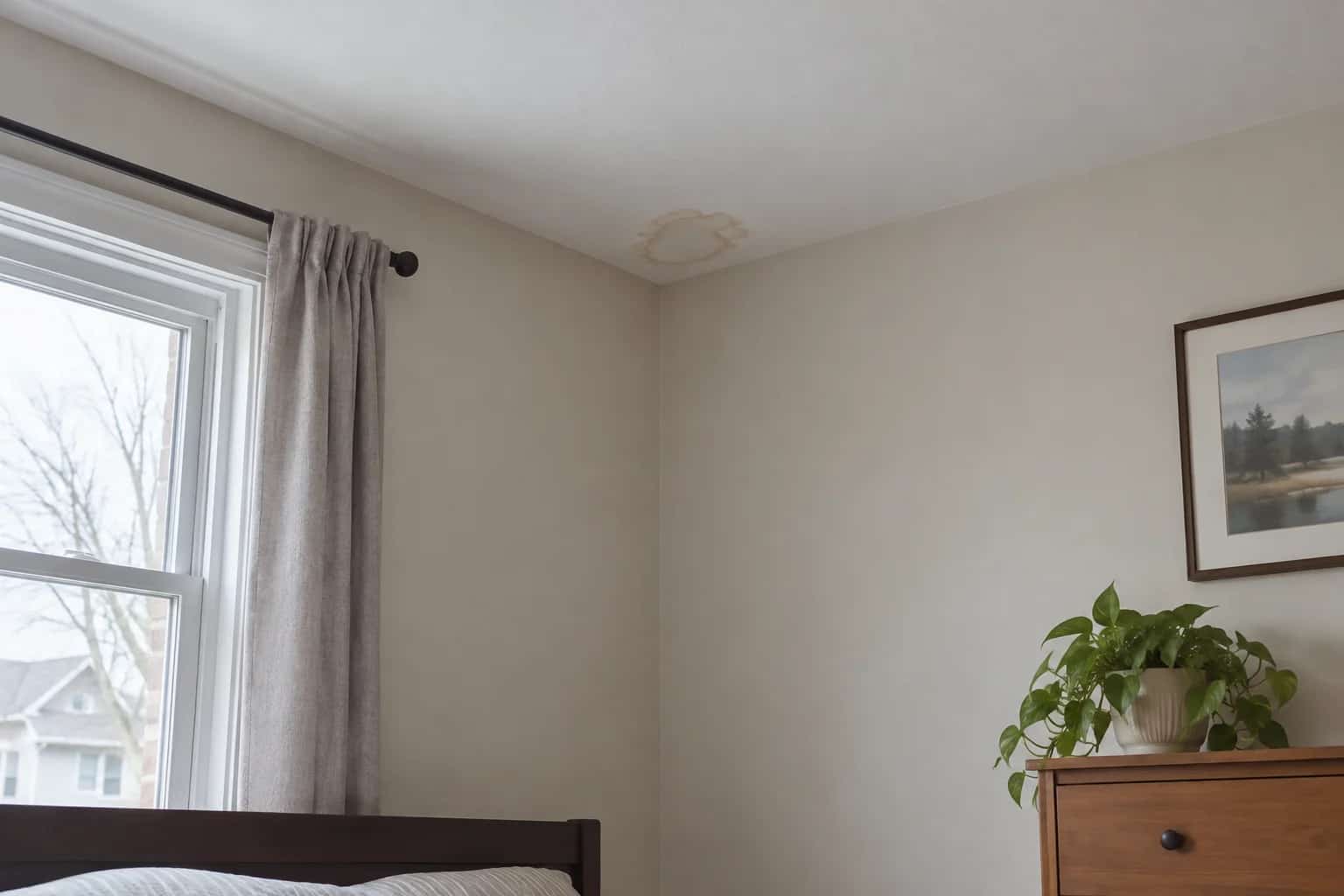
A roof leak appears in a relatively new BC house. The builder says it will send someone, the home insurer asks what caused it, and the warranty booklet mentions five-year envelope coverage. These are three different roles. Contact the builder and the home warranty provider promptly, and notify your home insurer where the loss may require it.
Begin with safety and reasonable damage limitation. Keep away from wet electrical equipment and bulging ceilings. Document visible conditions from a safe location; do not enter a hazardous attic to improve the claim photographs.
The owner has saved the builder's number as House Problems. It has been useful for a sticking door and a cabinet adjustment. Now Mike asks for the warranty certificate as well. "Keep that number. We need the other name on this paperwork too." A roof leak is a poor time to discover that every message went to only one organisation.
Find the Provider Attached to This Home
BC's new-home protection includes third-party home warranty insurance. The BC Housing New Homes Registry helps identify the builder of record and warranty provider. Obtain the policy itself, including coverage dates and the claims contact. A familiar builder's name is not enough to identify the insurer administering the warranty.
BC Housing describes the minimum 2-5-10 framework: materials and labour coverage has differing periods and limits, building-envelope coverage runs five years, and structural coverage runs ten. The envelope protection includes certain unintended water penetration. That does not mean every roof leak within five years is automatically covered. Cause, policy terms, exclusions and the applicable commencement date still matter.
Do not use the purchase anniversary as a substitute for the recorded start date. BC Housing describes different commencement events for custom homes, speculative homes, strata units and common property. Ask the provider to confirm the dates for the affected property.
Give Both Recipients the Same Observation
A useful report identifies the address, policy, room, date, weather and observed water. Attach a wide room photograph and a closer view. If the leak recurred after a repair, include the earlier attendance date and what was done.
Suppose the builder replaces a visible shingle but the ceiling wets again during wind-driven rain. Report the recurrence rather than restarting the story as a new stain. The sequence may direct attention to a wall junction or other concealed route. It also shows that a previous response did not resolve the symptom.
The BC Housing warranty guide explains written notification and the warranty process. Keep confirmation that the provider received your report. A builder's appointment text should not be your only evidence that the warranty issue was submitted.
The builder's visit is booked, but the provider has not acknowledged the report. The homeowner is tempted to wait because another email feels fussy. Dave puts the appointment and submission into separate lines. "One tells us someone is coming. The other tells us the claim exists." Both can matter.
Warranty Defect and Insured Loss Are Different Questions
Home warranty insurance concerns specified construction defects. Ordinary home insurance responds according to its own insured events and terms. A wind event, a construction defect and resulting interior damage can raise different questions even when they all appear as water on the same ceiling.
Give each party accurate observations and the other relevant contact details. Ask what urgent protection may proceed and what should be documented before opening or removing materials. Do not delay necessary safety action while trying to obtain perfect evidence. Keep emergency and permanent-work records separately.
If the home cannot be occupied, ask the home insurer about temporary accommodation; do not infer that benefit from the roof warranty.
When an earlier repair turns up in the seller's documents, it stays in the file rather than being treated as embarrassing clutter. A roof history with a complication is more useful than a clean folder with half the story missing.
Three Contacts for a BC New-Home Leak
Receives the defect report and may carry out repairs.
Builder
Receives the defect report and may carry out repairs.
Warranty provider
Assesses the claim under the home warranty policy.
Home insurer
Assesses loss and related benefits under separate insurance.
Strata contact
Coordinates common-property work where applicable.
Resale and Strata Need Their Own File Check
BC Housing states that remaining home warranty coverage stays with the home when it sells. Obtain prior claims, repairs and policy records from the seller, rather than assuming a fresh period began at your closing. A manufacturer's shingle warranty has its own transfer terms and should remain a separate document.
For a strata roof, involve the strata corporation or manager to identify the common-property reporting and repair process. Keep the unit's interior observations connected to that file. Ontario's Tarion process is not the reporting route for a BC property.
After repair, ask for the finding, completed scope and any required follow-up. A dry ceiling during one shower is encouraging; records of the repaired entry detail and affected interior materials give the next owner something much more useful.
