
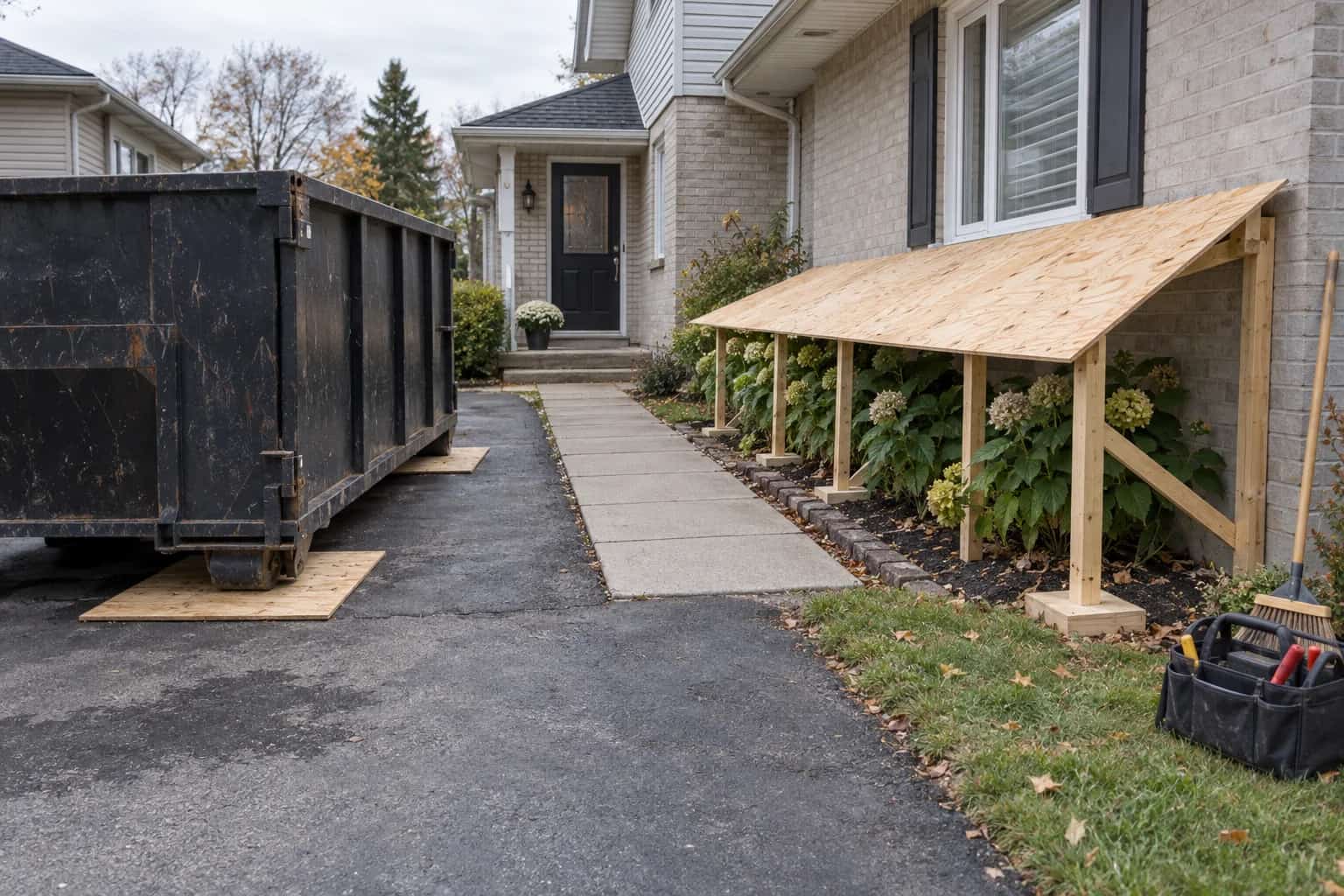
The waste line in the quote says "recycling". Beside the bin are old flashings. Inside it are shingles, scraps of wood and somebody's empty lunch bag.
Mike taps the word on the paperwork. "Which of those are we talking about?"
A separated metal collection may genuinely have one destination while the mixed roofing load has another. The lunch bag is not improving either conversation.
A useful tear-off waste plan names the receiving facility, the accepted material and the streams that must stay separate. A truck leaving the driveway proves removal. It does not, by itself, prove what happens to the load next.
Describe the Load Honestly
Tear-off can produce shingles, felt, wood, metal flashings, fasteners, packaging and debris from earlier repairs. Multiple roof layers can increase the volume substantially. Ask whether the estimate allows for the known layers and what happens if an additional layer appears.
If suspect asbestos-containing material is possible, address it before disturbance and before selecting a normal waste route. Our old-material assessment guide explains why visual guessing is insufficient.
Follow three waste streams
Keep destination evidence separate from recycling claims.
Describe the load
Separate shingles, wood, metal and suspect materials in the plan.
Confirm acceptance
Name the facility and confirm the actual commercial load.
Keep records
A scale or transfer ticket records a destination and quantity.
Define the claim
Final recycling needs more evidence than a bin leaving the driveway.
Metal Recycling Is Not Shingle Recycling
The revised scope names the flashings separately from the mixed shingle load. That small change lets the homeowner ask for the right records instead of chasing an impressive but undefined promise. Sorting also has to survive the working day: a labelled pile is little use if it all gets tipped into the same bin at cleanup.
A contractor may separate the flashings for recycling while sending a mixed shingle load for disposal. That can be a legitimate waste plan, but it should be described accurately. The word "recycled" beside one material should not silently expand to cover everything in the bin.
Ask how the sorting will happen on your property. If there is space for only one large container, smaller separated collections may still be possible. The practical plan should match the claim; otherwise the promised route can fall apart as soon as the first mixed load is tipped in.
A Local Receiving Route to Confirm
As checked on October 15, 2026, YORK1's Nugget Transfer Station at 300 Nugget Avenue in Scarborough lists roofing shingles among accepted construction waste and publishes commercial-vehicle charges. It also lists no asbestos. That is a concrete transfer destination to discuss with your hauler, not proof that its shingle loads become new asphalt.
Confirm the actual load before collection: old shingles mixed with wood, a separated metal pile and suspect older material are different streams. Ask whether the facility will accept your contractor's load, what contamination restrictions apply and whether it requires advance arrangements. Do not assume a price for inert asphalt applies to asphalt shingles.
If your contractor promises shingle recycling, ask for the named processor and the material requirements before the bin arrives. Keep the transfer receipt, then ask what further record supports the recycling claim. A receipt for delivery to a transfer station does not by itself document the final use.

Check the Actual Destination
Durham Region's waste facility information is a starting point for local facility contacts and rules. Contractor loads, material types and individual destinations may be treated differently. Ask the hauler or facility to confirm acceptance rather than assuming household drop-off rules apply to a commercial roofing bin.
Ask the hauler to answer four questions:
- Which facility receives the load?
- Is the destination for disposal, transfer or processing?
- What happens if material is rejected?
- Does the recycling claim cover the whole load or only a separated portion?
Do not demand an impossible certainty about the final use of every fragment. Do expect the contractor to distinguish what it can document from what it merely hopes happens downstream.
Agree on bin locations and protection from unrelated dumping.
Keep the delivery route clear and discuss driveway protection. A recycling plan that ignores safe handling, access or cleanup is incomplete. The roofing crew also needs a practical way to collect nails and small debris around landscaping and entrances.
Put the disposal scope in the contract, including any weight allowance or charges for unexpected material. Ask for scale tickets or disposal receipts where they are part of the promised documentation. Those records can support the destination claim, though they may not prove the final recycled use.
At handover, check the ground cleanup too. A documented destination for the main load does not account for nails left at the gate or fragments in the garden.