
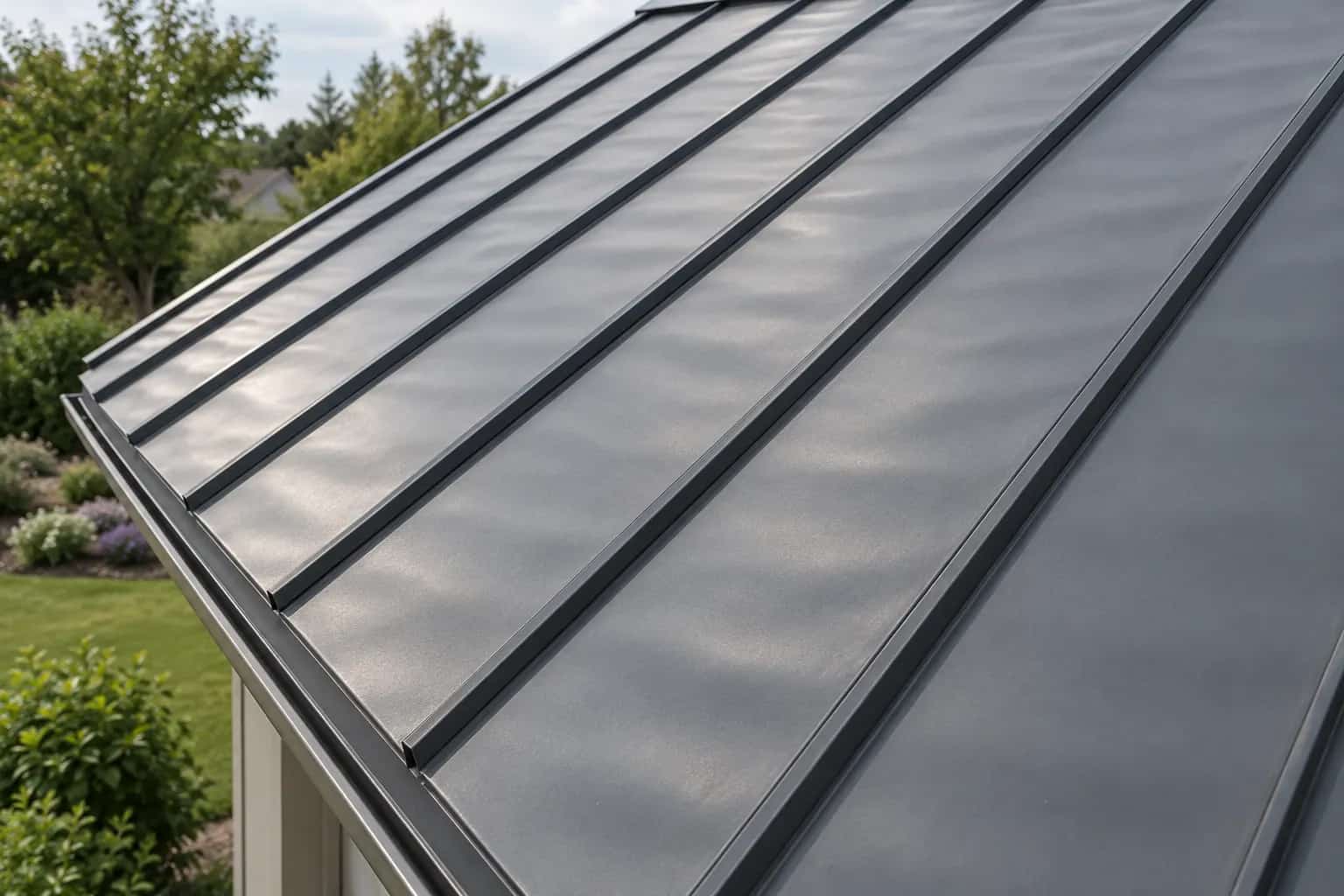
Dave taps the metal sample on the kitchen table. It makes exactly the noise you would expect from someone tapping metal on a kitchen table. "Good," Mike says. "Now put an attic and a bedroom ceiling under it." That is the missing part of most conversations about rain noise.
A residential metal roof is not automatically loud. Nobody can predict the room sound from a panel sample alone; the deck, attic, insulation and ceiling belong in the comparison.
Start Inside the House
The Metal Roofing Alliance's noise explanation identifies attic space, insulation and installation as important influences on sound transmission. Its broad claim that correctly installed metal can be as quiet as asphalt should not be treated as a measured promise for your house.
We start above the room where the noise would matter. Is there a solid roof deck? An open attic? An insulated roof slope directly over the ceiling? What will the proposed work actually change?
That last question is the one we would settle before quoting. If the project replaces only the exterior covering, the contractor may not be changing the ceiling or insulation at all. A promise based on an improved assembly needs that assembly included in the work.
The homeowner points to the garden shed. Pat points upstairs to the bedroom. They are both metal-roof questions, but only one is the room anyone needs to sleep in. We would start the comparison there, including the ceiling and insulation, before arguing about the panel.
A Demonstration Should Resemble Where You Live
If sound is a deciding factor, visiting a completed home with comparable construction is more useful. Listen from a similar room, with windows in their normal position. A phone recording can help describe a concern, but differences in microphones, recording levels and rainfall make it a poor way to rank products precisely.
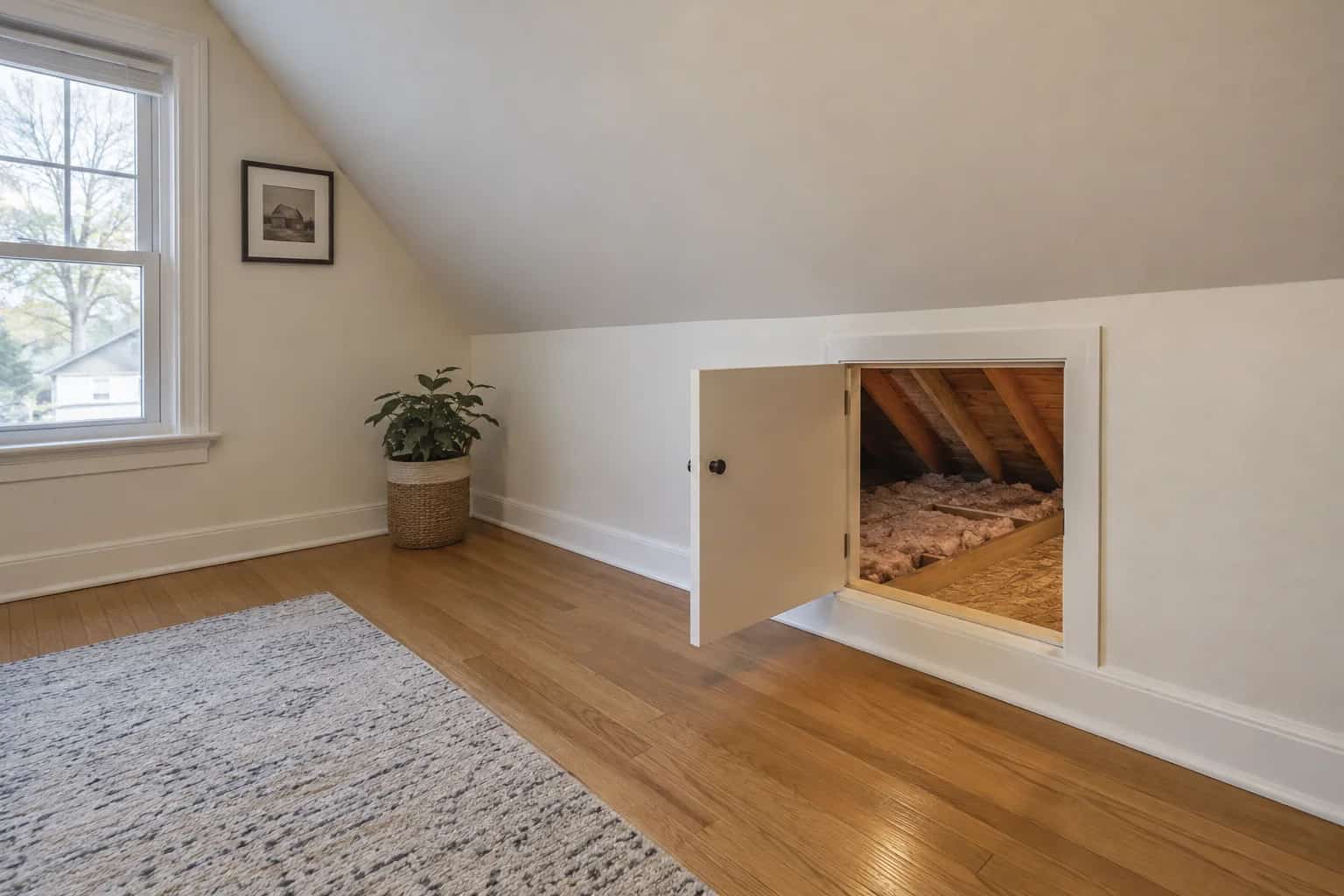
For a particularly noise-sensitive room, such as a bedroom directly under the roof, put the comfort requirement into the design discussion before choosing the covering. An assembly-specific acoustic assessment may be worthwhile if the consequence of getting it wrong is substantial. Buying first and searching for a quieting product afterwards gives you fewer choices.
Same Rain, Different Rooms
These assemblies cannot be ranked by the metal surface alone.
Open canopy
Metal close overhead, without a finished ceiling or insulated attic between you and the rain.
House with an attic
Roof deck, attic space, insulation and ceiling all belong in the sound comparison.
Room under the slope
A shorter roof-to-room path makes the actual ceiling and insulation construction especially relevant.
Which Noise Are You Trying to Avoid?
A broad patter during a shower is different from one sharp drip landing on a metal sill. A rattle that appears with wind is different again. Describing them all as a noisy metal roof can send the repair in the wrong direction.
For a concentrated drip, start with the gutter and downspout noise guide. For new movement sounds after accessory work, the thermal-movement guide explains why panel connections deserve attention. Neither condition should be assumed from sound alone.
Dave would happily listen to a finished house in the rain. He would be less impressed by a phone clip recorded six inches from a bare sheet. Ask what the demonstration actually resembles before letting its soundtrack choose your roof.
What a Useful Quote Says
Prefer a named roof assembly and a clear description of any sound-control work over a phrase such as whisper quiet. If two metal proposals use different support systems or retain different existing layers, they are not equivalent acoustic proposals even when their colours match.
At Steady, the useful answer is an assembly discussion followed by a clear scope. A sample can help choose the colour. It is a very small and badly furnished bedroom.