
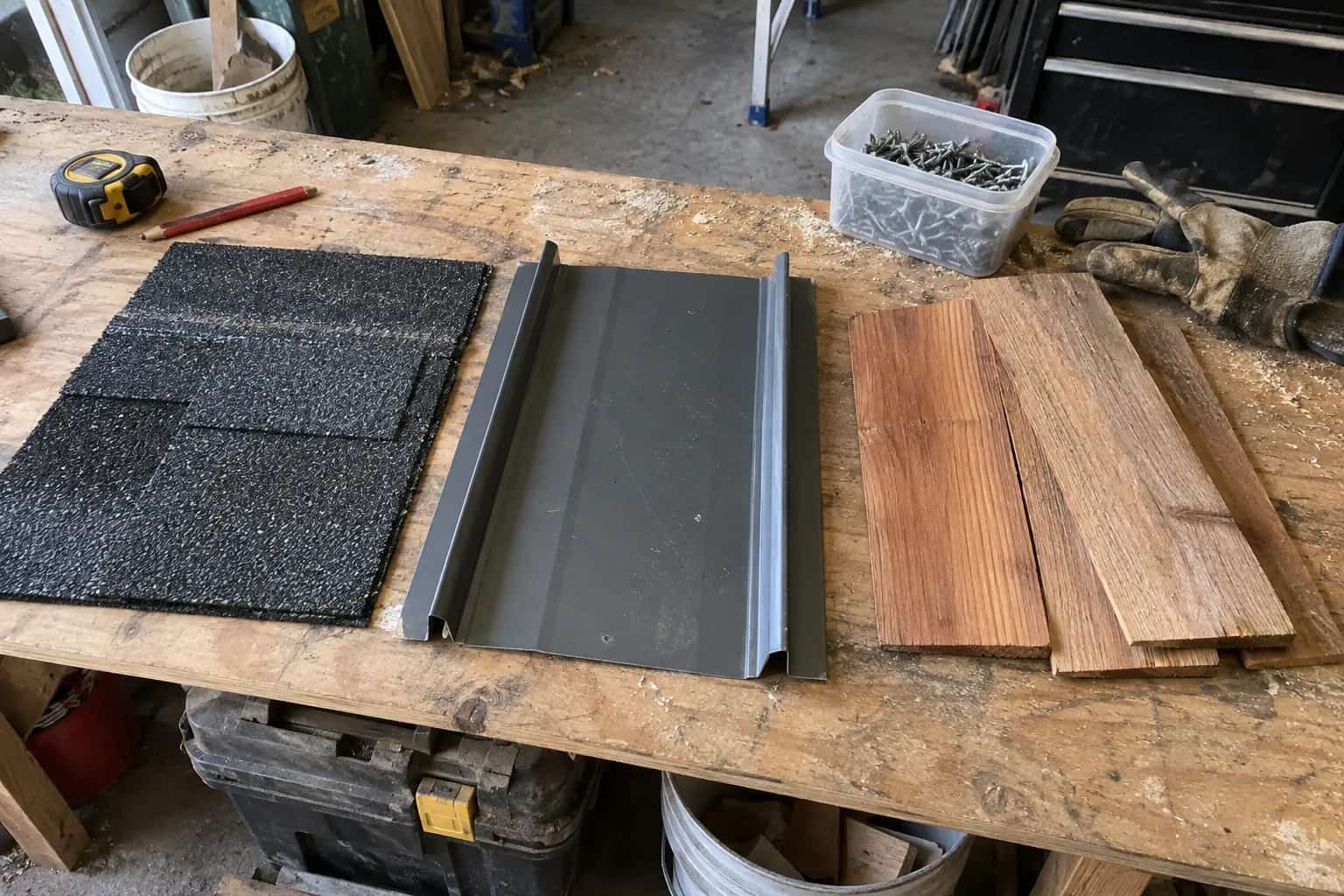
Pat likes the cedar sample, Dave is asking about the metal details and the owner has a firm installation budget. Mike brings the comparison back to the actual house. Asphalt is usually the practical starting point for a tighter budget. Standing-seam metal suits owners willing to fund its higher first cost and complete system. Cedar suits a house where natural texture justifies specialist installation and regular care. None wins every roof.
We install asphalt. Metal and cedar deserve a fair comparison, including the work and upkeep that do not appear on the colour sample.
Asphalt: a manageable first cost and familiar repairs
Asphalt shingles generally cost less to install than standing-seam metal or cedar on a comparable roof. Individual damaged shingles can often be replaced if the surrounding material remains flexible enough to work with. On an older roof, brittleness and colour matching can make a small repair less straightforward.
For planning, GAF gives asphalt shingles a general 20-30-year lifespan. Installation, weather and maintenance affect that range. A longer warranty printed on a bundle is a different measure.
Best fit: an ordinary pitched roof, a defined budget and a preference for familiar local installation and repair options. Keep valleys and drainage clear, and investigate lifted or missing shingles promptly.
Compare the practical questions
Three materials, different commitments
Appearance is easy to compare. Installation details and future maintenance deserve the same attention.
Start with the complete shingle system.
The product is one part of the choice. Roof slope, installation, ventilation and surrounding details affect how the assembly performs.
- Ask about
- The named shingle, accessories and installation requirements.
- Plan for
- Inspections and repairs around damaged shingles and flashings.
- Check the paperwork
- Product coverage and workmanship coverage separately.
Compare complete proposals for your house. No material has one universal lifespan, cost or maintenance schedule.
Metal: higher first cost, different long-term work
Standing-seam metal typically asks for a larger initial budget. Its raised seams make a clean, linear roof surface, and a properly specified system can provide decades of service. Metal is a family of systems, though: a concealed-fastener standing-seam roof and an exposed-fastener panel roof have different connections and maintenance needs.
The finish, fasteners, seams and penetrations still need inspection. Dave adds repair access and panel connections to the metal comparison. Replacing a damaged panel can involve more surrounding work than a few shingles. Mike points to the chimney on the plan: it still needs a proper junction, however persuasive the metal sample looks.
Smooth metal can shed snow towards entrances, decks and paths. A snow-retention system designed for the roof belongs in the price and layout where needed. That decision depends on snow loads and the actual panel and attachment system, not a few guards added wherever they look tidy.
Best fit: owners expecting to stay for the long term who like the appearance and can fund the complete installation, including roof details and snow management. Compare the service-life case with the actual price premium.

Cedar: choose the upkeep along with the texture
Cedar shingles are generally sawn for a more regular appearance; shakes give a more varied texture. Both need an assembly that can drain and dry. Deep shade, overhanging branches and trapped debris make care especially important.
The Cedar Shake & Shingle Bureau's maintenance guidance stresses keeping debris off the roof and avoiding damaging cleaning practices. Pat keeps cedar in the comparison but includes the care plan beside it. The owner likes the texture; they still need to like arranging its maintenance. A pressure washer is not a shortcut to a younger cedar roof.
Best fit: a home where cedar's appearance is a deliberate priority and the owner is comfortable arranging specialist care. Check heritage requirements before changing the covering on a designated property.
Compare the same roof, not three samples
Keep these items equal across the quotes:
- Removal and deck work: what comes off, what stays and how hidden damage is priced.
- Junctions: valleys, chimneys, skylights and wall connections.
- Long-term work: maintenance, likely repair access and any future solar installation.
- Complete price: disposal, snow management where needed, taxes and exclusions.
A simple bungalow and a roof full of dormers are different jobs even with the same floor area. Mike asks for current prices for this roof, with its dormers and junctions. Multiplying an attractive headline rate by the floor plan would make the calculation quick and the result rather less useful.
If the budget points to asphalt, there is no need to apologise for it. If metal or cedar wins on appearance and ownership plans, price the whole system before deciding. Our quote guide helps make that last comparison fair.