
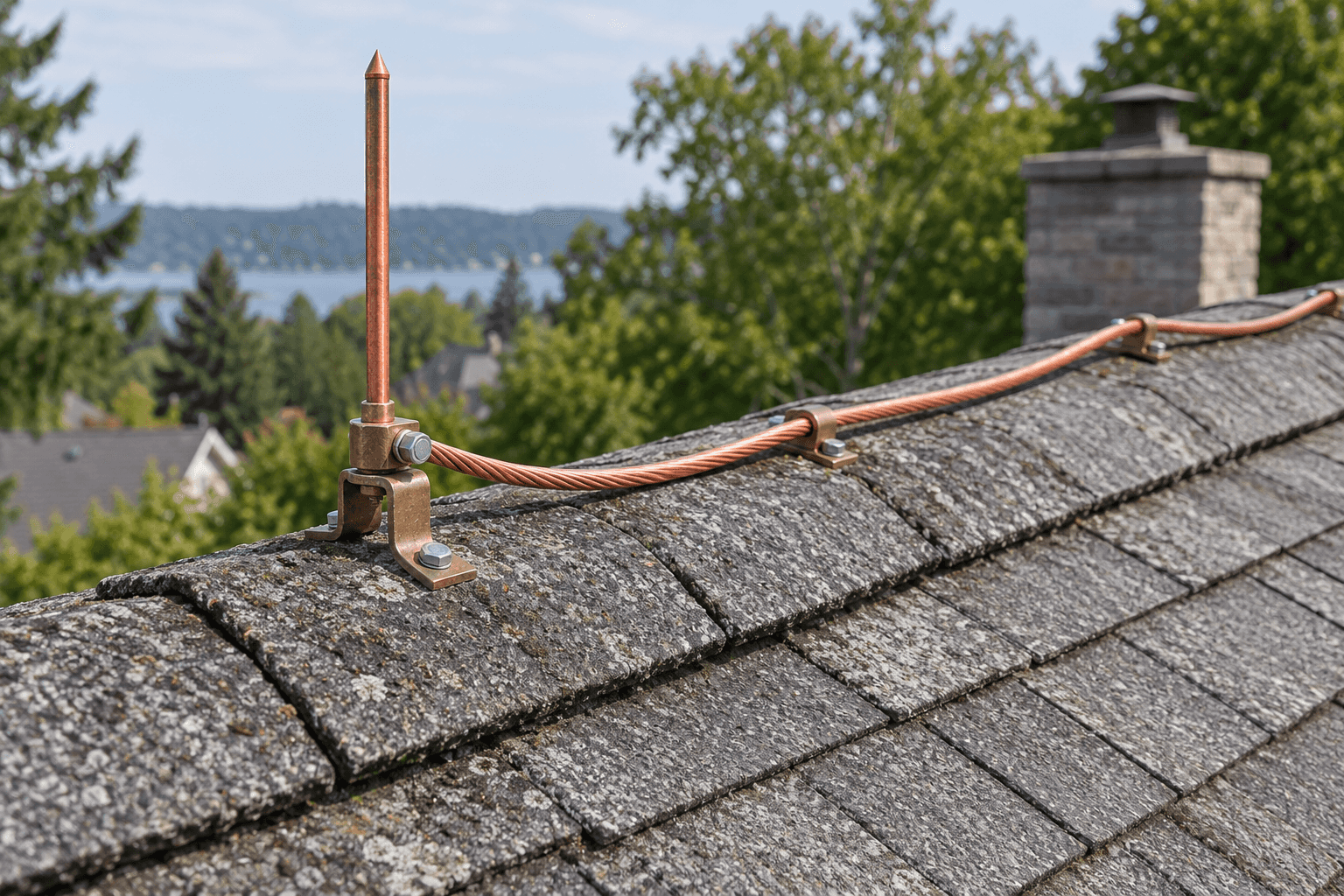
The roof quote includes "remove and reinstall rods." That is a beginning, but it leaves most of the useful questions unanswered. Who identifies the system? Who decides what can be reused? What establishes that the reinstated arrangement is complete?
Bring the lightning-protection specialist into the reroofing plan before the system is disturbed. The roofer and specialist need to agree on attachments, scheduling and completion checks. A row of upright rods in the final photograph does not answer those questions.
Find the existing system records
Look for the installation drawing, installer details, inspection reports and any certificate. Keep the dates visible. If the house has changed since the drawing was prepared, mark the additions rather than assuming the old drawing still describes everything.
An air terminal, often called a lightning rod, is one visible component. The Lightning Protection Institute explains that a system also includes conductors, bonding, grounding and surge protection. Roof work can interrupt parts of that arrangement.
Give the specialist a list of new roof features, including a skylight, antenna or equipment. Include work that another contractor will perform later. A roof replacement followed by a new installation deserves one coordinated review, even if the invoices arrive separately.
This guide concerns planned work. If the house may already have been struck, follow the lightning-strike response guide and emergency-service directions before arranging ordinary maintenance.
Connect the two scopes
Resolve the gaps before removal begins.
Existing record
Review the layout, reports and changes to the building.
New roof
Agree compatible attachments and repairs to obsolete openings.
Reinstatement
Coordinate the work sequence and specialist return.
Inspection
Confirm what the completion document covers and any exceptions.
Make the two quotes meet at the roof
Ask the roofer to identify the new covering and any restrictions on attachments. Ask the lightning contractor to show how its components will attach to that covering and how penetrations, where needed, will be weatherproofed.
The LPI's reroofing guidance specifically calls for coordination of compatible attachment materials and system reinstatement. That is particularly useful when the new roof differs from the old one. An attachment that worked on shingles may not be the agreed detail for a new metal or membrane system.
Try a simple comparison while reading the quotes. If the roofer excludes all specialist attachments and the specialist excludes all roof repairs, who closes an old attachment hole that will no longer be used? Write the answer into the scope before it becomes an argument over a small but active leak.
Do the same for reuse. List which parts will be assessed, who stores them and how the owner approves replacements. "Reuse where possible" needs a decision-maker and a condition check.
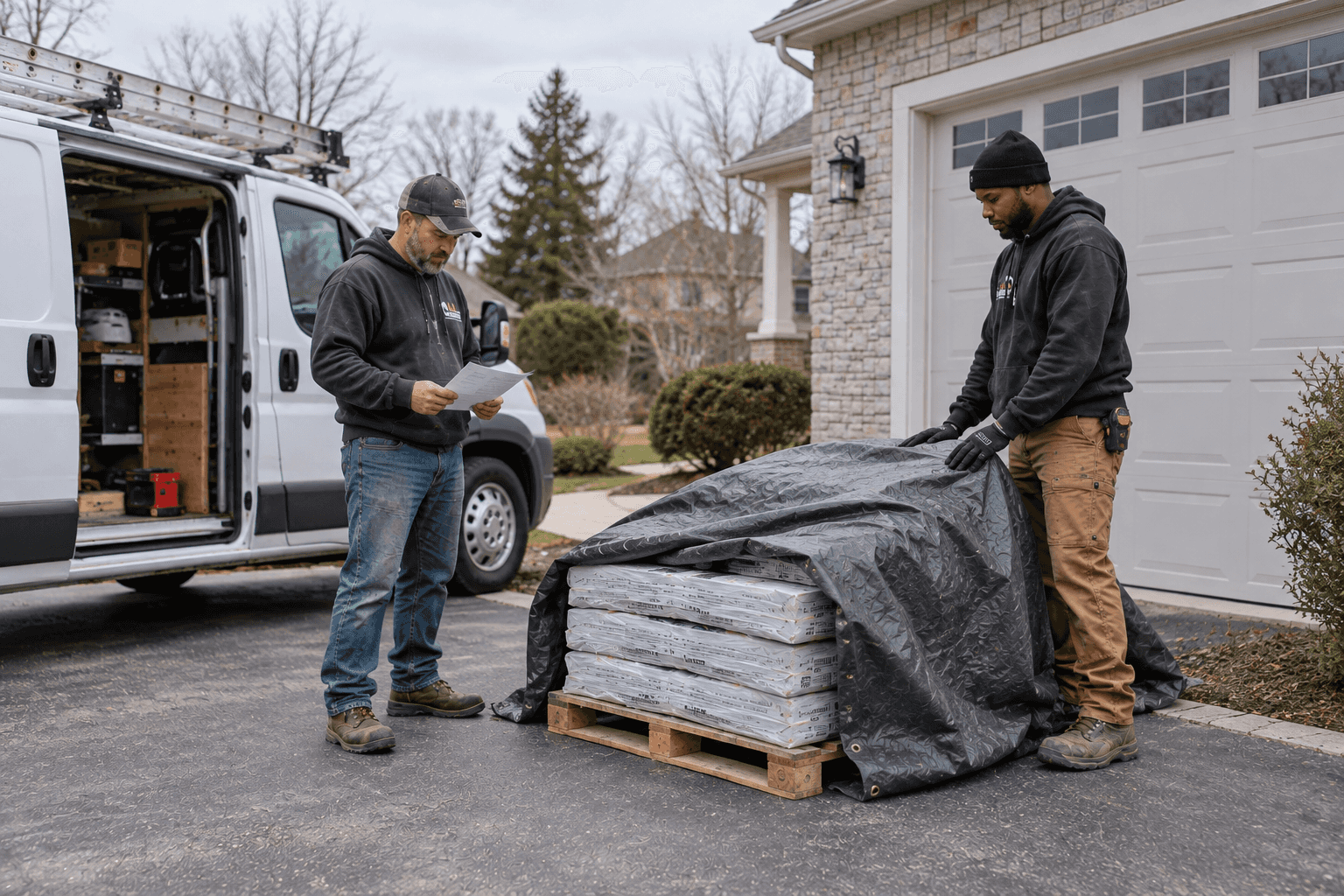
Plan the interval between removal and reinstatement
Ask how the work is divided into stages and when the specialist returns. A phased project can leave one part finished while another remains open. The protection arrangement during that interval needs the specialist's plan.
Tell the household what has been disconnected and when the final check is expected. Do not describe the system as operational solely because components are temporarily resting back on the roof.
Also agree on how unexpected changes are handled. If damaged decking changes an attachment location, the crew needs a contact who can approve the revised arrangement. A photograph sent before the covering closes over the area can save a second visit that involves reopening it.
Be precise about the completion document
Ask which inspection or certification is included and what area it covers. UL Solutions distinguishes an inspection of an entire structure that can result in a Master Label Certificate from a limited inspection that can result in a Letter of Findings with stated exceptions. The names and scope matter.
Those program descriptions do not establish which rules apply to your Ontario property. Have the specialist identify the applicable standard and any project, insurer or local requirements. Do not assume an old certificate automatically covers the altered installation.
Keep the final report beside the updated layout, component record and roofing photographs. If the report lists an exception or outstanding item, assign its follow-up rather than filing the document as a general all-clear.
Include it in the roof handover
During the completion walkthrough, confirm that roof repairs at old attachment points, reinstatement and the agreed inspection are all accounted for. They may be completed by different people on different days.
The next person servicing a vent or roof feature should know the system is present and whom to contact before moving anything. A short note in the house maintenance file is more useful than hoping every future contractor recognizes every conductor.
You do not need to become a lightning-system designer to manage this project. You need a scope that makes the specialist work, roofing work and final evidence fit together.