
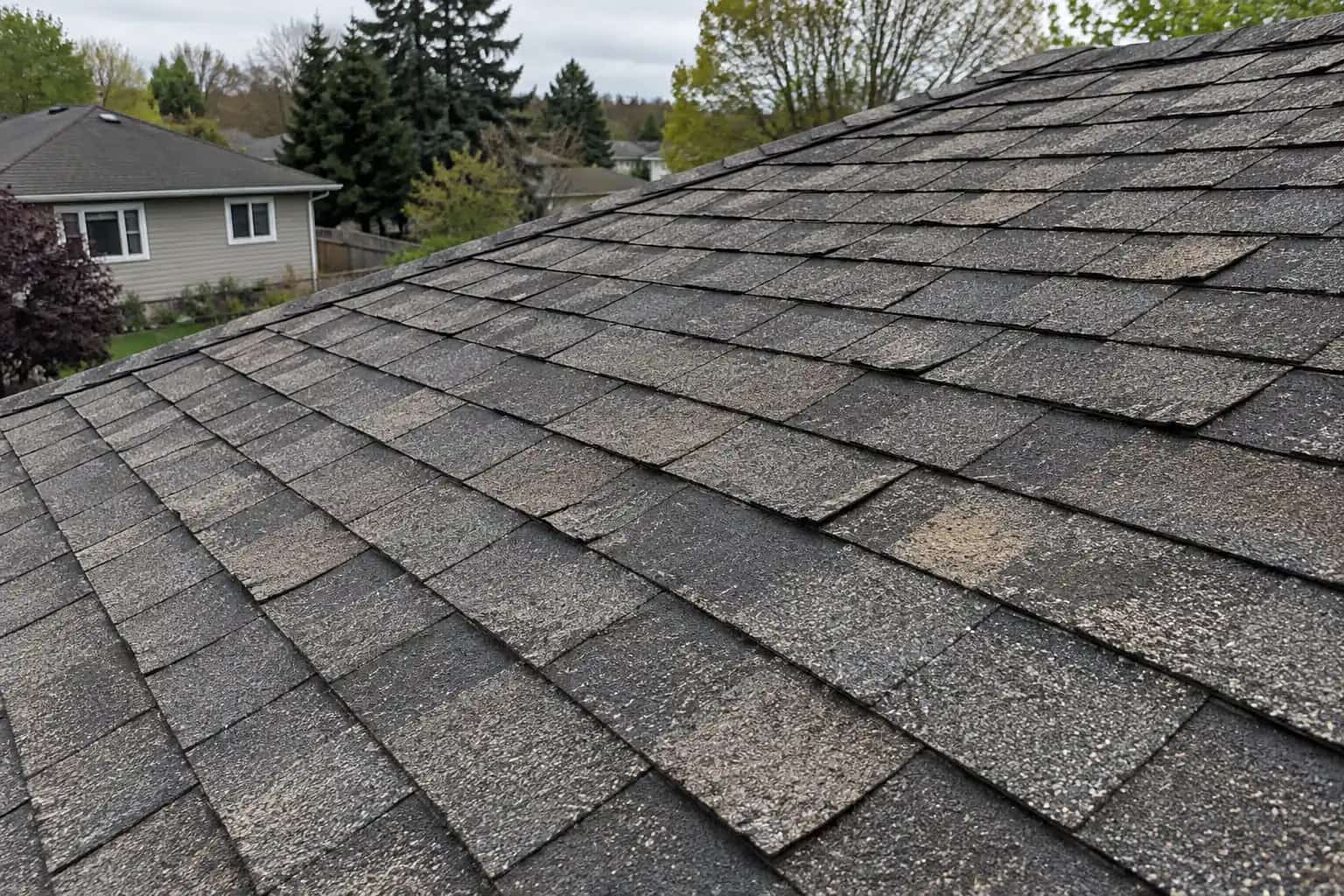
Mike has a small repair area marked on a photograph when the supplier calls: "That colour is discontinued." Pat looks at the full-roof replacement quote somebody has already suggested and raises an eyebrow. One missing colour chip has acquired a surprising amount of authority. First, the team needs to find out what actually changed.
Separate a discontinued colour, a changed product and an unrepairable roof. They are not the same finding. A repair may still be possible, but the replacement must suit the existing construction as well as your expectations for appearance.
Find Out What Actually Disappeared
A colour can leave a product range while the underlying shingle format remains available. A whole product can also be replaced by a different design. Ask the supplier which happened, and request the current manufacturer's information rather than relying on a familiar colour name.
GAF's discussion of American Harvest and its Bold Definition collection is a real example of colours and collections changing. It directs product-specific questions to the manufacturer's representatives. It is not confirmation that any similarly named replacement will interlock with an older roof, or that every listed product is stocked in Ontario.
Start with invoices, spare bundles, wrapper photographs or a professionally identified sample. Roof colour viewed from the street is not a reliable product identification method.
Dimensions Matter More Than a Similar Shade
Shingles have a particular size, exposure, fastening arrangement and seal location. IKO's installation guide explains that these details vary among products. Two grey laminates can therefore be poor substitutes even if a small sample looks convincing beside the house.
Ask the roofer to explain how the proposed replacement fits the surrounding courses and which manufacturer guidance supports the repair. The answer should address the whole repaired junction, not simply whether the new piece can be cut to look similar from below.
The existing shingles also need to tolerate the work. A replacement that is suitable in principle may still be difficult to install where the surrounding material is damaged or too fragile to manipulate satisfactorily. Request photographs and an explanation of that constraint if it changes the repair boundary.
Three Different Matching Questions
A close colour match can still be the wrong repair material.
Product identity
Establish the old shingle's dimensions and installation arrangement.
Technical repair
Confirm the replacement and surrounding material permit a sound detail.
Appearance
Compare weathered existing courses with a real replacement sample.
Repair boundary
Choose the supported scope after technical and visual questions are clear.
Decide How Much Colour Difference You Can Live With
The proposed patch sits on the rear slope, but the owner sees it from the kitchen every morning. Dave had initially assumed it would barely be noticed. He changes his mind when he stands at the window. Appearance is the owner's decision; "you can't see it from the road" is not the same as "you won't see it."
Look at actual samples in daylight, preferably beside a representative existing sample supplied safely by the roofer. New material and weathered roofing may not match even when their original product names do. Compare the likely patch from the viewing distance that matters, not only at arm's length on the kitchen table.
A whole-slope option may produce a more consistent appearance, but ask whether that larger scope is technically needed or an owner-selected cosmetic choice. Both can be legitimate decisions. They should be priced and described honestly.
Old Stock Is Not Automatically the Best Answer
Pat finds an advertised leftover bundle and resists declaring victory. First comes the label photograph, then the quantity and condition. Finding an unopened bundle can be useful. It also raises questions about exact identity, storage condition, quantity and whether enough compatible material exists to complete the job. Have the roofer and supplier assess it before treating a marketplace listing as the solution.
Keep photographs of labels and record where material came from. If there is not enough for the entire proposed area, find that out before stripping a larger section in expectation of a perfect match.

Keep Warranty and Insurance Expectations Separate
A discontinued product does not by itself establish entitlement to a full roof replacement. The GAF limited warranty, for example, expressly allows replacement products to differ in appearance. Your actual warranty or insurance policy controls the relevant remedy; obtain that answer from the provider rather than assuming matching preferences are covered.
Compare the resulting choices: a supported local repair with a visible difference, a larger repair for an accepted reason, or broader replacement justified by overall condition. Our repair-or-replace guide helps evaluate the last option. The supplier's missing colour chip should inform that decision, not make it for you.