
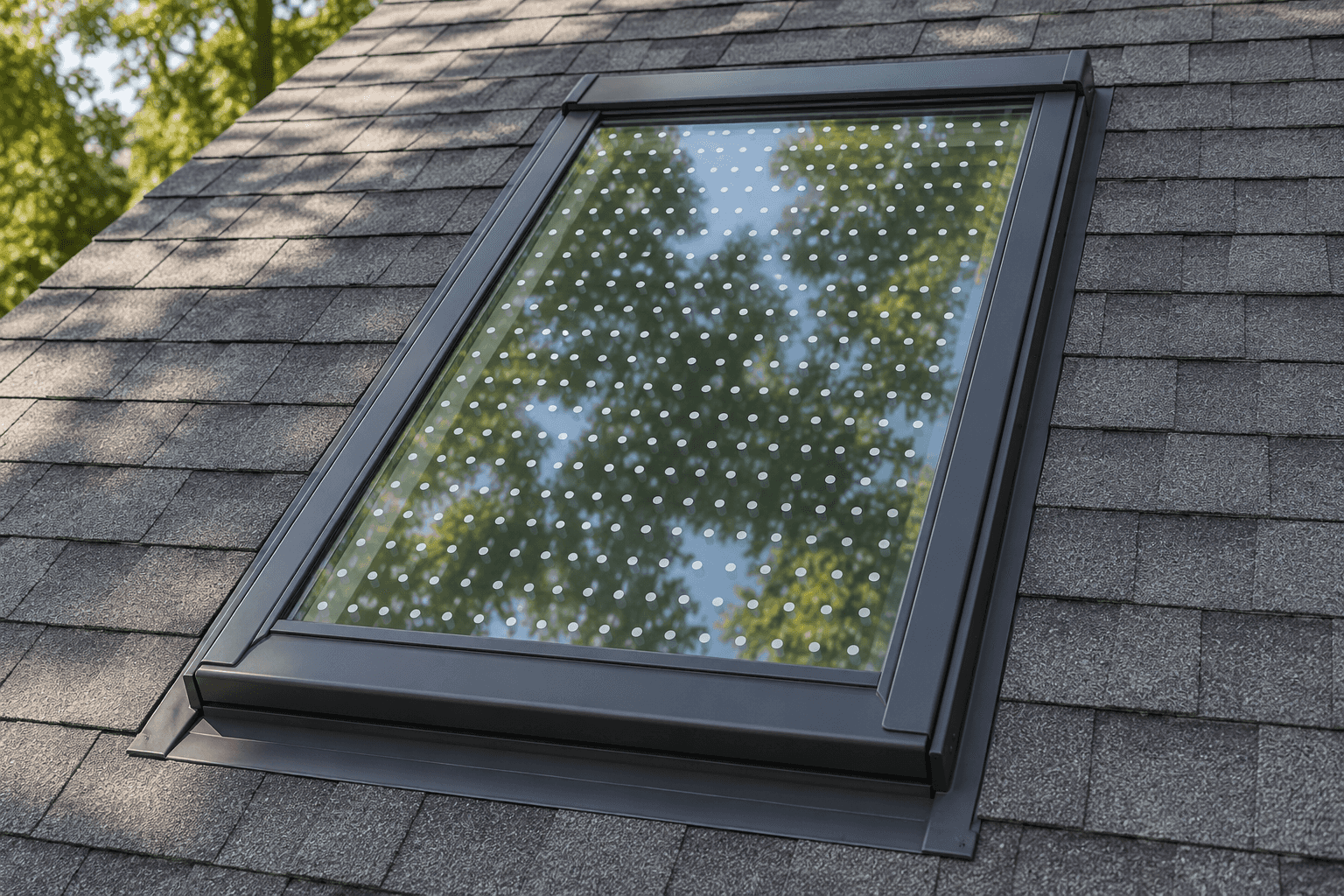
A roof window can reflect the tree above it so convincingly that the glass barely registers from outside. A conservatory roof or glazed wall beside a terrace can create a similar problem. When birds repeatedly hit one area, another single bird-shaped sticker is unlikely to answer the whole question.
Assess the affected glass from outside and plan a compatible treatment across its exterior surface. For glazing at roof level, the access and maintenance arrangements matter as much as the pattern you choose.
Identify the glass involved
Record where and when collisions occur, using observations from safe ground or indoors. Note the affected pane, nearby vegetation, reflected sky and whether a view through the building creates the appearance of an open route.
Do not assume that sloping glass is automatically safe. BirdSafe's review of glass options notes that evidence is lacking that angled glass reduces the overall number of collisions. Equally, a collision at a nearby vertical window does not establish that the roof window needs the same treatment. Identify the actual location first.
A photograph from outside is useful when discussing the problem with a glazing contractor or bird-collision specialist. Include the whole opening and its surroundings, not just a close view that loses the reflection.
Make the glass visible
Plan the treatment as a complete surface.
Observe
Locate the affected pane and the reflected or through-view scene.
Specify
Choose full exterior coverage with appropriate contrast and spacing.
Check and maintain
Confirm glazing compatibility, safe access and continued coverage.
Use a dense exterior pattern
FLAP Canada's current guidance calls for high-contrast markers on the first, exterior glass surface, with full coverage and no more than two inches between markers. Its visual-marker sheet expresses the spacing as no more than 5 by 5 centimetres and specifies individual dots at least 6 millimetres across.
A few isolated decals leave large untreated spaces. An interior blind or sticker may also leave the outside reflection visible. The useful comparison is between complete exterior treatments that meet the guidance, rather than between decorative shapes.
Ask the supplier to show the pattern, spacing and appearance against the actual glass in different daylight. A small sample helps establish whether the markers remain visible against both bright sky and darker foliage. It also lets you judge the view from the room before committing to the whole opening.
Check the glazing manufacturer's instructions
Identify the roof-window model and its glass specification. Ask the manufacturer whether the proposed exterior marker, film or screen is compatible with its coatings, seals, operating parts and care instructions.
A treatment sold for a vertical window is not automatically approved for a roof window. Obtain product-specific advice about weather exposure, adhesion and cleaning. Avoid covering drainage paths, moving joints or the frame with an improvised film arrangement.
If the glazing is already due for replacement, ask about suitable factory-treated options. Have the supplier explain which surface carries the treatment and how the installed product addresses bird visibility. A general "bird friendly" description should come with enough detail to evaluate the actual glass.
Make access part of the quote
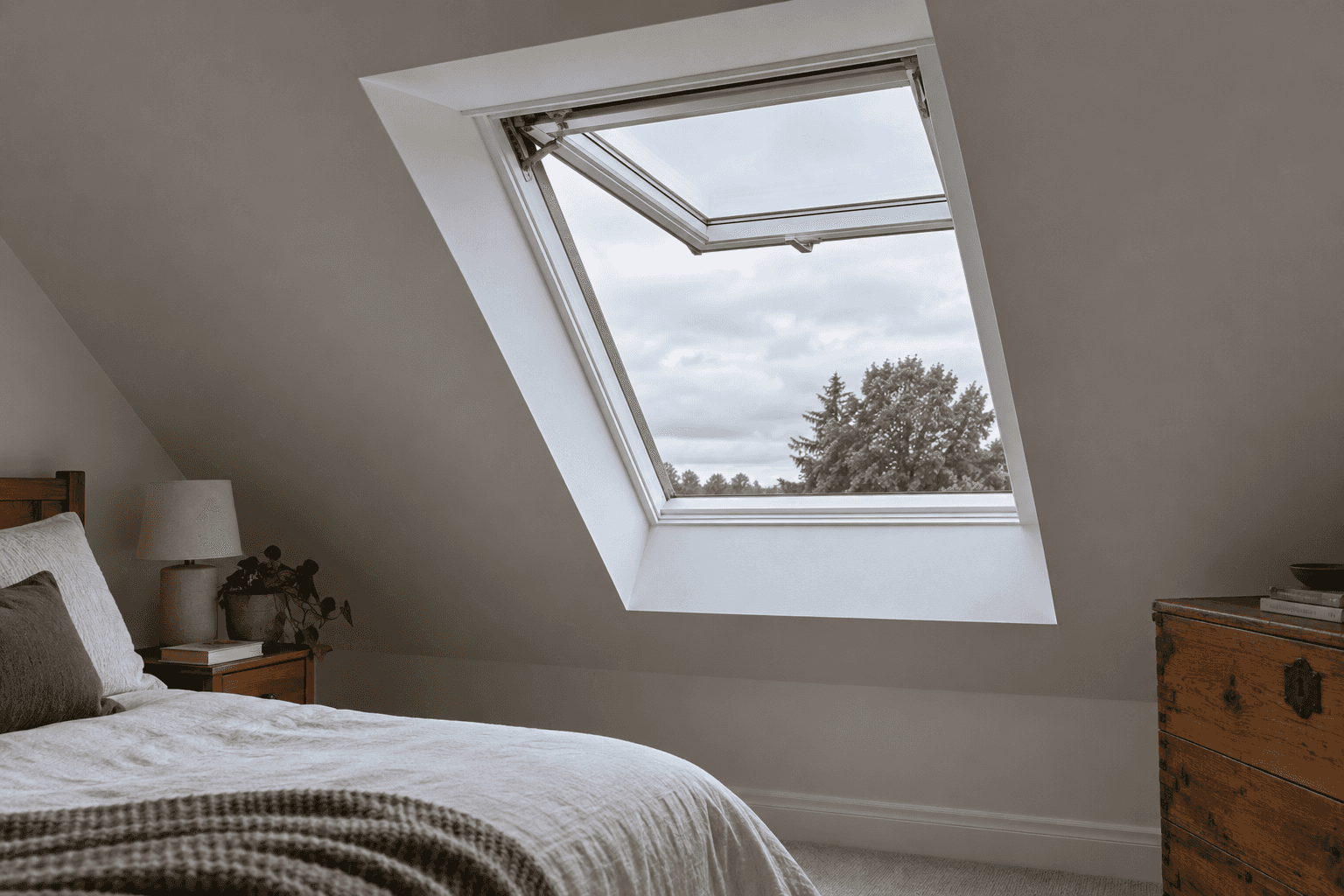
Do not climb onto the roof or lean out of an upper window to apply markers. Some roof windows have a manufacturer-defined cleaning position, but that does not establish a safe method for every model or treatment.
Ask the installer how the entire exterior face will be reached, including its upper corners, and how the treatment will be maintained later. A design that can only be refreshed by an unplanned roof visit is harder to keep effective.
This is separate from birds nesting at a roof vent. Do not block ventilation or disturb a nest while trying to solve a collision problem at glass.
Check the result over time
Keep a dated record of the completed pattern and continue observing the affected location. Check for missing markers and changes in reflection as vegetation and daylight change. If collisions continue, ask FLAP Canada or an appropriate specialist to review the treatment and surrounding glass.
The aim is a window birds can recognize as a barrier while the room remains pleasant to use. Dense, compatible coverage and a practical care plan give that decision substance.