
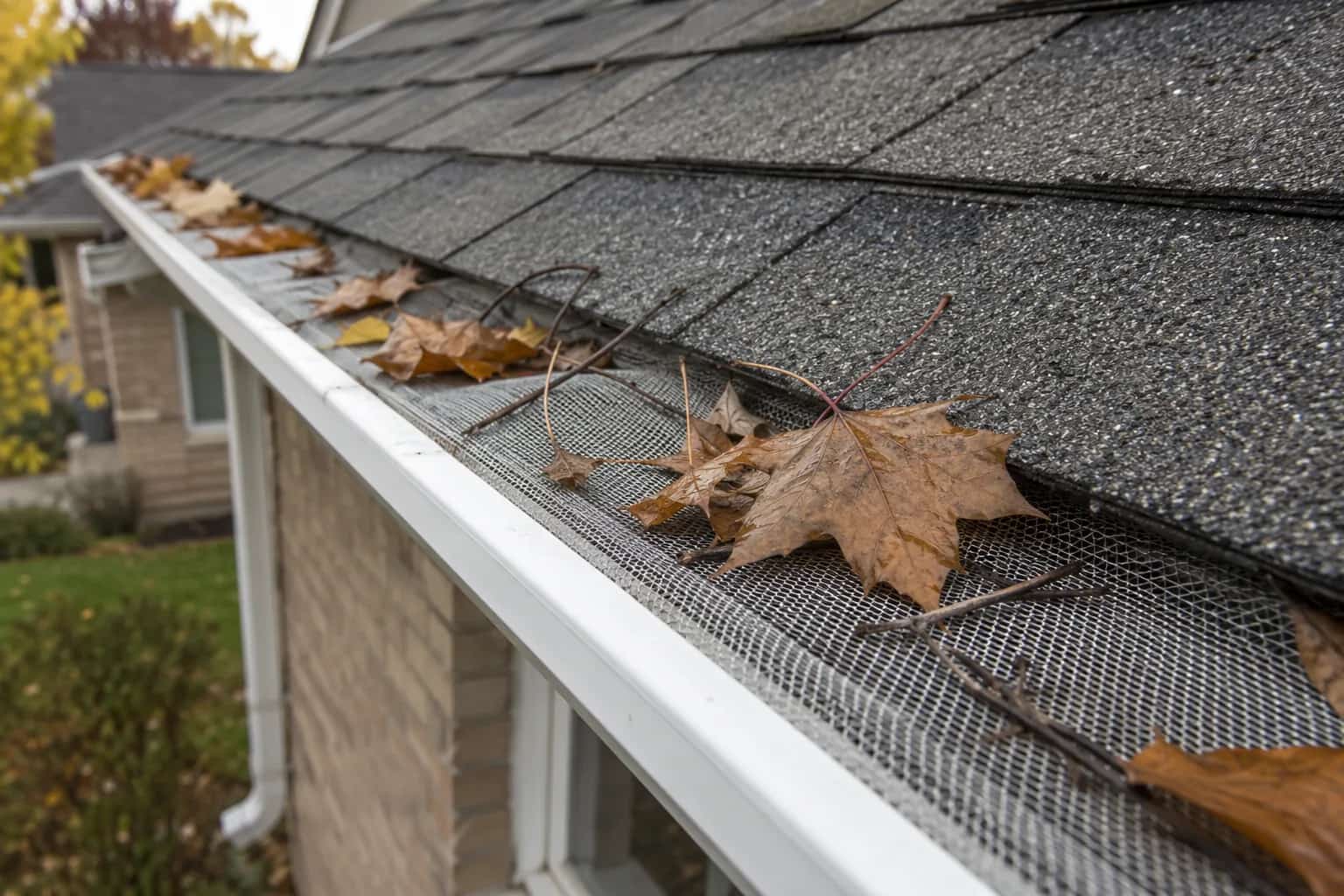
The owner points to a dark strip below the upper downspout. Mike follows it down the shingles, but Dave keeps looking at the lower gutter. The repair needs to account for both. A concentrated stream can affect the roof surface, and moving it means checking the drainage that receives it next.
There is no useful answer based solely on the presence of an elbow above shingles. The roof material, slope, outlet location and downstream drainage all matter. Ask the roofer to assess the particular assembly and the roofing manufacturer's requirements.
Inspect the Flow Path
Look from a safe ground position for a distinct worn or stained track below the outlet. A contractor can check for displaced granules, damaged shingles and water directed toward laps or flashing. A visible track is a reason for closer inspection, not proof that the entire lower roof needs replacement. GAF addresses shingle damage from concentrated upper-roof discharge; check the applicable manufacturer guidance for your shingles.
Pay particular attention where the discharge lands near a wall, skylight or roof transition. Water should not be concentrated onto a vulnerable junction simply because that was the shortest route for the pipe.
If a leak occurs only during heavy rain, record the upper outlet's behaviour. The lower roof may stay dry during light showers yet receive a sudden surge when the upper gutter begins discharging strongly.
Neater Can Still Be Undersized
Pat sketches a tidy extension into the lower gutter. It would take the direct stream off the shingles and may solve that local exposure. Dave draws the upper roof area beside the lower outlet before calling the sketch complete. But the lower outlet now has to accept the concentrated delivery without overflowing. If it was already struggling, the new pipe can make the limitation easier to see.
Count the Upper Roof's Contribution
The lower system receives more than its own rainfall.
Upper roof
Collect the contributing area feeding the upper downspout.
Discharge detail
Avoid concentrated flow at vulnerable lower-roof junctions.
Lower gutter
Check capacity for both roof areas together.
Final outlet
Confirm the combined runoff reaches a suitable destination.
Compare Complete Routes
Mike compares a supported extension to a suitable receiving gutter with relocating the upper downspout to another suitable discharge path. Maintenance, attachment and compatibility belong beside appearance. A pipe resting loosely across shingles is a delivery waiting to be installed, not the finished answer.
Do not screw an improvised pipe support through shingles and cover the holes with a dab of sealant. Attachment should be designed with the roof assembly, wind exposure and future maintenance in mind. A loose length resting on the roof can move and damage the surface it was meant to protect.
Add the Roof Areas Together
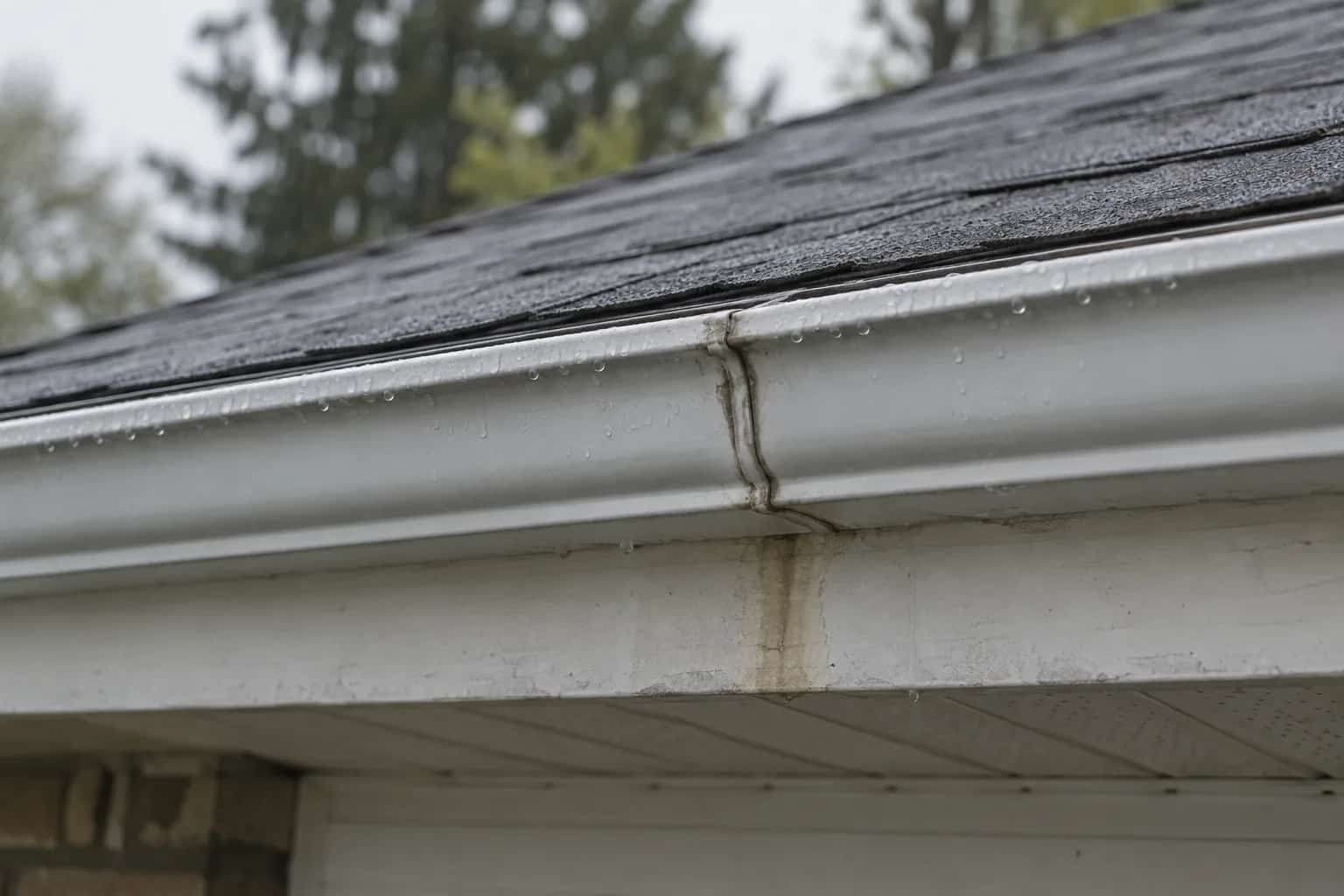
The receiving gutter must handle its own roof plus the upper contribution. Berger's sizing guide provides the general capacity framework, while current local design conditions and the chosen product determine the actual arrangement.
Will the Pipe Be in the Way at the Next Repair?
The lower roof may need cleaning or replacement before the upper system does. Ask how the pipe can be serviced or temporarily removed without damaging shingles. A route that blocks a valley or traps leaves can create another maintenance problem.
Pat's follow-up photographs during rain include the receiving gutter as well as the repaired strip. The shingles should not acquire a dry patch at the expense of a new waterfall at the lower corner.