

"We can probably fit you in before winter" sounds encouraging. It is less encouraging beside a deposit due tomorrow and an empty space where the work dates should be. Get the schedule into the agreement before committing money to an undefined place in the queue.
Ontario's home-renovation guidance lists a work schedule, including start and completion dates, among the information a renovation contract should contain. Mike taps the empty schedule line. "They have booked your money quite precisely." It is worth asking for similar care with the work.
Weather can change roofing plans. That is a reason to describe how changes are handled, not a reason to leave the entire calendar blank.
Ask what the date actually describes
Material delivery, crew arrival, tear-off, installation and final completion are different events. A supplier dropping shingles on the driveway does not mean the roof work has started in the everyday sense the homeowner expects.
Ask which date refers to site work and what counts as completion. Does the quoted schedule include gutters, skylight interior finishing, bin removal and the walkthrough, or are separate trades returning later? Our working-days guide explains those different parts of the sequence.
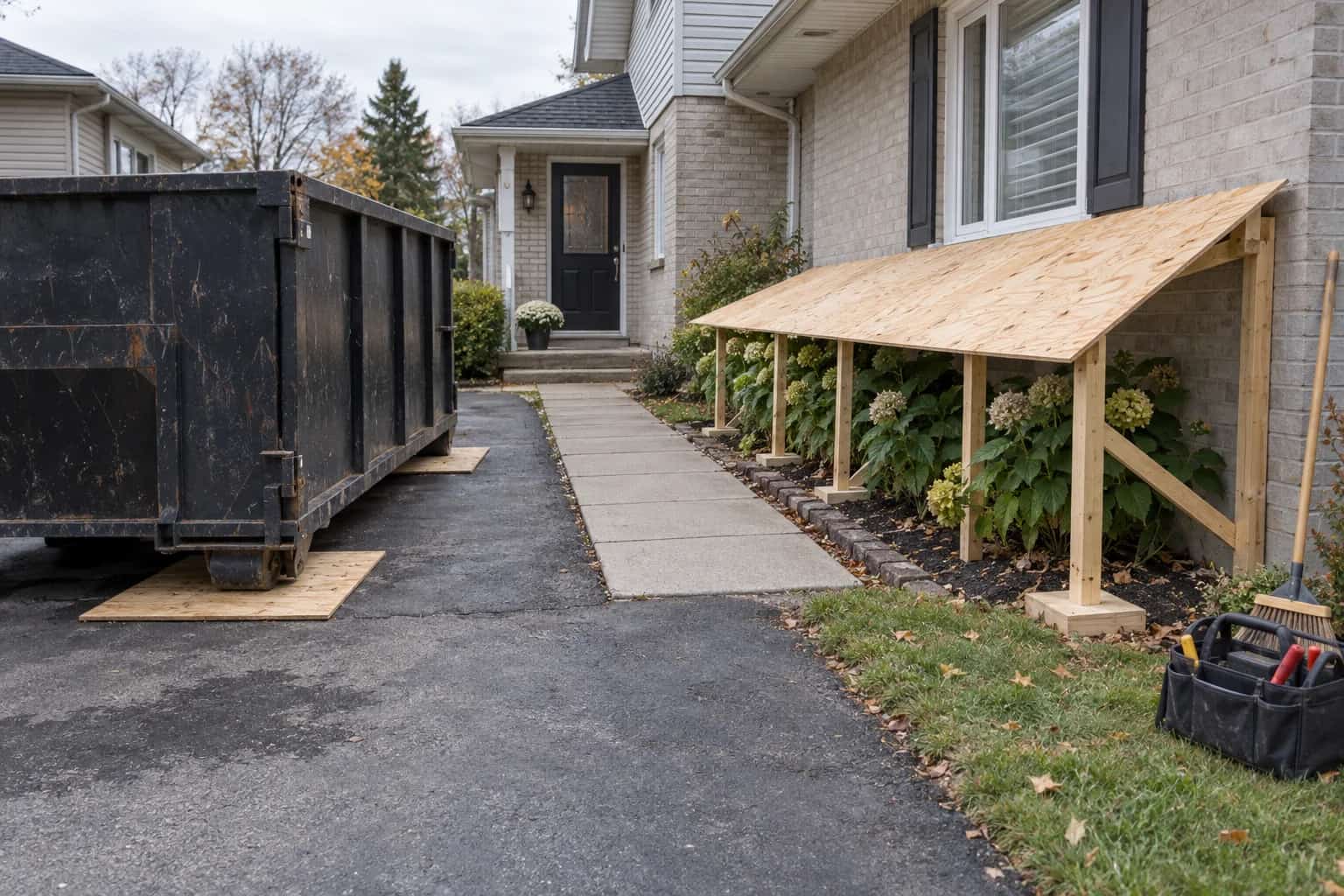
Write any separate visits into the plan. Nobody wants to discover that "finished Friday" means the shingles are finished while the driveway remains rented to a bin until Wednesday.
Make uncertainty specific enough to manage
A reasonable contractor may not be able to promise suitable weather on one distant Tuesday. They can still explain the proposed date or window, the conditions that may move it, how much notice they aim to give and who contacts you.
Ask what happens if a product is unavailable or an earlier job overruns. Will the crew offer a revised schedule before delivery? Can the materials remain safely stored if the job moves? Which household arrangements should you avoid making until the date is confirmed?
An open-ended phrase such as weather permitting does not answer those questions. The useful explanation names the decision and communication process. It also makes clear what happens to any existing leak while the replacement waits.
A short message that improves the agreement
Try: "Before I accept, please add the planned site-work start, expected completion and any separate visits. Please also describe how a weather or material delay changes those dates, who will notify us and how any exposed work is protected."
Add household constraints that matter. A driveway needed for mobility access is more consequential than a preference to have the bin elsewhere. A tenant, shift worker or pet arrangement may need notice even if the actual roof work remains flexible.
The schedule should be compatible with the payment milestones. If the only firm commitment is a payment date, ask the contractor to finish the rest of the document. Mike writes the site-work date beside the deposit discussion. We like a calendar that gives both sides something to do.
Give each date a job
A complete schedule distinguishes progress from preparation and includes a change process.
Commitment
Record the proposed start and completion before acceptance.
Separate visits
Identify delivery, other trades, bin removal and walkthrough.
Delay process
Name the reason, notice and revised-date confirmation.
Current record
Keep the latest agreed schedule with the payment milestones.
If you have already signed
Preserve the signed version and messages about timing. Ask for a written schedule or clarification without pretending it was part of the original agreement all along. Any amendment should be clear about what changes and what remains agreed.
Do not assume a missing date automatically gives you a particular cancellation remedy. Agreement type, promised performance, notice and circumstances can matter. Check promptly with Consumer Protection Ontario or an Ontario legal adviser if you need to cancel or the contractor will not clarify. Our home-signed contract cancellation guide explains a separate time-sensitive issue; it is not a substitute for checking your own contract.
This is also different from a crew stopping halfway through an open-roof job. Active exposure needs immediate attention, not only a better calendar. State any current damage plainly when seeking help.
Keep one current version of the plan
After a change, save the revised schedule and confirm affected visits. A roof date moved by a week should not leave the gutter installer arriving at the old time or the homeowner taking an unnecessary day off.
You are looking for a workable agreement, not a guarantee that October will behave itself. Clear dates, defined completion and reliable updates make normal uncertainty manageable. "We'll be there sometime" leaves all of it with the person living underneath the roof.