

Dave opens the attic access for an insulation assessment, spots droppings and stops the ordinary inspection. Pat is still downstairs asking how much insulation to order. "Different first question now," Dave tells him. Do not sweep rodent waste, use a household vacuum or bury it under fresh insulation. The work needs a sequence: prevent continued entry, assess contamination, clean or remove affected material, repair damage and restore the attic.
These parts may involve different companies. A pest-control visit does not establish that insulation is clean, and an insulation top-up does not remove contamination.
Why ordinary cleanup habits are a problem
The Public Health Agency of Canada warns that sweeping or vacuuming rodent waste can release particles into the air. It recommends considering professional cleaning for heavily infested and contaminated areas. Hantavirus infections are rare in Canada, but contaminated material still needs careful handling; appearance cannot identify whether a particular dropping carries infection.
PHAC also provides directions for cleaning contaminated surfaces. Those directions should not be stretched into a do-it-yourself recipe for a whole attic full of porous insulation. Access, material depth, dust migration and the amount of contamination change the work. Avoid entering or disturbing the area while the scope is being assessed.
Does every bit of insulation have to go?
A few visible droppings do not establish the full extent, and neither does an odour. Ask the assessor to explain the proposed boundary: what was inspected, where nesting or contamination was found, which materials will be removed and why any adjacent material can remain.
Natural Resources Canada's attic guidance calls for removal of damaged or contaminated insulation and warns against disturbing significant vermin contamination. That supports removing affected material; it does not turn one photograph into proof that every attic requires complete stripping.
Mike compares two proposals and finds that the cheaper one describes only the accessible corner. The other includes concealed areas, waste handling and reinstatement. They are not yet prices for the same job. Compare those boundaries before comparing totals. A disinfectant application over the top should not quietly replace the agreed removal work.
Agree on the handoffs before opening the attic
Urgent weather protection may overlap, but contaminated materials should not be buried beneath the restoration.
Pause disturbance
Tell every trade about droppings, nesting material and suspect insulation.
Control entry and assess
Coordinate pest control with the contamination assessment and safe work access.
Remove and clean as specified
Use an assessed method for affected porous materials and exposed surfaces.
Repair and restore
Address damage and moisture, then air-seal and replace insulation after cleanup is accepted.
Plan the route through the house
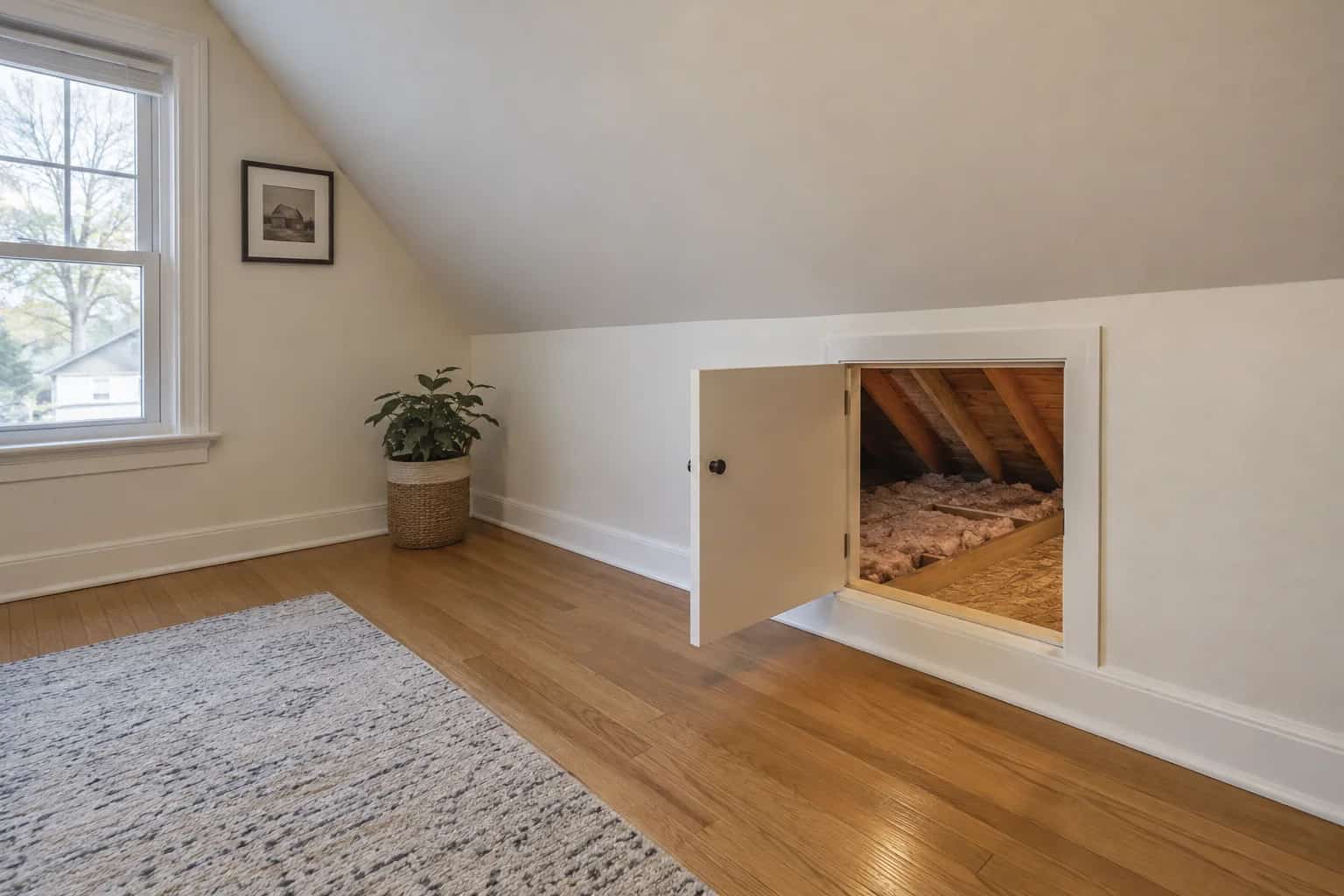
The hatch in this plan opens over the upstairs hall, directly beside the route to the children's rooms. Pat marks that route before anyone schedules removal. An attic hatch often opens over a hallway or bedroom. The cleanup scope should explain how workers and equipment enter, how affected material leaves and how the living space is protected. Ask who checks the area at the end and what completion documentation you will receive.
Tell the assessor about older insulation layers. Suspect vermiculite needs separate assessment before disturbance; discovering it midway through removal changes the plan. Our older-material guide explains that boundary.
Restore what the rodents or water damaged
Coordinate exclusion so the entry route is corrected without trapping animals inside. Our wildlife-entry guide covers the roof and soffit side. If rain is entering too, temporary weather protection may be urgent and can be coordinated with the cleanup rather than waiting for the whole sequence to finish.
Once the affected area is accessible, have damaged wiring assessed by a qualified electrical contractor and roof or framing damage assessed by the relevant trade. Wet materials also need their moisture source resolved. Then complete the agreed air sealing, ventilation repairs and insulation restoration.
Before the final top-up, Mike wants confirmation that the cleanup is complete and the entry repair has been checked. Fresh insulation is a finish to this sequence, not a way to make an awkward inspection look tidy. Covering the evidence with fresh insulation makes the next inspection harder without making the original problem go away.