
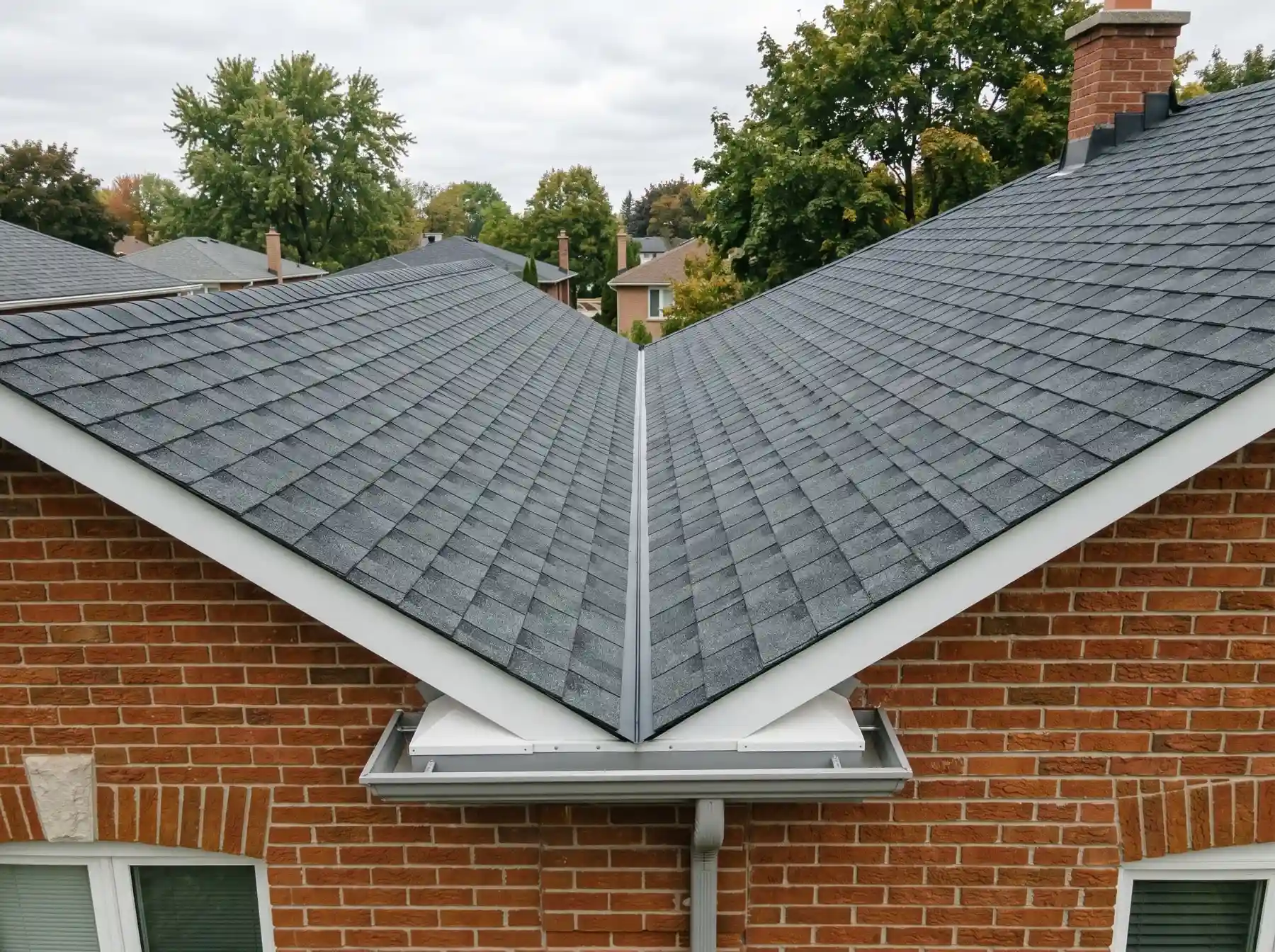
The homeowner in Pickering called about a water stain on a second-floor bedroom ceiling. The stain was about 18 inches across, directly below where the roof met an exterior wall. Every roofer's first instinct would be to check the flashing at that wall junction. We did. The flashing was fine.
The actual leak was in a valley 8 feet to the left.
Why roof leaks are hard to find
Water on a roof deck doesn't drip straight down. It follows the path of least resistance, running along rafters, pooling on top of vapour barriers, and traveling horizontally before it finds a gap to drip through. The water stain on the ceiling rarely sits directly below the point where water is entering the roof.
In this case, water was entering through a failed valley where the galvanized flashing had corroded through. The water ran along the top of a rafter for about 8 feet, hit a junction where two rafters met, pooled briefly, and dripped through a nail hole in the vapour barrier. It landed on the drywall near the wall, nowhere near the valley.
What failed
The valley flashing was original to the house, about 18 years old. Galvanized steel valleys in Ontario have a rough lifespan of 15–20 years depending on exposure. This one had a pinhole corrosion spot about the size of a pencil eraser. That's all it takes.
During heavy rain, water was pushing through that pinhole and under the shingles on the downhill side of the valley. The volume was small, maybe a cup per storm, but consistent enough to saturate the area and run along the framing.
The fix
We removed the shingles on both sides of the valley for about 6 feet, pulled the old flashing, and installed new W-valley flashing with ice-and-water shield underneath. Then re-shingled with matching shingles. Half a day of work.
Cost of the repair: roughly what you'd expect for a half-day valley job. Cost if it had gone another year: the homeowner was about 6 months away from mould in the rafter bay and a remediation bill that would have been 10 times the roof repair.
What homeowners should know
A ceiling stain doesn't mean the leak is directly above it. If you put a bucket under the drip and call it handled, the actual entry point is still open and still letting water in.
Small leaks cause big damage. A pinhole in valley flashing doesn't look dramatic. There's no waterfall. But a cup of water per storm, 30–40 storms per year, soaking the same rafter and insulation is how you get structural rot and mould.
Valley flashing has a lifespan. If your roof is 15+ years old and you've never had the valleys inspected, it's worth a look. The flashing can fail years before the shingles do.
This job was a half-day repair that resolved a problem that had been quietly worsening for over a year. The homeowner's only regret was not calling sooner.